 |
A 2022 study published in ScienceDirect highlighted indoor temperature, humidity, and microclimate comfort as key factors influencing labor productivity. Temperature's impact was recorded at 88.2%, while humidity affected 73.8%. When the surrounding environment impacts employee well-being, morale, and concentration, investing in the workplace extends beyond mere infrastructure.
 |
With over one hundred years of development, Daikin views people as central to its operations. This philosophy recognizes that each individual's potential requires nurturing, from recruitment and training to professional development and daily workplace experiences.
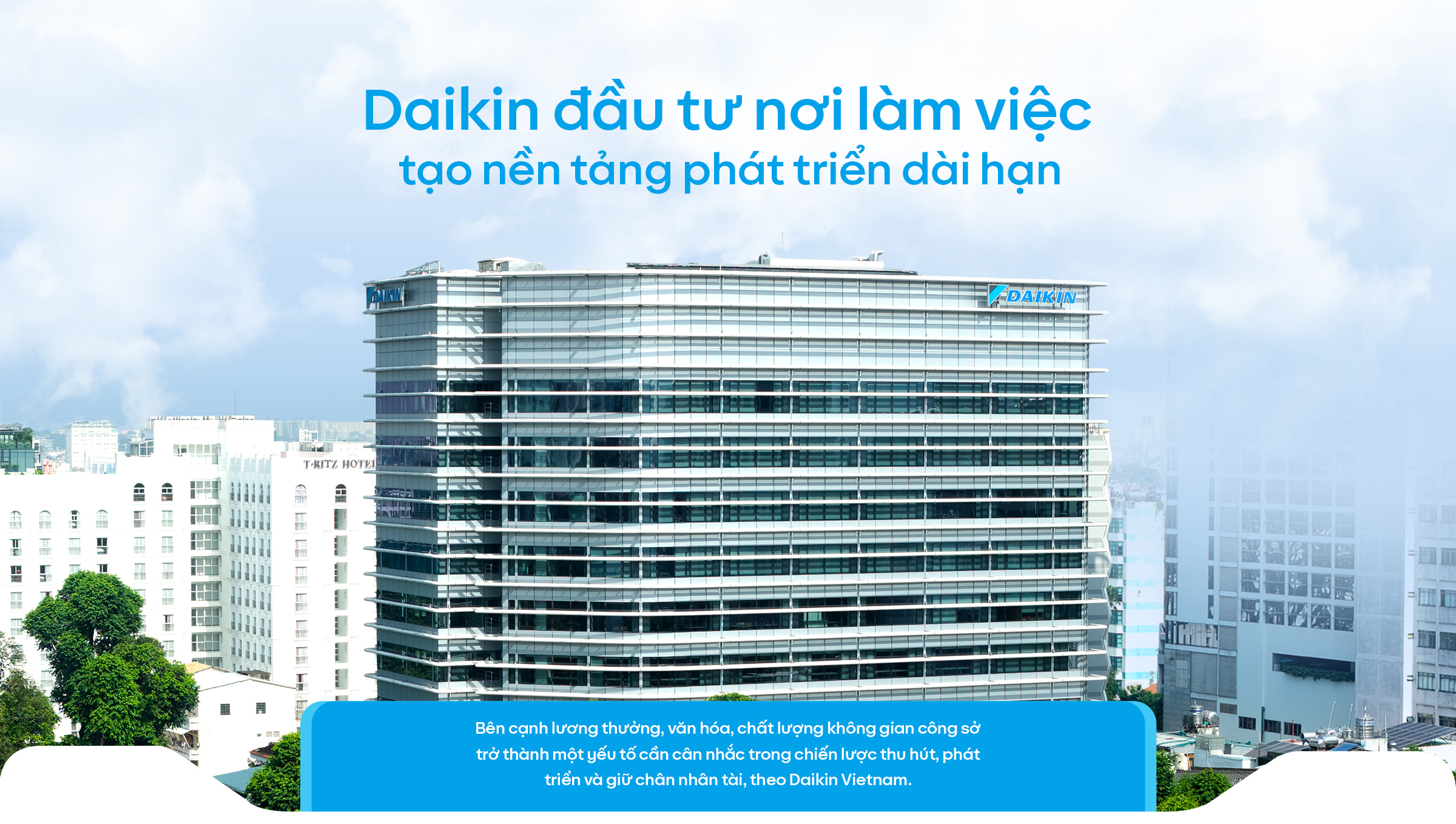
Therefore, beyond operational efficiency, Daikin also considers how employees perceive and utilize their workspace. This perspective led to the company's investment in its new headquarters, Daikin Air Tower, located at 10 Cong Truong Quoc Te in central Ho Chi Minh City.
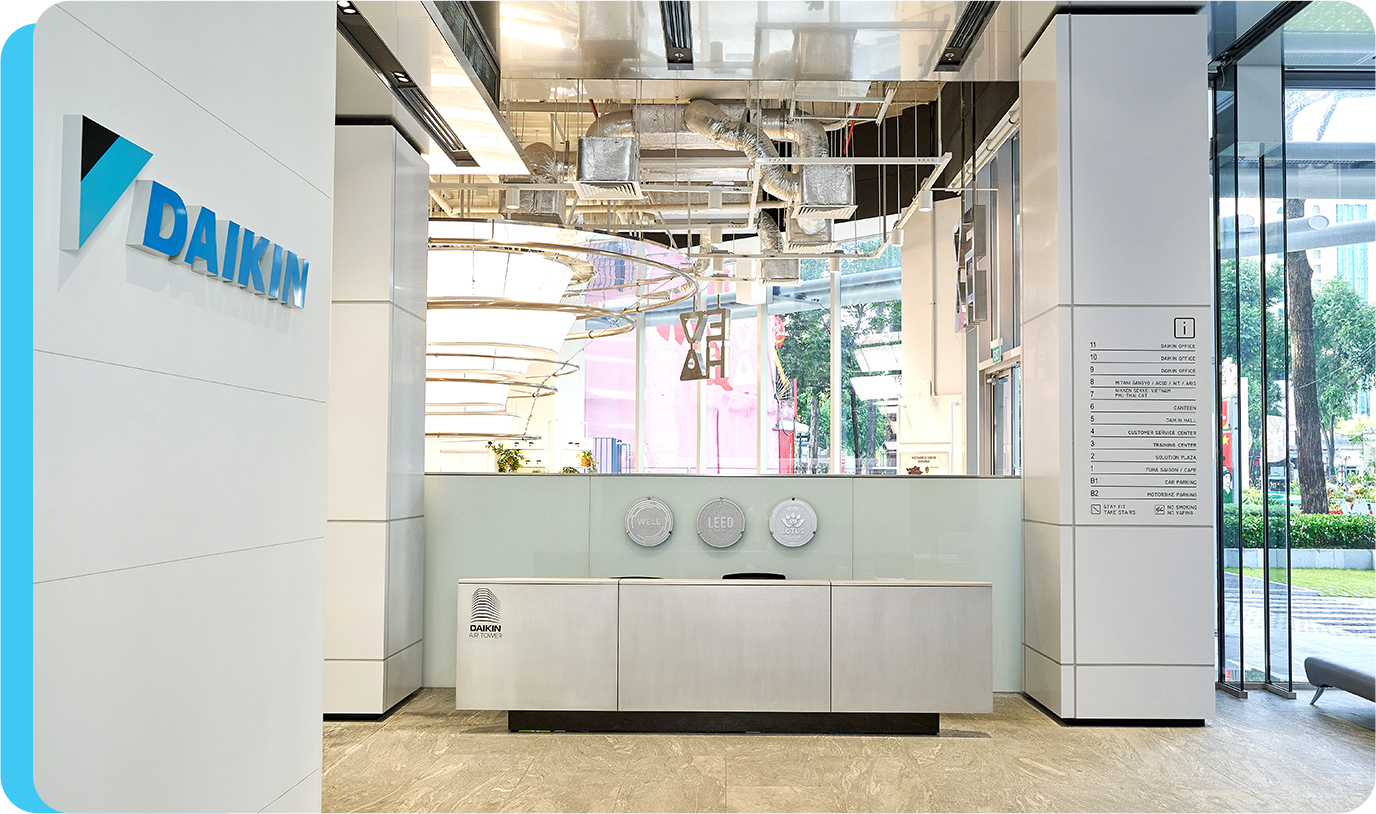 |
The interior of Daikin Air Tower. Photo: Daikin
Takashi Mori, general director of Daikin Vietnam, stated that Daikin Air Tower was designed to create a suitable working environment for employees while supporting the company's long-term development goals.
"Daikin Air Tower is designed to be a workplace where employees can be proud, and it also creates a foundation for us to continue developing into a globally-minded enterprise that remains flexible in adapting to changes," Mori said.
The building simultaneously achieved three certifications: Well, Leed, and Lotus Platinum levels. This demonstrates Daikin's commitment to carbon emission reduction alongside its human-centric management philosophy.
These standards respectively prioritize user health and experience, environmental and energy efficiency, and green building criteria. Pursuing all three certification systems demands high operational efficiency for the building and optimal conditions for its occupants.
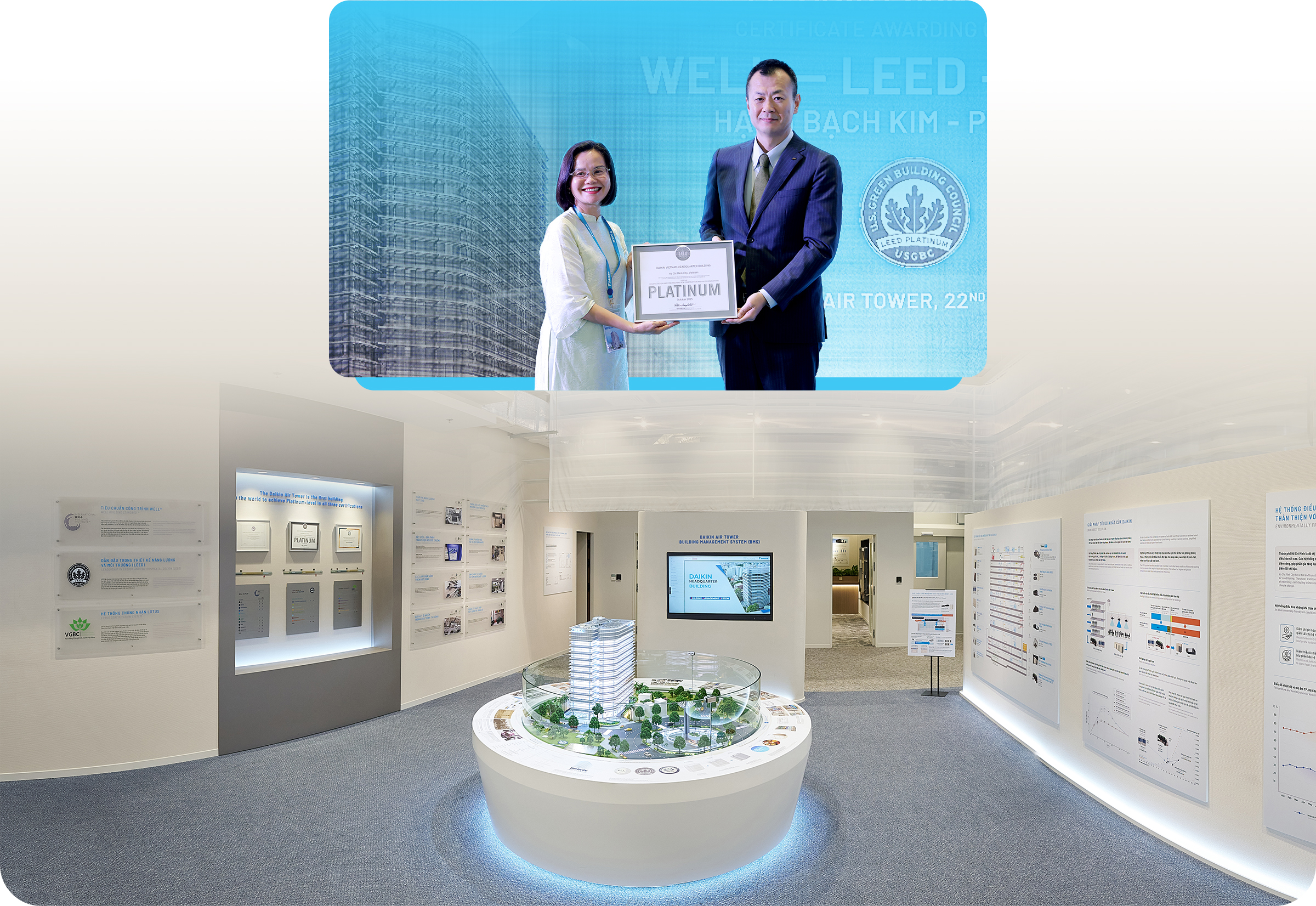 |
Daikin Air Tower achieved Well, Leed, and Lotus Platinum certifications simultaneously. Photo: Daikin
At Daikin Air Tower, these requirements manifest in employees' daily experiences. Specialized glass systems harness natural light while reducing heat radiation, creating a comfortable and energetic environment for the team. Temperature, humidity, ventilation, and air purity are controlled by Daikin's integrated solutions to maintain stable microclimate conditions throughout the workspace.
For instance, the task ambient AC system distributes air based on actual usage needs, rather than uniformly cooling the entire area. This solution focuses air conditioning on occupied zones, balancing comfort with operational energy efficiency.
Beyond work areas, the 6th floor features amenities for rest and rejuvenation, including a cafeteria, nap room, and gym. The office uses ergonomic furniture from Okamura, a Japanese brand, to provide more comfortable conditions for employees during work hours.
These elements demonstrate how the company considers user experience throughout the day. Daikin states that the space, technology, and amenities are seamlessly connected to support employee work, rest, communication, and collaboration.
Its central Ho Chi Minh City location allows employees easy access to surrounding economic, commercial, service areas and amenities. According to the company, the office's location also impacts its ability to attract and enhance the experience of its workforce.
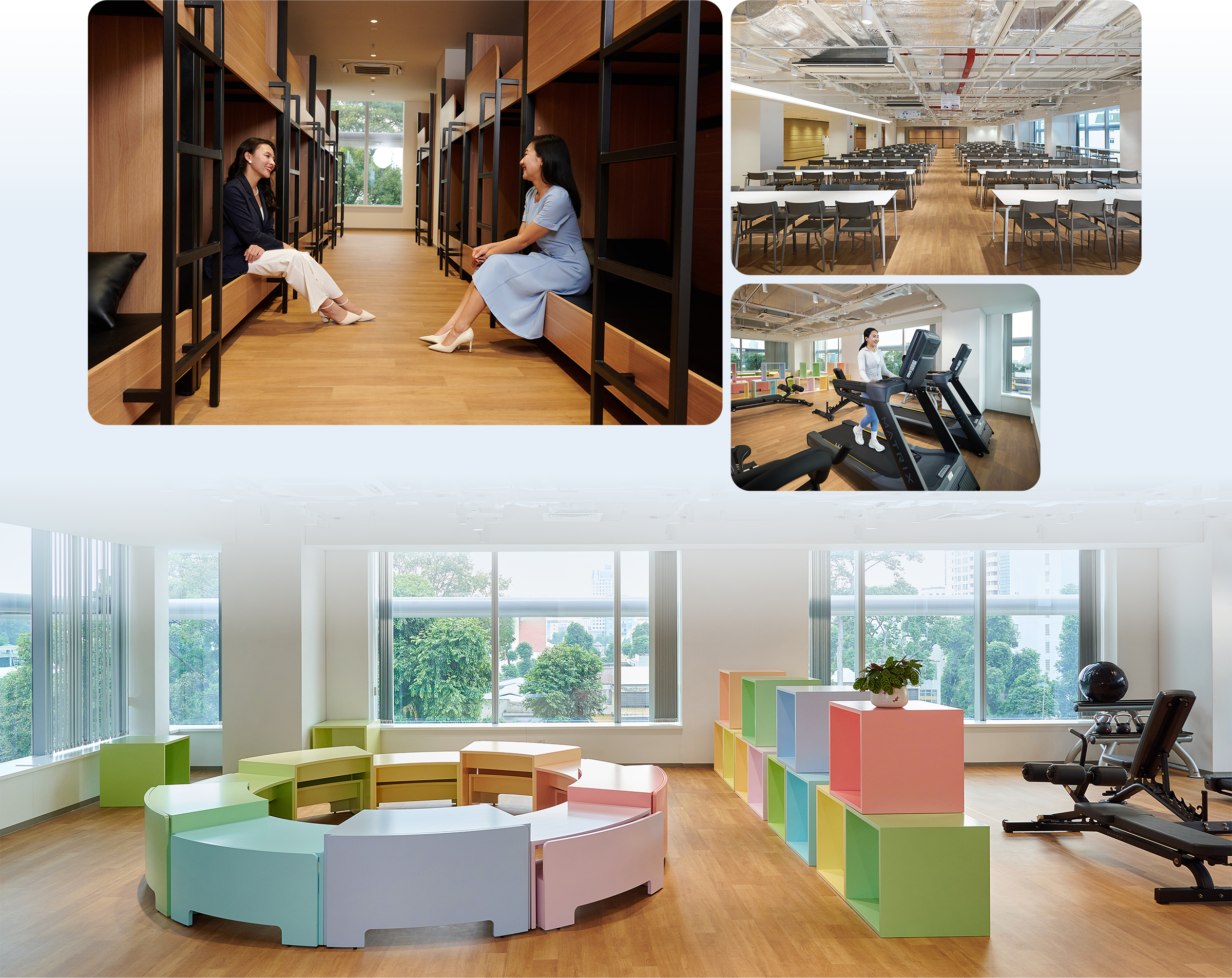 |
Work support spaces inside the building. Photo: Daikin
 |
For Daikin, the new headquarters also serves as a hub connecting the company with customers, partners, industry experts, universities, and regulatory bodies.
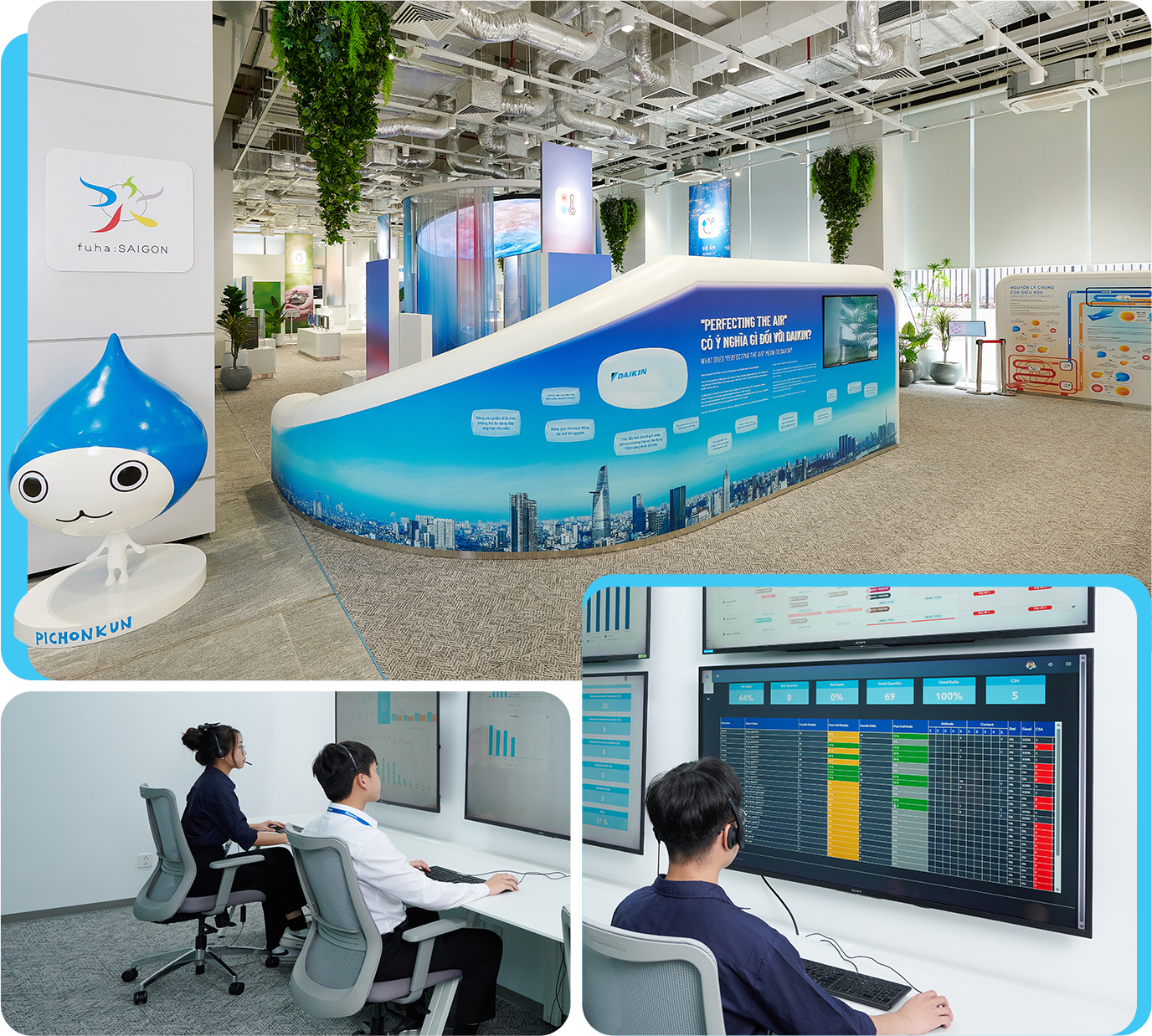
At the Fūha experience zone, customers and partners can directly access the brand's air solutions. Users can experience these solutions in spaces designed to simulate various needs. This area allows the company to visually demonstrate solutions while gathering feedback and real-world requirements from the community.
In addition to the experience zone, a dedicated training and knowledge transfer area helps enhance and standardize the capabilities of technicians and partners. Here, partners can practice on actual Daikin equipment, improving their ability to handle consultation, installation, operation, and maintenance requests.
According to Daikin leadership, in the air conditioning industry, product quality and lifespan are linked to system design, installation, and maintenance. Therefore, training technical teams and partners is a core part of the service chain the company maintains after products enter the market.
Takashi Mori stated that the new headquarters integrates training, sales support, installation, and after-sales service functions, aiming to develop into an open center. Daikin also seeks to enhance collaboration with educational institutions and regulatory bodies to create more spaces for knowledge exchange, expertise, and innovation.
Thus, the "human-centric" concept extends from employees within the building to customers, partners, and the wider community.
 |
 |
Daikin leadership noted that for many years, company offices were primarily evaluated based on location, area, function, and operating costs. However, as human resources become increasingly vital for competitiveness, companies must view the workplace as a source of value for both users and business operations.
A properly invested work environment can support employee health, concentration, and engagement. If these factors help employees maximize their capabilities, the value generated can then be transformed into product and service quality and an improved customer experience. In other words, this represents a strategic investment in people and long-term competitiveness.
A brand representative affirmed: "With Daikin Air Tower, a suitable work environment enables employee development; the human resources team creates better products and services; and those values ultimately return to serve customers and society."
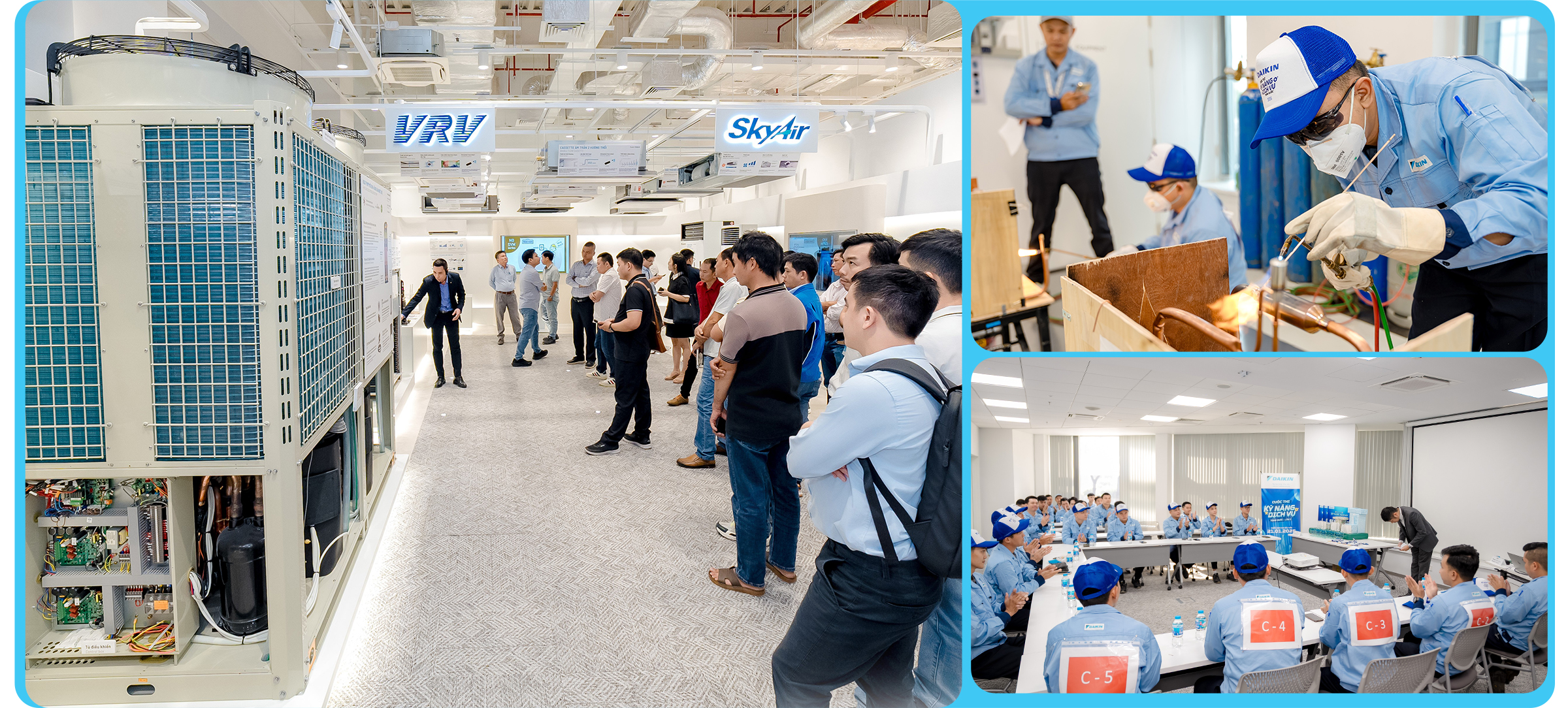 |
Customers learn about Daikin's ventilation system. Photo: Daikin
Daikin Air Tower also continues Daikin's investment and operational expansion in Vietnam, spanning manufacturing, human resource development, and customer service. In manufacturing, Daikin operates a factory in Hung Yen with a total investment of 123 million USD. The company has developed a network of 17 service centers and stations nationwide to provide after-sales support to customers.
Daikin's operations in Vietnam currently generate over 3,300 jobs. The company conducts 72 internal training classes annually and partners with 46 vocational schools, contributing to human resource training and development for the industry.
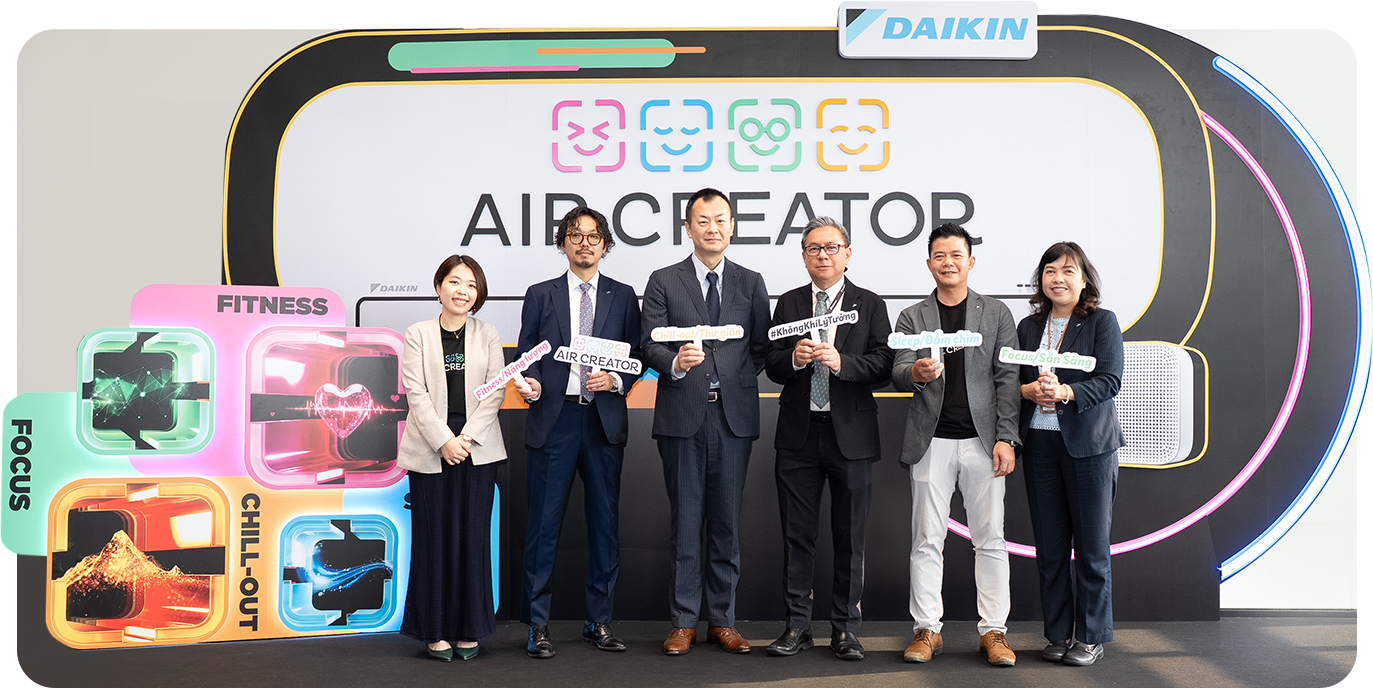 |
Daikin leadership team. Photo: Daikin
Takashi Mori emphasized that the new headquarters represents the company's long-term development commitment in Vietnam. "Daikin does not view Vietnam as a short-term market; instead, we choose to build a sustainable foundation to co-create values that can endure for generations," he stated.
By transforming the workplace into a source of inspiration and engagement, the company reshapes the employee experience, initiating a circular value chain where staff develop to better serve customers and collectively pursue sustainable organizational values.
Content: Hoai Phuong - Design: Hang Trinh