On 2/2, following a phone call with Indian Prime Minister Narendra Modi, US President Donald Trump announced on Truth Social that the two nations "reached a trade agreement." This deal reportedly involves the US reducing reciprocal tariffs on India from 50% to 18%. In exchange, New Delhi would stop buying Russian oil, lower import tariffs and non-tariff barriers, and purchase over 500 billion USD in US goods.
The Indian financial market reacted positively to this news. The Nifty 50 index on the country's stock exchange rose by nearly 3% on 3/2. The rupee appreciated by 1% against the US dollar, and the yield on India's 10-year government bonds decreased by 5 basis points (0,05%).
The agreement drew attention due to the clause concerning Russian oil, a contentious issue in recent US-India trade negotiations. In 8/2025, the US President imposed an additional 25% tariff on Indian goods, citing India's purchase of oil from Russia, raising the total tariff on the South Asian nation to 50%. Two months later, Trump stated that Prime Minister Modi had promised to stop buying Russian oil. Indian officials did not comment on this statement at the time.
Despite this, in 10/2025, Reuters, citing sources, reported that Indian refineries had halved their imports of Russian oil. This led to Russia's oil imports to the South Asian nation dropping to a two-year low in 12/2025. Instead, India increased purchases from the Middle East, Africa, and South America.
Indian Oil Minister Hardeep Singh Puri stated last month that India is diversifying its fuel supply as Russian oil imports decline.
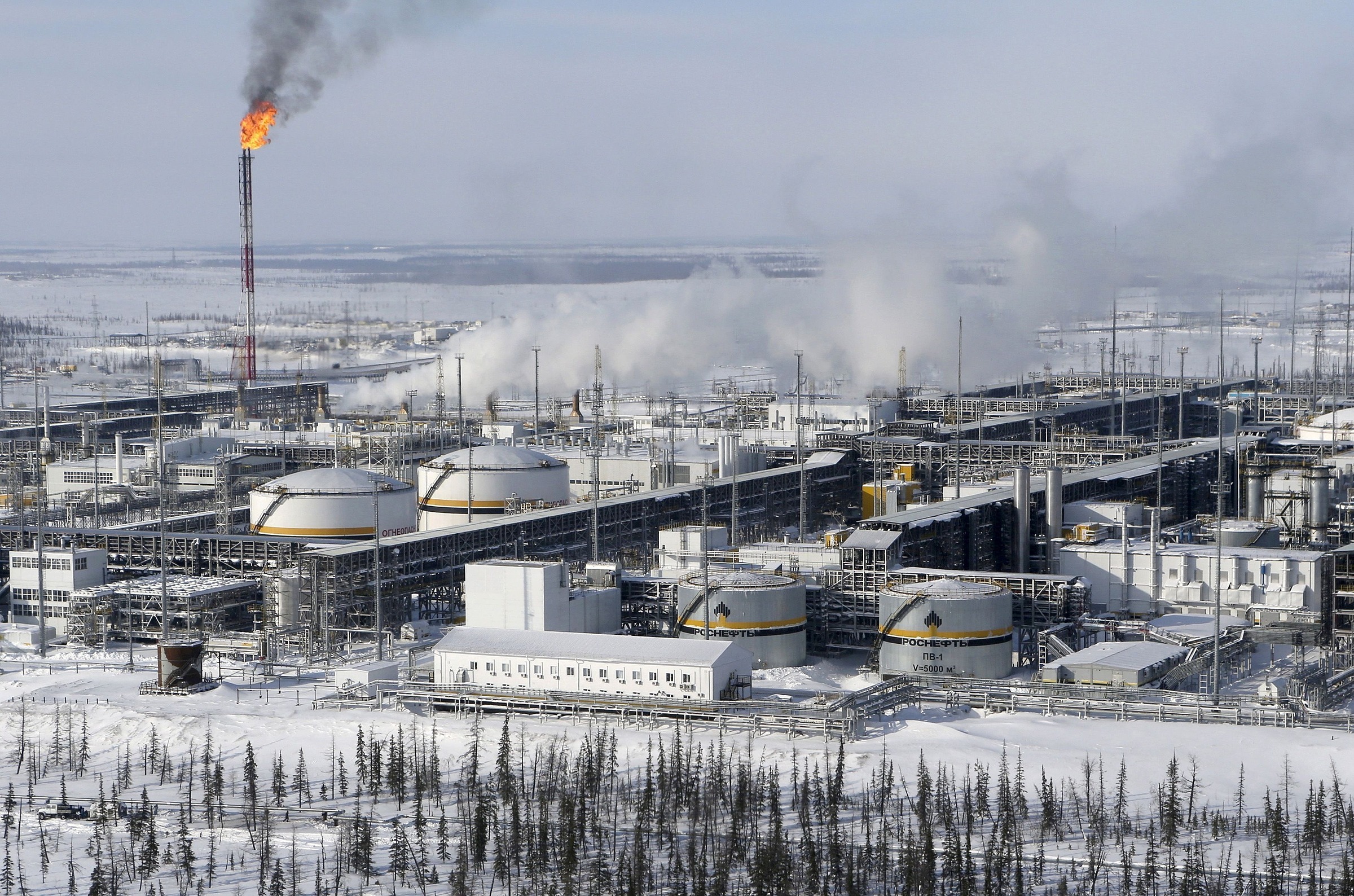 |
An oil field of Rosneft in Krasnoyarsk, Russia. Photo: Reuters |
In his 2/2 post, Trump suggested that India stopping Russian oil purchases "would help end the war in Ukraine." Over the past few years, Western countries have increased sanctions on Russia's oil and gas sector to pressure Moscow to cease the conflict in Ukraine. Energy exports continue to contribute significantly to Russia's budget.
On social media, Prime Minister Modi also expressed pleasure over the reduced import tariffs but did not mention stopping Russian oil purchases.
After the conflict erupted in early 2022, Russian oil faced Western alienation and numerous sanctions. Consequently, India and China gradually became the largest buyers of this product. DW cited data indicating that between 2021-2024, India's imports of Russian oil increased 19 times, reaching 1,9 million barrels per day.
Petras Katinas, an energy researcher at the Center for Research on Energy and Clean Air (CREA), stated that India saved 33 billion USD in energy costs during 2022-2024. This was due to Moscow's aggressive price reductions. Indian media estimates that discontinuing these purchases could increase the country's fuel costs by an additional 9-11 billion USD annually.
India is no longer benefiting as much from buying Russian oil compared to 2022. At that time, they received discounts of up to 15-20 USD per barrel. However, last August, this figure was only around 5 USD, according to Sumit Ritolia, an oil analyst at data firm Kpler. Ritolia predicts that Indian companies might take about one year to reduce their reliance on traditional oil partners if compelled to do so.
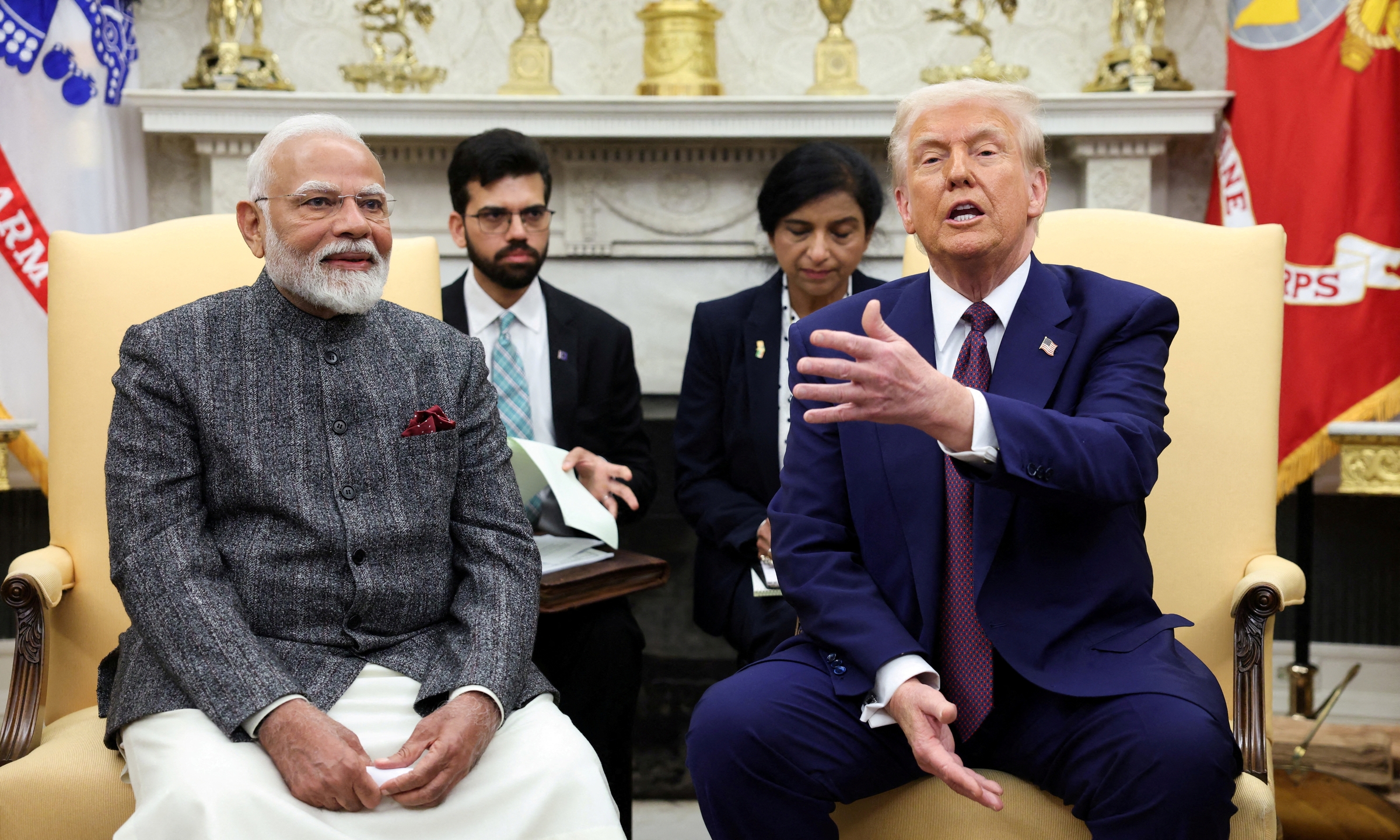 |
US President Donald Trump and Indian Prime Minister Narendra Modi at the White House in 2/2025. Photo: Reuters |
Indian refineries must complete their current oil contracts with Russia before fully halting purchases. They have also not received any government directive to stop imports. Orders placed in February will be received one month later.
Credit rating agency Moody’s suggests that while India has reduced crude oil purchases from Russia in the past few months, a complete and immediate halt is unlikely. Such a move would disrupt India's economic growth. The agency also warns that if New Delhi completely stops buying Russian oil, it could cause supply shortages elsewhere, accelerating oil prices and fueling inflation.
For Russia, this would intensify economic pressure. The country's budget is sensitive to oil price fluctuations, as the oil and gas sector contributes approximately 30% of its total revenue.
However, global fuel prices have gradually decreased since last April, after the Organization of the Petroleum Exporting Countries (OPEC) began increasing production. Additionally, recent new Western sanctions have posed further challenges for the sector. According to Dmitry Medvedev, Deputy Chairman of the Russian Security Council, Russia is currently under about 30,000 sanctions from Western countries.
According to a Russian Ministry of Finance report late last year, oil and gas revenues decreased by nearly 25% to 8,480 billion ruble, the lowest since 2020. The average price of Russian oil last month was only 39 USD per barrel, down from 57 USD in 8/2025.
This is not the first time Russia has faced declining oil prices. In previous years, they had more options, such as cutting expenditures. However, the costs of the conflict in Ukraine, which currently account for about 30% of Russia's annual budget, make spending cuts difficult.
For the global market, India's cessation of Russian oil purchases could accelerate crude oil prices. "If India had not bought Russian oil in 2022, prices could have reached 120 USD, or even 300 USD per barrel," Ritolia noted. Before the conflict, Brent crude was around 80 USD per barrel, then exceeded 100 USD when the conflict began.
Analysts have long warned that if Russian oil supply suddenly drops significantly, prices will surge as affected countries scramble for alternative sources. Even with continuous increases in OPEC production, adding several million barrels of oil per day in the short term remains challenging due to constraints on spare capacity and logistics.
"Nowhere can supply about 5 million barrels of oil per day quickly enough to prevent prices from rising high," Alexander Kolyandr, a senior research fellow at the Center for European Policy Analysis, told Independent.
High fuel prices would accelerate global inflation, including in the US. The US Federal Reserve (Fed) estimates that a 10 USD increase in oil prices adds 0,2 percentage points to the country's inflation. The Reserve Bank of India has similar calculations.
Brent oil prices are currently at 66 USD. Therefore, if they reach 110-120 USD, inflation could increase by one percentage point, causing energy, transportation, and food costs to soar for both consumers and businesses.
Ha Thu (according to Reuters, DW)