According to Brussel Times, this regulation applies to large fashion retailers operating in the EU market, defined as those with 250 or more employees and an annual turnover exceeding 50 million euro. Smaller businesses falling below these thresholds will have until 7/2030 to comply.
This policy is part of the Ecodesign for Sustainable Products Regulation (ESPR), which mandates businesses to prevent product waste and reduce resource consumption during production.
Previously, to keep production costs and retail prices low, many fashion brands manufactured short-lifecycle clothing in developing countries across Asia and Latin America. This unsustainable production and consumption trend led to an abundance of excess goods, with unsold inventory frequently being destroyed.
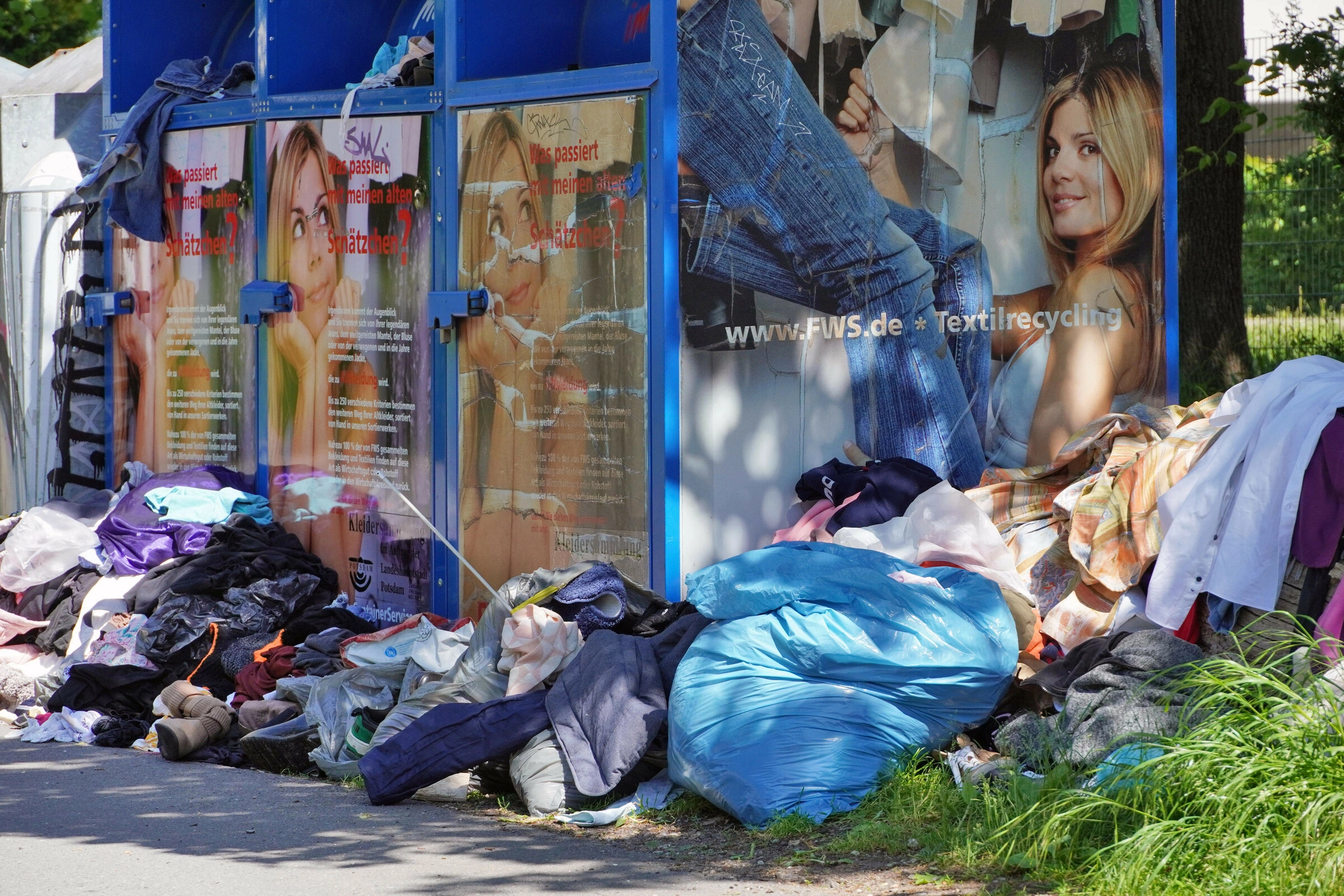 |
Old clothes illegally discarded in Potsdam, Brandenburg, Germany, 28/5. Photo: Reuters
The European Environment Agency estimates that approximately 4-9% of all textile products, equivalent to about 264,000-594,000 tons annually, are destroyed without being used even once. This situation generates approximately 5,6 million tons of CO2 emissions each year, matching Sweden's total emissions in 2021.
The EU considers the destruction of unsold goods a wasteful practice. In France alone, about 630 million euro worth of unsold goods are destroyed annually. Online shopping exacerbates this issue; in Germany, nearly 20 million returned items are forced into disposal each year.
The ban on destroying clothing is the first initiative within a series of ESPR policies. Authorities encourage businesses to prioritize reuse through activities such as resale (discounted or via secondary markets) or donations to charities.
Destruction is only permissible when goods are unsafe, damaged, infringe intellectual property rights, or are rejected by charitable organizations. If reuse is not possible, these goods must first be recycled before destruction is considered as a last resort.
To prevent policy abuse, businesses must provide evidence and disclose the volume of destroyed goods in their annual reports, retaining records for 5 years.
EU officials drafted this policy 4 years ago as part of broader measures to curb fast fashion, given that each European citizen discards 11kg of clothing annually. Policymakers also aim for luxury businesses to set sustainability standards, recognizing that the luxury fashion industry's revenue often relies on ephemeral trends.
Europe expects this policy to encourage businesses to produce and operate more resource-efficiently, transitioning towards a circular economy. The Industry newspaper reported that French fashion house Chanel announced it would cease destroying textile inventory before the EU ban. Unsold stock will be transferred to the company's internal textile circularity department, which will be responsible for repurposing or recycling these items.
Bao Bao (according to Brussel Times, EC)