Towards the end of the World Cup in the US, official FIFA merchandise, including t-shirts, water bottles, and baseball caps, saw discounts of up to 85%. This strategy aimed to clear all remaining tournament souvenirs from shelves in pharmacies, clothing stores, and supermarkets.
However, the Financial Times reports that FIFA is employing a distinct retail strategy in the tournament's final phase. The organization is exploring every opportunity to generate revenue, aiming to capture every last US dollar from fans.
For the first time, fans can attend the pre-final press conference in New York, an event previously exclusive to media. By purchasing an 80 USD ticket to Fanatics Fest, a four-day sports event in New York, supporters can watch the Spain and Argentina teams' press conference live.
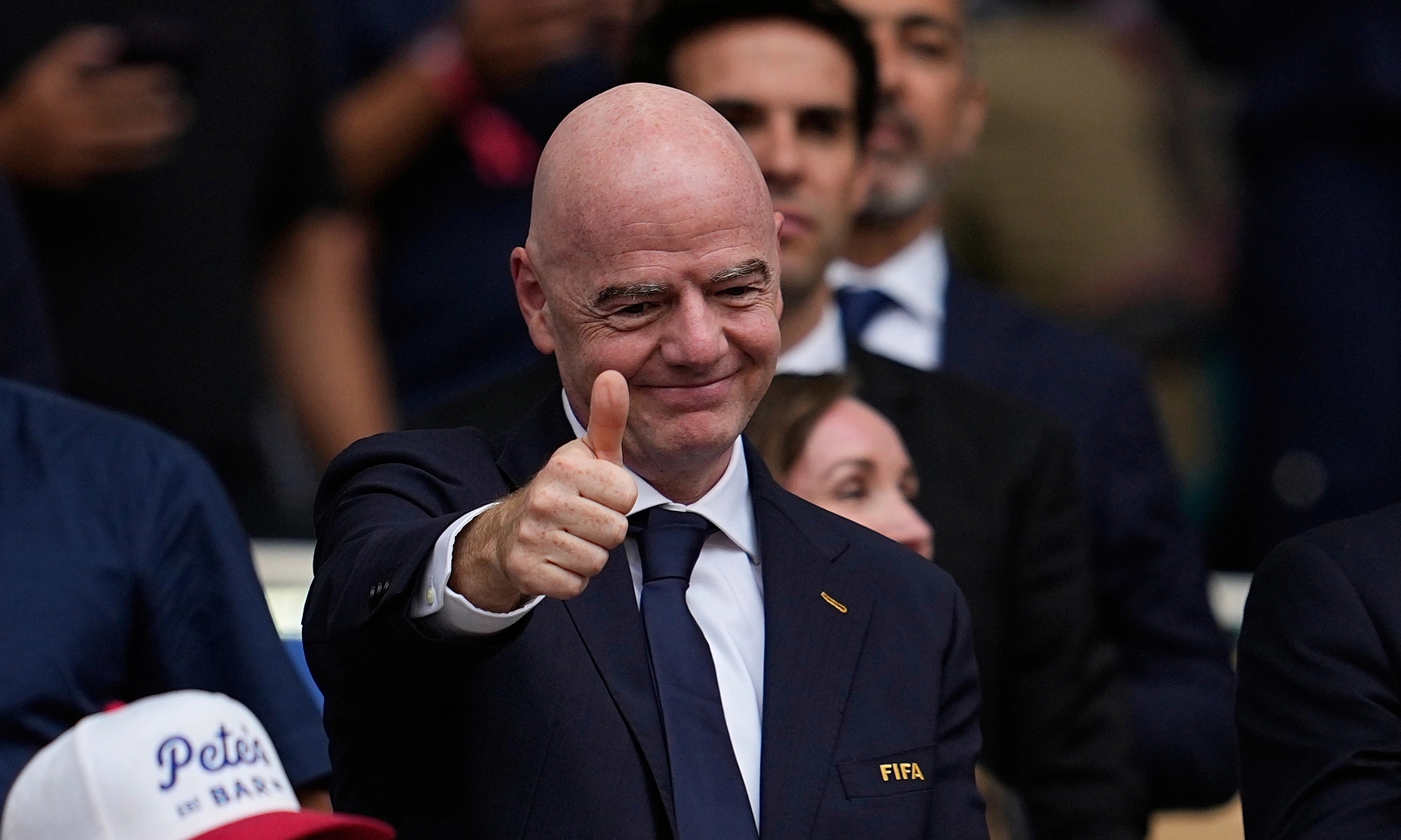 |
FIFA President Gianni Infantino attends the World Cup quarter-final match between Norway and England at Hard Rock Stadium in Miami Gardens, Florida, US on 11/7. Photo: AP |
MetLife Stadium, host of the final match, was permitted to open four hours before kickoff, one hour earlier than usual. This extended opening time allows food and beverage (F&B) and merchandise vendors to boost sales. Sports Business Journal projects that F&B and souvenir sales for the World Cup final could reach 11 million USD.
During halftime, FIFA extended the usual 15-minute break with an 11-minute performance. This star-studded show featured artists such as Madonna, Justin Bieber, Shakira, BTS, Burna Boy, the PS22 Chorus, and Coldplay.
FIFA explained that US audiences are accustomed to, expect, and are willing to pay for halftime shows. The Financial Times remarked, "This presents a unique opportunity to generate additional revenue from the world's largest economy. No potential earnings should be overlooked."
While these initiatives may not directly yield substantial revenue for FIFA, they significantly enhance the commercial value of the World Cup final. Broadcasters benefit from extended advertising slots, helping to offset their broadcasting rights expenses. Furthermore, FIFA gains leverage to command higher prices for future broadcasting rights, sponsorship packages, and commercial agreements in subsequent tournaments.
TalkSport reported that Fox Sports generated over 250 million USD solely from advertisements aired during the three-minute water break. The publication suggests that FIFA is actively seeking to monetize time slots that previously did not generate revenue.
This year, FIFA introduced championship rings for the winning team, alongside the gold trophy and medals. This practice aligns with US sports tradition, where champions of events like the Super Bowl or World Series customarily receive rings.
The 2,026-piece World Cup championship ring collection includes 30 rings for the winning team. FIFA plans to sell the remaining 1,996 rings, with pricing yet to be announced.
Following the match, segments of the actual pitch will be sold to fans in the US and Europe, starting at 450 USD. This exclusive product sold out last week, potentially adding 11 million USD to FIFA's revenue.
Throughout the tournament, FIFA's commercial team operated at full capacity, maximizing revenue by fully adopting American business practices, from monetizing water breaks to setting premium ticket prices.
This year's World Cup revenue is projected to exceed 10 billion USD, more than double the Qatar tournament's earnings four years ago. This milestone marks the first time a sports event has surpassed this revenue figure.
While FIFA often "oversells" its tournaments, The Athletic contends that no other event currently rivals the World Cup's commercial scale. The Olympics, once a competitor, generated just over 5 billion USD in its most recent iteration. In comparison, Euro 2024 in Germany recorded revenues of only 2.9 billion USD.
Tu Anh (according to FT)