National Commercial Bank (NCB) recently announced it would close payment accounts without individual customer notification if two conditions are met: the account has not had any transactions for over 24 months, and its current balance is below 20,000 dong, which is less than the bank's inactive account management fee.
LPBank (Vietnam Prosperity Joint Stock Commercial Bank) also stated it would close accounts with no remaining balance and no activity for 12 consecutive months. Customers wishing to continue using their "dormant" accounts can reactivate them by performing at least one financial transaction, such as depositing money or making a transfer.
According to LPBank, if users do not take any action before 29/7, their payment accounts will be closed the following day.
Last year, Sacombank, MB, VIB, Woori Bank, and others also either closed or changed the status of payment accounts that had no transactions. However, the conditions for "dormancy" period and minimum balance varied among institutions, ranging from one to two years and less than 50,000 dong. The minimum balance often depends on the account maintenance fee, allowing banks to deduct this fee before closing the account.
Currently, some banks charge fees ranging from 5,000 dong to tens of thousands of dong each month when an account does not maintain the required average balance. Accounts with few or no transactions still consume technology, security, and management resources. Therefore, these fees help banks maintain their systems, service quality, and data integrity.
Last month, the State Bank of Vietnam (SBV) sought public feedback on a draft proposal that would permit banks to proactively close "junk" accounts and inactive accounts to mitigate risks of fraud and scams.
According to the draft, many legitimate payment accounts are forgotten by customers, no longer needed, and have no transactions for extended periods. Others are anonymous or impersonated accounts opened by criminals using old or fake documents. The regulator proposes adding a regulation that allows banks to close accounts that have not generated transactions for three years or more. After closing, banks will monitor any remaining balance to return it to legal beneficiaries upon request.
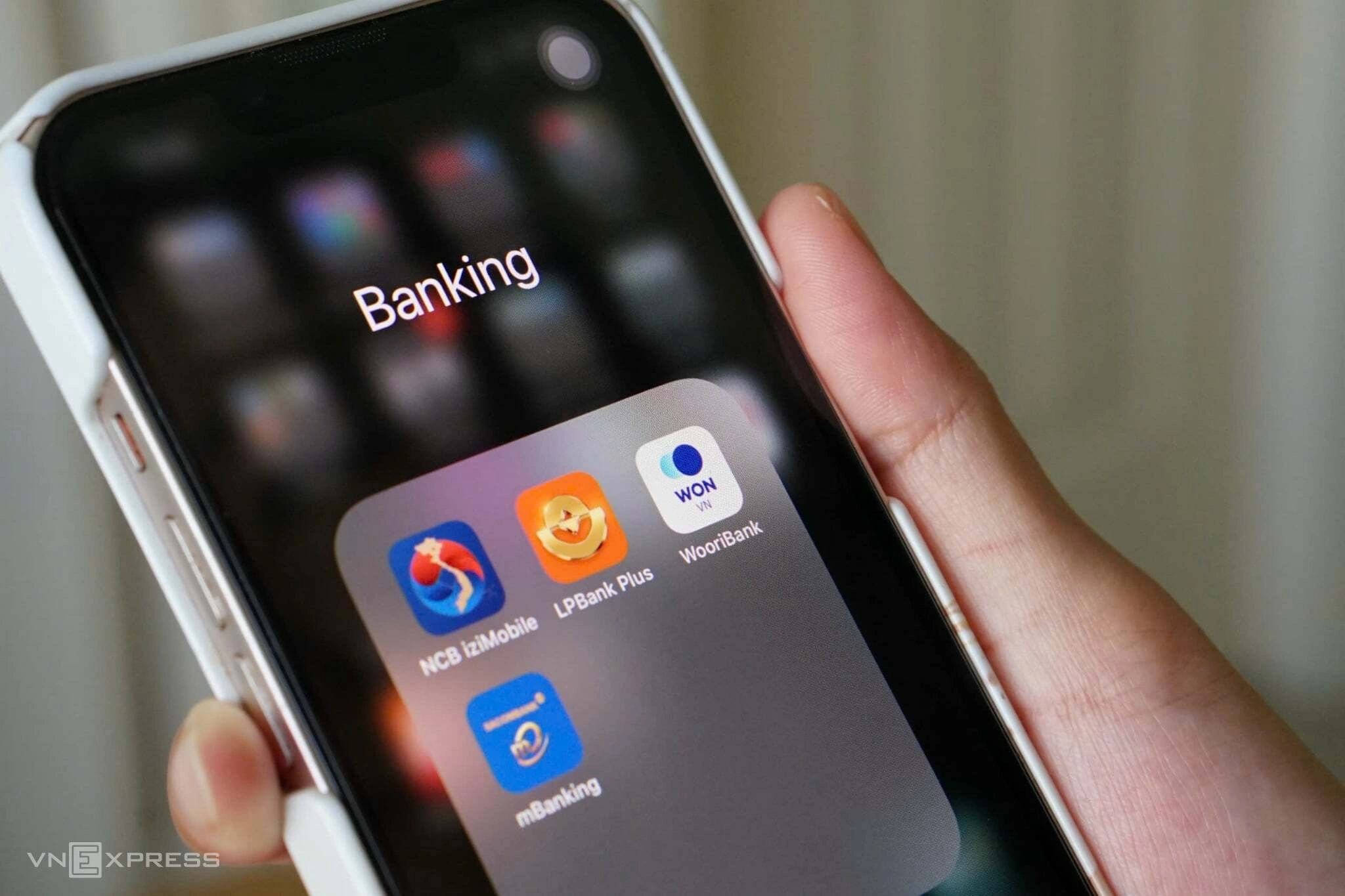 |
Applications of some banks. *Photo: Phuong Dong* |
The State Bank of Vietnam stated that the three-year timeframe is based on the experiences of several countries. For example, the United States classifies accounts inactive for three to five years as "dormant", while the UAE places accounts without transactions for over three years on a separate list for monitoring.
Phuong Dong