Freshwater dolphin fish are characterized by their flat, small bodies, smooth, scaleless skin, and red-orange tails and fins. They are named "dolphin fish" because they emit a squeaking sound when removed from the water.
During the flood season, people in the Mekong Delta typically catch this fish using traps and nets. However, early this season, the supply of fish to wholesalers has been limited, keeping prices elevated.
Loan, who owns a seafood wholesale business in An Giang, stated that she collects only about 5-7 kg of freshwater dolphin fish daily. Live, grade one fish (28-30 fish per kilogram) is currently priced at around 620,000 dong per kilogram, a 10% increase compared to the same period last year.
According to Loan, freshwater dolphin fish on the market vary in size and shape. Larger, plumper, and uniformly sized fish typically fetch higher prices than smaller ones. "With the flood season just beginning, fish are still scarce; we only manage to collect 5-10 kg at a time. Ensuring live fish reach customers requires considerable effort," Loan explained.
Surveys at wholesale markets in An Giang, Dong Thap, and Can Tho indicate that large, live freshwater dolphin fish are priced at approximately 450,000-600,000 dong per kilogram, representing a 10% increase compared to the same period. Smaller fish, around 40-45 per kilogram, sell for about 400,000 dong.
Meanwhile, fish averaging 80 per kilogram, which have been cleaned, frozen, or iced, cost 120,000-160,000 dong per kilogram. Therefore, selling prices vary significantly based on size and preservation method.
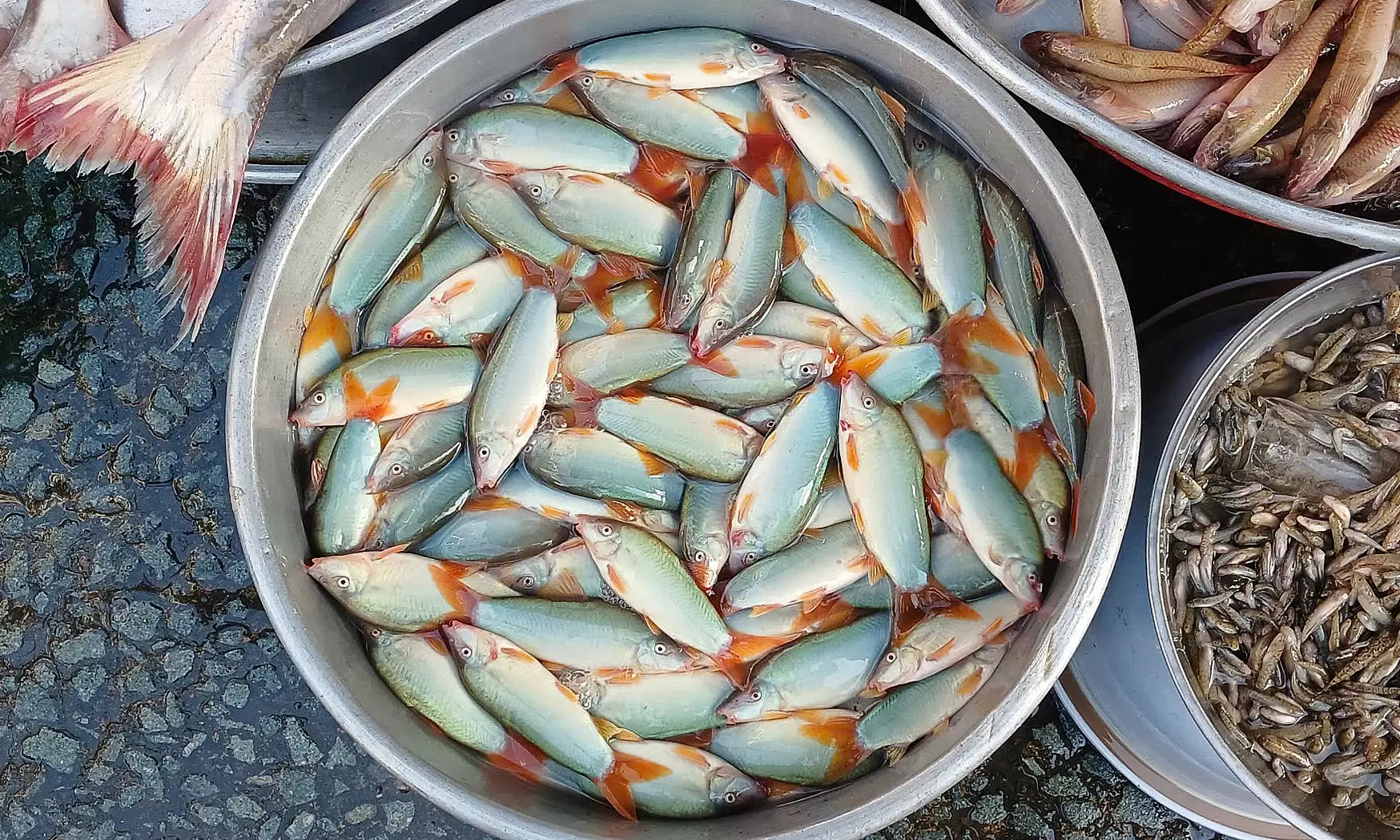 |
Freshwater dolphin fish sold at a market in Ho Chi Minh City. Photo: Thi Ha |
Thanh, a seafood supplier at Pham Van Hai market in Tan Son Hoa ward, noted that he only sources freshwater dolphin fish about once a week early in the season. Larger fish are difficult to gather in sufficient quantities for regular sales.
This type of fish also experiences significant losses during long-distance transport, especially when live. Consequently, he primarily procures smaller fish, around 70-80 per kilogram, for easier transport to Ho Chi Minh City.
"These fish are prone to high mortality rates during transport. If not handled carefully, they could all die before reaching their destination, leading to substantial losses," Thanh stated.
From a farming perspective, freshwater dolphin fish do not allow for rapid production increases. Luan, a dolphin fish farmer in Dong Thap, explained that the fish are typically raised in cage systems located in areas with clean water and good currents. The period from stocking to harvest spans about 8-10 months. Throughout the cultivation process, farmers must constantly monitor and sanitize the farming area to prevent disease and mass mortality.
Fry costs are also substantial. Currently, freshwater dolphin fish fry are priced at approximately 3,000-4,000 dong per fish, with about 200-300 fry per kilogram, equating to 600,000-1.2 million dong for the fry alone. Due to the limited supply of fry, Luan primarily sells them by individual fish rather than by kilogram.
According to agricultural agencies in Dong Thap and An Giang, while freshwater dolphin fish have high economic value, they have a long cultivation period and are typically farmed only once a year. Local authorities advise residents against expanding cultivation without a clear understanding of the techniques and a stable market outlet, to mitigate the risk of losses.
Thi Ha