The Vietnamese government issued Resolution 55 on 19/3, revising regulations for managing gasoline prices. This significant change comes as the global energy market experiences strong volatility due to the Middle East crisis, prompting a need for more responsive domestic pricing mechanisms. The new resolution stipulates that domestic gasoline prices will be adjusted immediately one day after the base price increases by 15% or more compared to the previous announcement period.
This 15% fluctuation threshold is a substantial expansion from the 7% level previously implemented under Resolution 36, which became effective on 6/3. Officials from the Domestic Market Management and Development Department (Ministry of Industry and Trade, MOIT) indicated that this revision aims to align the pricing mechanism more closely with current market dynamics. Previously, following Resolution 36's implementation, domestic gasoline prices saw frequent adjustments, at times occurring for five consecutive days, highlighting the need for a less volatile adjustment trigger.
The resolution also introduces a mechanism for price reductions when global prices fall. Specifically, domestic gasoline prices must be adjusted immediately the day after the base price drops by 10% or more. However, if the base price increases by less than 15% or decreases by less than 10%, gasoline prices will continue to be managed under existing regulations outlined in Decree 80/2023. This mechanism involves the MOIT and the Ministry of Finance (MOF) jointly adjusting prices every seven days, specifically on thursday. Retail prices may increase, decrease, or remain stable as needed, with new prices becoming effective at 15h on the adjustment day.
The MOIT will announce base and retail gasoline prices, taking into account the components of the base price and input from the MOF, which must be submitted by 12h on the day of adjustment.
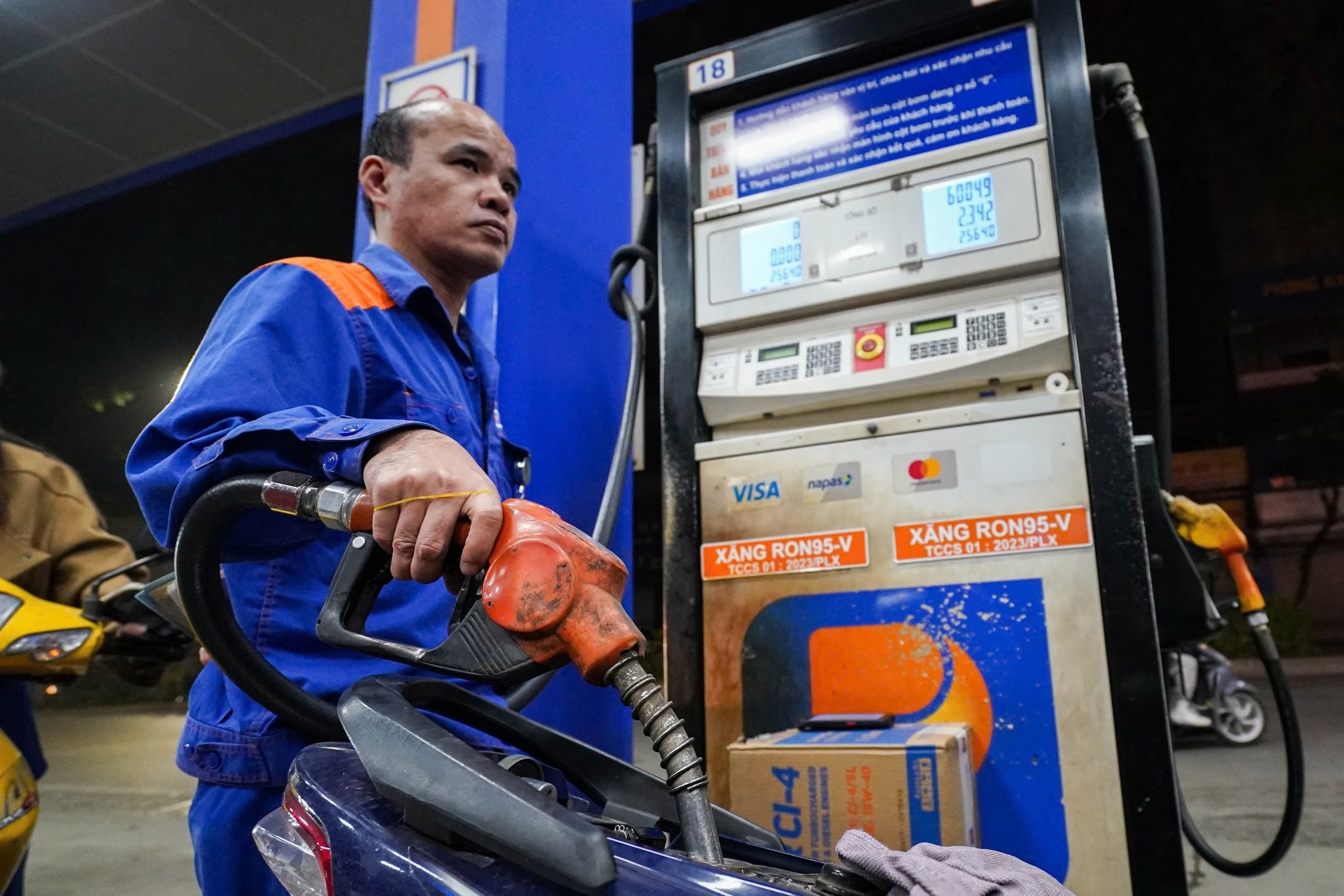 |
An employee at a store on Lang street, Hanoi, pumps gasoline for a customer, 11/3. Photo: Hoang Giang. |
Since late February, escalating tensions in the Middle East have triggered a more pronounced reaction in the global energy market than previous escalations between Israel and Iran last year. In response, Vietnam, which partly relies on imported energy, has adjusted its gasoline price management. This includes more frequent price adjustments, increased use of the stabilization fund, and a combination of policy tools to mitigate global energy fluctuations.
Beyond the price adjustment mechanism, Prime Minister Pham Minh Chinh reaffirmed the government's primary objective at today's meeting on gasoline price stabilization: to prevent energy and gasoline shortages, avoid disruptions to supply chains, production, and business activities, and minimize negative impacts on macroeconomic management. Vietnam is proactively preparing for a potential deficit in the gasoline price stabilization fund, anticipating a rapidly evolving and possibly prolonged global energy crisis. The Prime Minister has approved advancing state budget funds from the 2025 revenue surplus to support the fund. The fund will then repay the state budget once the crisis has passed.
The MOF is responsible for collaborating with the Government Office and the MOIT to finalize the draft and secure approval from relevant authorities. This measure is expected to be in effect until 15/4. Should the situation persist, the government will monitor developments and report back to the competent authorities.
Phuong Dung