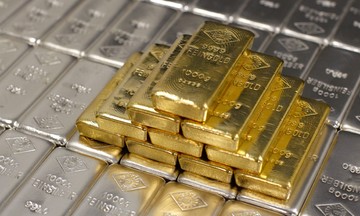
On January 2, spot gold prices rose 14 US dollars to 4,330 US dollars an ounce. During the trading session, prices briefly reached 4,403 US dollars before gradually declining. Silver prices followed a similar trend, closing up 1.2 US dollars at 72.7 US dollars.
The precious metals market on January 2 continued to be supported by familiar factors: geopolitical tensions and expectations of US Federal Reserve (Fed) interest rate cuts. Bart Melek, Global Commodity Strategy Director at TD Securities, noted, "The market is still anticipating a rate cut in March and once again this year. Coupled with risks related to US import taxes and public debt, prices for gold, silver, platinum, and palladium have all been driven higher."
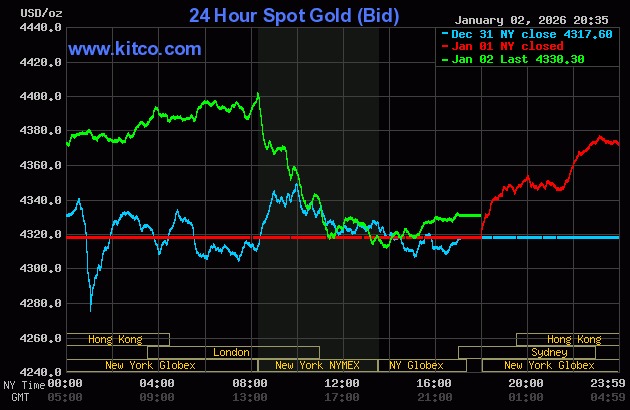 |
Gold prices rose on January 2. Chart: *Kitco*.
Investors currently anticipate the Fed will cut interest rates two times this year, each by 25 basis points (0.25%). Gold typically rises in value in a low-interest-rate environment.
Unrest in Iran, ongoing issues in Gaza, and the lack of a Russia-Ukraine peace agreement have prompted investors to seek refuge in gold. Jim Wyckoff, a precious metals analyst at Kitco Metals, noted, "From a technical perspective, the market currently projects February gold futures could rise above the 4,584 US dollar resistance level."
In the physical market, gold prices in India and China surpassed global prices for the first time in two months. This surge was driven by increased consumer demand after international prices cooled.
On January 2, platinum prices rose 3.5% to 2,125 US dollars an ounce, while palladium increased nearly 2% to 1,636 US dollars. Last year, these two precious metals saw gains of 127% and 76% respectively. Both silver and platinum are recognized by the US as essential minerals. They face supply shortages and low inventories due to robust increases in investment and industrial demand.
By Ha Thu (Reuters, Kitco)