The environmental impact of product returns, particularly from online shopping, has become a significant concern. This issue is especially pronounced in January, following the Christmas and New Year holidays, when US retailers experience a surge in returned goods. Many sellers expand their return channels and increase staff to handle this sudden influx.
The National Retail Federation (NRF) estimates that online orders in 2025 had a return rate of 19,3%, meaning one in five online purchases is returned. Across the entire retail sector, the return rate is 15,8%, accounting for 850 billion USD in sales.
High return rates significantly increase environmental pressure. Products are often packaged using petroleum-based materials such as plastic bags, shrink wrap, and bubble wrap. Beyond packaging, the transportation involved in both initial delivery and subsequent returns consumes energy and generates emissions.
An item's journey from seller to transit points, central warehouses, and finally to the customer for last-mile delivery creates a carbon footprint. When returned, the item repeats these stages, effectively doubling its environmental impact. Joseph Sarkis, a supply chain management lecturer at Worcester Polytechnic Institute, estimates that returning an item increases its planetary impact by 25-30%.
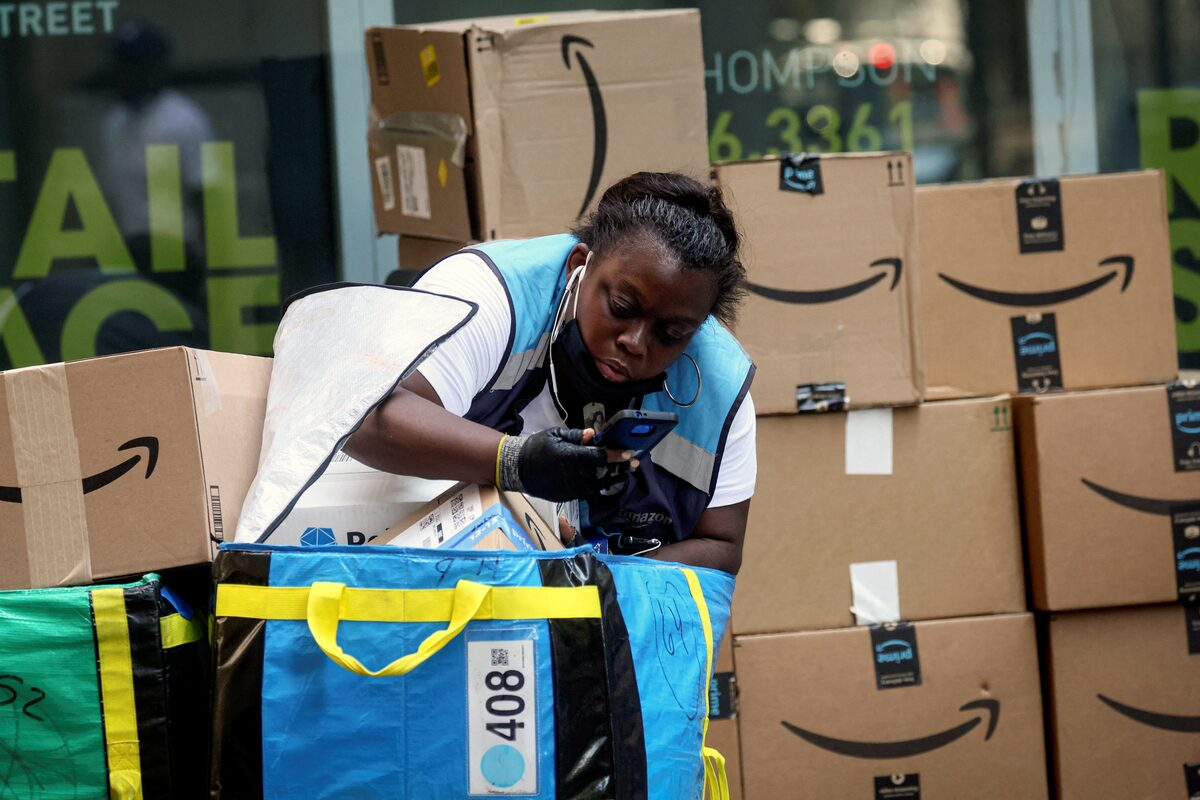 |
An Amazon delivery employee inspects packages in New York City, US, 11/7/2022. Photo: Reuters |
An Amazon delivery employee inspects packages in New York City, US, 11/7/2022. Photo: Reuters
Even upon reaching the seller, many returned items are not resold, often due to economic factors. For example, if a customer returns a phone because they dislike its color, the seller incurs costs for shipping, labor for inspection, repackaging, and potential repairs. Businesses typically absorb these costs for expensive items like phones to remarket them.
However, this approach is not feasible for low-value items, such as a 6 USD silicon spoon sold via Amazon, where the cost of processing a return exceeds the product's value. Additionally, certain specialized items like swimwear and bras are difficult to resell. When items cannot be refurbished or repaired, they are sent to recycling facilities or landfills. Approximately one-third of all returned goods never find a subsequent buyer.
Why do buyers return items?
According to the National Retail Federation's 2025 Retail Returns Outlook report, nearly half of buyers return items believing their actions align with e-commerce platform policies. Demographically, Gen Z (those born between 2007-2012) exhibits the highest return rate. They readily experiment with new products and brands. However, a segment of this demographic tends to purchase multiple sizes and colors of the same item, keeping only a few, a habit that inflates return rates.
Some consumers intend to wear fashion items once before returning them. There are even cases where individuals deliberately return incorrect items or empty boxes. When surveyed, two-thirds of Gen Z buyers considered misstating a return reason acceptable if they were dissatisfied with the product or if the store had strict return policies.
From an economic perspective, sellers do not ultimately bear the brunt of these costs. Christopher Faires, an assistant professor of logistics and supply chain management at the University of Georgia Southern, states that the expenses for repairing, inspecting, packaging, and shipping returned goods are factored into the retail price. Consequently, a "free return" policy is, in reality, never truly free.
Recommendations for buyers and sellers
To mitigate environmental impact, experts advise retailers to provide information on the environmental impact or the cost of returns within the product's pricing structure, in addition to standard product descriptions. Amazon now charges customers a return fee in some cases. Industry-wide, 72% of retailers currently charge for certain return options, according to the NRF. The rationale for these fees includes rising shipping costs and the prevalence of e-commerce fraud. While such measures help protect profit margins, many businesses acknowledge that they can lead to increased complaints and customer attrition.
Danni Zhang, a lecturer in logistics and operations management at Cardiff University, suggests that buyers should contribute to increasing the resalability of goods. This includes avoiding product damage and reusing packaging for returns. Furthermore, prompt returns enhance a product's chance of being resold. For instance, a red sweater suitable for Christmas is far more likely to sell on 20/12 than on 5/1 of the following year.
Additionally, purchasing directly in-store is preferable to online shopping, as it typically has a lower return rate. If a return is necessary, returning an item to a physical store offers greater environmental and economic benefits compared to returning via a shipper, as the item can quickly be displayed on shelves. A higher resalability rate helps reduce waste sent to landfills.
Experts emphasize that the best action buyers can take is to minimize returns. The habit of buying multiple items to try on and then returning most is unsustainable, both environmentally and economically.