Specifically, the seven priority groups include: digital technology, artificial intelligence, information and communication technology, quantum technology; environmental technology, emission reduction and climate change response; manufacturing technology, automation and new materials; smart healthcare and biomedical technology; digital cultural industries and smart tourism; high-tech agriculture; and biotechnology.
Within this, the digital technology group targets solutions such as artificial intelligence, big data, cloud computing, internet of things, blockchain, information security, and data protection. The city also prioritizes technologies serving digital government, smart cities, transportation, logistics, charging infrastructure, and urban railway operations.
Hanoi currently has 10,996 digital technology enterprises, accounting for approximately 15% of the nation's total digital technology enterprises. The digital economy's share of the city's economy reached 17,34% in 2025, with a target to increase it to at least 22% this year.
For digital government and smart cities, the focus is on solutions for urban management and operations, such as: digital public services, data-driven governance, traffic management, urban logistics, smart parking, e-tickets, urban railway management and operation technology, and charging infrastructure.
In the environmental technology group, priorities include: environmental monitoring and warning, waste treatment, resource conservation, greenhouse gas emission reduction, carbon market development, clean energy, and efficient energy use. The city also emphasizes flood and disaster warnings, green urban development, and green transportation.
In the industrial sector, Hanoi currently focuses on: robotics, automation, sensors, embedded systems, 3D printing, and smart manufacturing, along with technologies related to semiconductor integrated circuit design, testing, and packaging. Biomaterials, green materials, and advanced materials are also prioritized. The scale of investment in Hanoi's industrial and high-tech zones indicates this group's development potential. By mid-2025, industrial parks and Hoa Lac High-Tech Park had attracted 844 projects, with a total registered capital of approximately 13,75 billion USD. Of these, Hoa Lac High-Tech Park accounts for 110 projects with around 5 billion USD in investment capital.
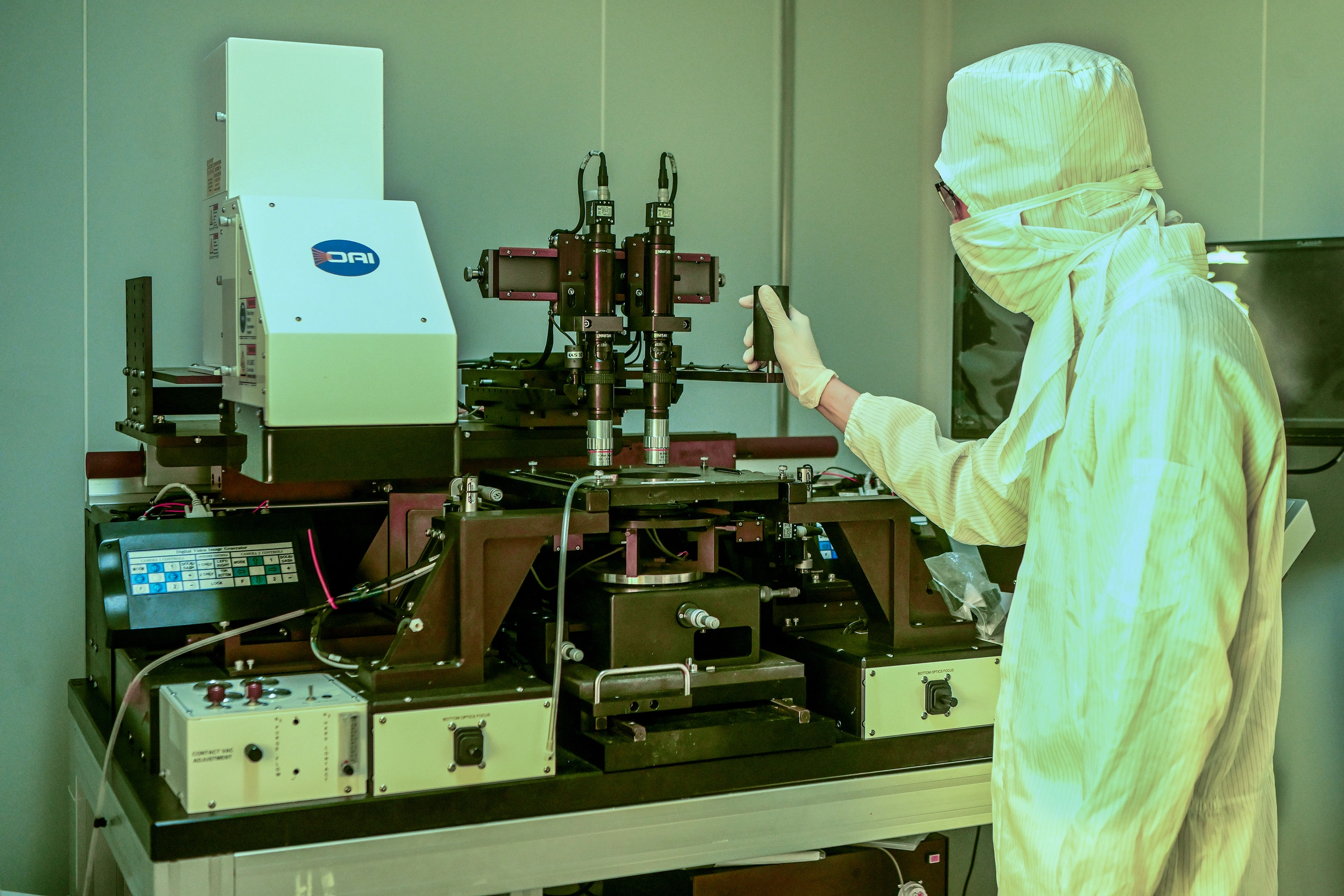 |
A clean room at the Nano and Energy Center, University of Natural Sciences, Vietnam National University, Hanoi, a facility for semiconductor training and research. Photo: *Giang Huy*. |
In healthcare, the city prioritizes artificial intelligence applications in: diagnosis, treatment, and health management, smart medical devices, biosensors, biotechnology for healthcare, preventive medicine, and telemedicine.
Technology is also integrated into sectors linked to the capital's cultural and tourism strengths. The digital cultural industries and smart tourism group focuses on: creative design, digital media, digitization and heritage exploitation, digital museums, smart tourism maps, virtual reality, and augmented reality. The size of the tourism market provides a basis for this direction. In 2025, Hanoi welcomed approximately 33,7 million visitors, including 7,82 million international tourists. Total tourism revenue is estimated to exceed 134,000 billion VND.
In agriculture, the city prioritizes: smart agriculture, precision agriculture, and high-tech applications in agricultural production, harvesting, preservation, and processing. Biotechnology in breeding and biological products; traceability, quality control, and food safety are also included in the list.
According to statistics from the General Statistics Office, in the first eight months, Hanoi saw approximately 24,500 new businesses established, with 472,300 billion VND in registered capital; approximately 9,100 businesses resumed operations.
Thai Anh