Ho Chi Minh City plans to implement a real-world testing environment, or "sandbox," for unmanned aerial vehicle (UAV) technology in Can Gio, Cu Chi, and the Northern Ho Chi Minh City Science and Technology Urban Area.
The sandbox aims to provide a controlled environment for businesses, research institutes, and organizations to develop and test UAV technology under conditions permitted by authorized agencies. However, participation in these trials does not replace or exempt entities from specialized legal procedures and requirements, particularly those concerning airspace management and flight safety.
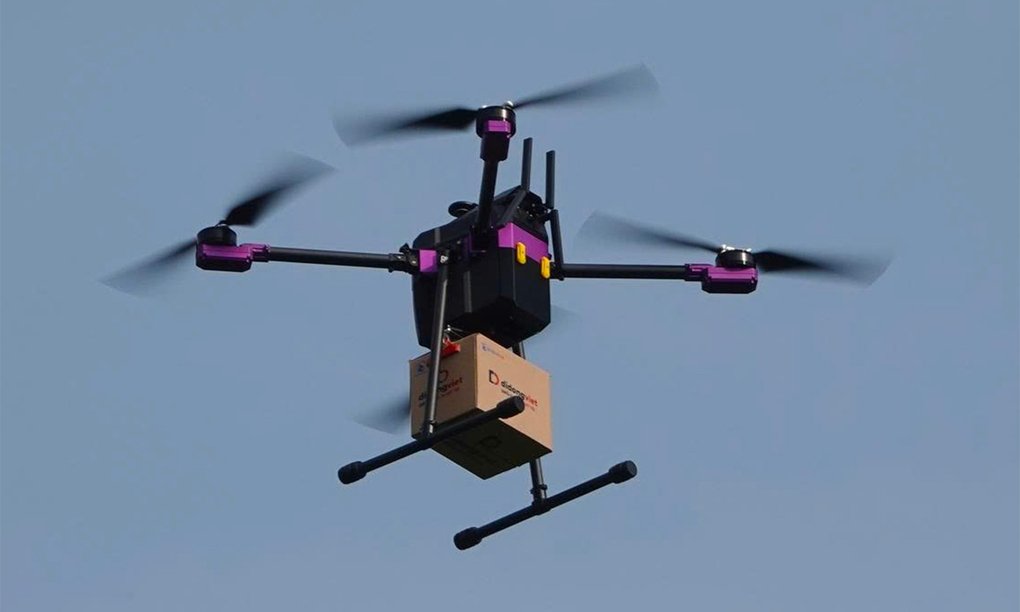 |
UAV delivery trial at Ho Chi Minh City Hi-Tech Park on 5/1. Photo: Huu Danh - An Phuong
The Ho Chi Minh City High Command is tasked with coordinating with the Air Defense - Air Force Service, Military Region 7 Command, Ho Chi Minh City Police, and the Department of Science and Technology, along with other relevant units, to identify suitable locations. The chosen areas must meet strict requirements for airspace management, national defense, security, and flight safety.
A key aspect of this initiative involves private sector participation in building the testing infrastructure. The Department of Science and Technology will invite and select technology companies, research institutes, and universities to invest in infrastructure, equipment, management platforms, and operational systems for the sandbox through a socialized model.
Once the locations and implementation mechanisms are finalized, the Department will develop a detailed plan for the testing environment to submit to the Ho Chi Minh City People's Committee for approval.
The establishment of this sandbox follows several UAV testing activities already conducted by the city this year. In January, the Department of Science and Technology, in collaboration with the Management Board of Ho Chi Minh City Hi-Tech Park and several businesses, conducted UAV delivery trials at the Ho Chi Minh City Hi-Tech Park. This activity was carried out under a flight permit from the Department of Operations, General Staff, and was part of the city's controlled testing framework.
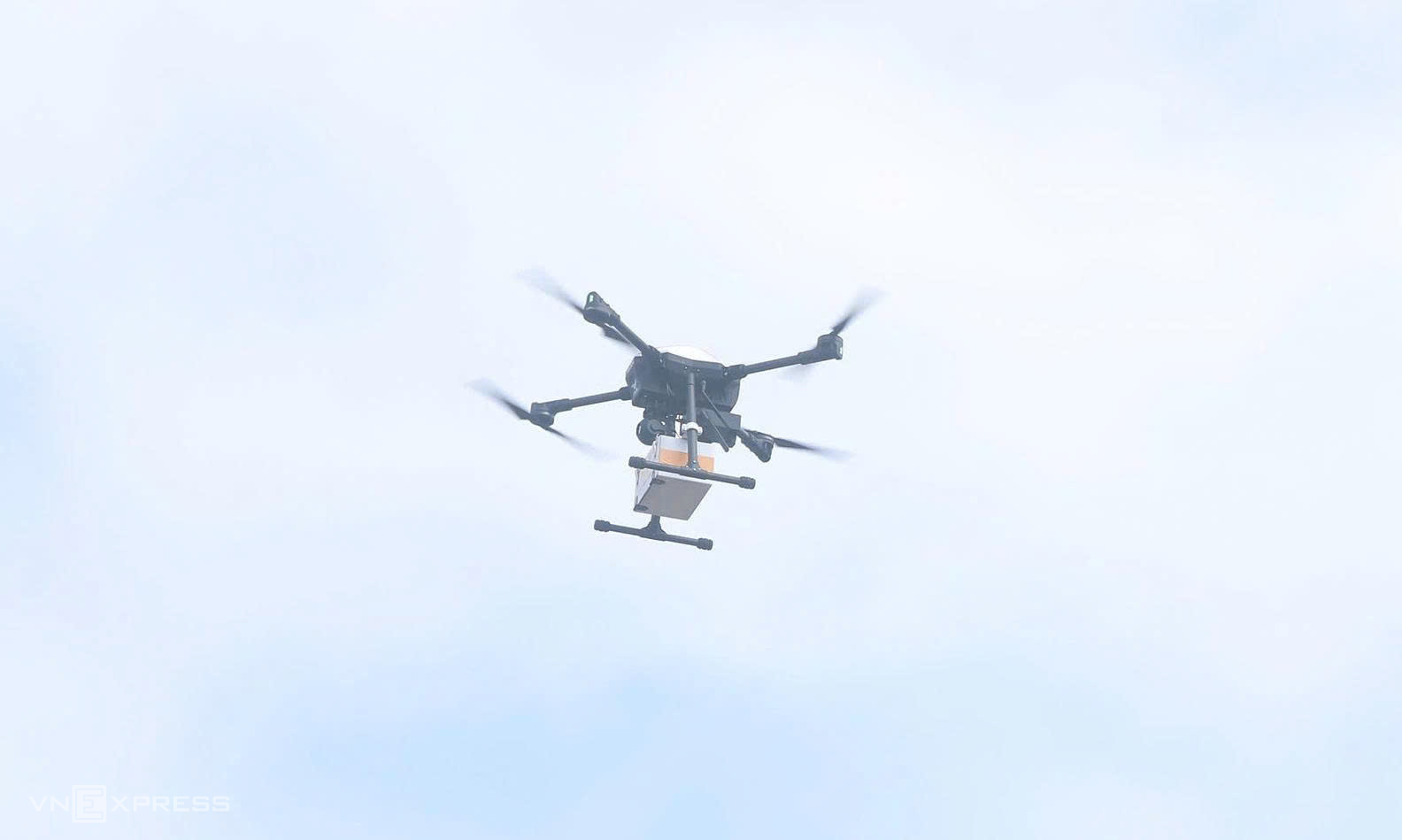 |
A UAV receives goods departing from Can Gio Ferry Terminal for transport to Vung Tau Ward on 12/2. Photo: Le Tuyet
In February, Ho Chi Minh City further expanded its UAV trials by launching a cargo transport route from Can Gio to the Vung Tau area. The flight path, spanning over 12 km and taking approximately 15 minutes, was integrated into a delivery service's logistics system to test the applicability of UAVs in postal operations.
According to the Ho Chi Minh City People's Committee, the results from the sandbox will extend beyond mere technology evaluation. After the testing phase, suitable products and solutions may be adopted to support State management, replicate successful models, or undergo further refinement through scientific and technological initiatives.
Practical outcomes that meet real-world demands could also form the basis for the city to commission, procure, or support commercialization, as stipulated by regulations. This marks a crucial connection between technology research and testing, and its practical application.
The UAV sandbox is part of Ho Chi Minh City's broader strategy for developing its low-altitude economy. Under Plan 200/KH-UBND, Phase 2026-2027 will focus on improving institutional frameworks, establishing the sandbox, planning low-altitude airspace, and developing experimental models. Phase 2028-2030 aims to expand commercialization, invest in infrastructure, and develop applications in logistics, healthcare, rescue operations, transportation, agriculture, and urban management.
The envisioned infrastructure will likely include not only flight test areas but also expand to landing pads, charging stations, flight control centers, and low-altitude air traffic management systems. The city intends to connect this infrastructure with industrial parks, airports, seaports, and logistics hubs.
Therefore, opening the sandbox is a significant step in establishing a comprehensive UAV ecosystem in Ho Chi Minh City, encompassing research, testing, and application. For businesses, this environment provides an opportunity to validate their technology in a real-world setting before considering larger-scale deployment.