On 9/1, the us supreme court is expected to rule on the legality of import tariff policies implemented by President Donald Trump. Analysts suggest this decision could significantly impact us trade policy and fiscal stability.
The Supreme Court must address two key issues: first, whether the us government has the authority to invoke the International Emergency Economic Powers Act (IEEPA) to impose tariffs; and second, if the application is deemed improper, whether the US must reimburse importers for the collected tariffs.
Previously, both the Court of International Trade (CIT) in Manhattan and the Federal Circuit Court of Appeals for Washington ruled that the import tariffs Trump imposed under IEEPA were illegal.
It remains uncertain whether the court will announce its import tariff ruling today. The court merely designated 9/1 as a "decision day" for cases under review. However, the market anticipates a ruling on import tariffs, as judges heard arguments from all parties in november 2025, and the Trump administration requested an expedited process.
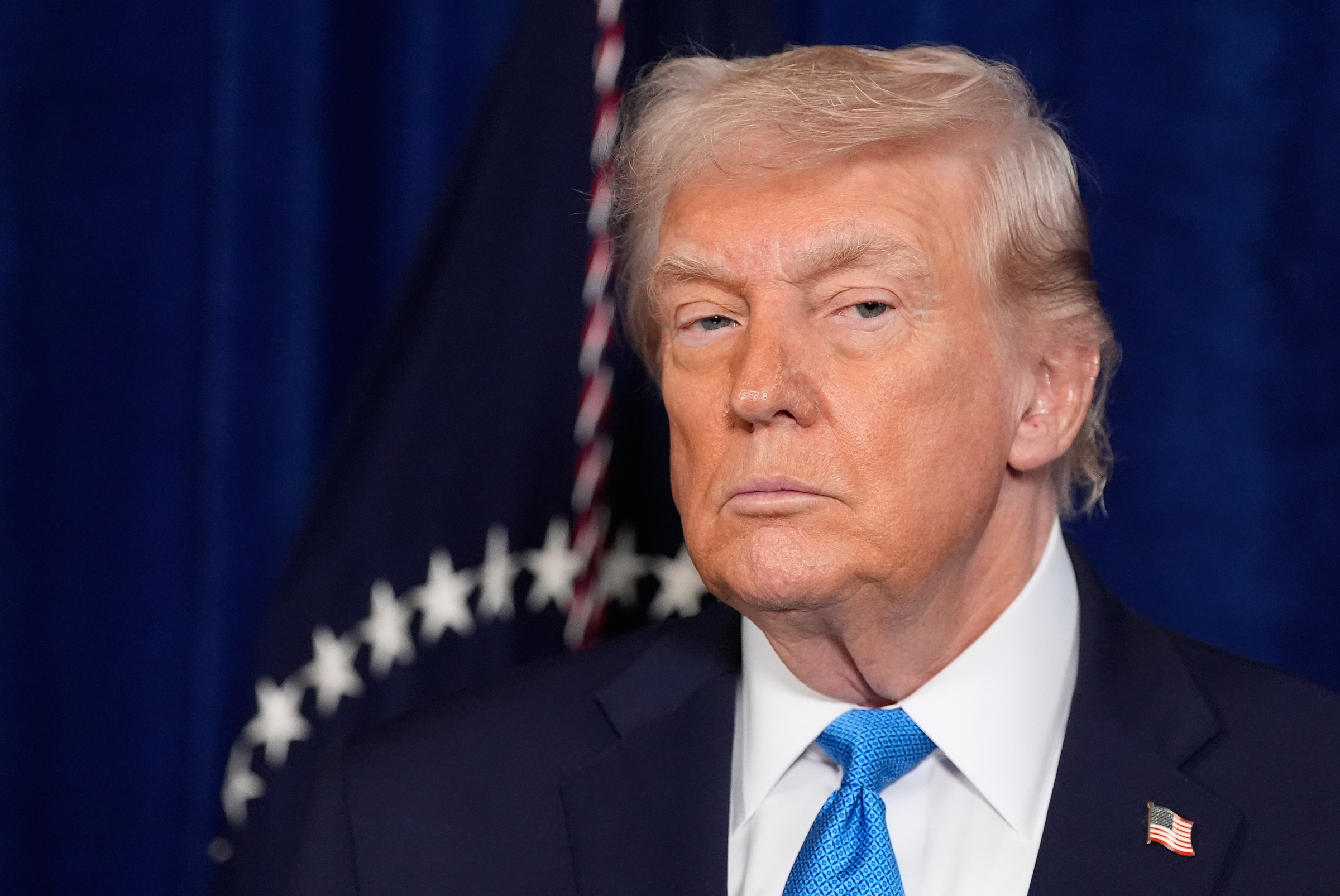 |
US President Donald Trump during a press conference in Mar-a-Lago, Florida on 3/1. *Photo: AP*
The final decision could be an intermediate option. Analysts suggest the court will grant limited authority under IEEPA, requiring the government to reimburse only a portion of the tariffs. Other scenarios are also possible. This sensitive issue is under close scrutiny by Wall Street.
Even if the White House loses the case, the Trump administration has other tools to implement import tariffs without relying on IEEPA. Bessent explained, "We can still collect tariffs at approximately current levels. However, the unfortunate aspect for the american people is that the President would lose flexibility in using import tariffs to protect national security and as a negotiation leverage."
In april, Trump invoked IEEPA to impose import tariffs on most trading partners, aiming to reduce deficits. Previously, he also used IEEPA to apply tariffs on China, Canada, and Mexico to prevent drug trafficking into the US.
Jose Torres, senior chief economist at Interactive Brokers, believes a ruling invalidating the import tariffs will have many consequences. Torres stated, "If the court blocks the tariffs, the administration will find other ways to circumvent it. President Trump is ambitious with this agenda, despite the controversies that arise."
He suggested that blocking tariffs would hinder Trump's goal of bringing manufacturing back to the US, negatively impact fiscal conditions, and raise interest rates. "However, it would benefit corporate profits, with lower input prices and smoother trade," he noted.
The Trump administration has outlined several options to compensate if the court's ruling is unfavorable. Market forecasting platform Kalshi currently assesses the likelihood of the court supporting import tariffs at 28%. Torres noted that his firm's clients have similar predictions.
Bessent stated the administration has at least three other options through the Trade Act of 1962 to maintain most tariffs. However, he also expressed concern that tariff reimbursements could pressure the administration and its efforts to reduce the budget deficit. According to data from the us Department of the Treasury, import tariffs generated approximately USD 195 billion in fiscal year 2025 and an additional USD 62 billion in fiscal year 2026.
Morgan Stanley analysts believe the Supreme Court "has significant room to issue an intermediate ruling." In a report, analysts Ariana Salvatore and Bradley Tian of Morgan Stanley wrote, "The court possesses great flexibility in delivering its ruling. A range of scenarios could unfold, such as narrowing the scope of current tariffs without mandating their complete repeal, or limiting future tariff imposition."
They added, "We believe the administration may also adopt a lighter approach to tax policy in general, given recent concerns about affordability."
So far, the impact of import tariffs has defied many predictions. Inflation has only slightly increased, while the trade deficit has sharply decreased. This contradicts some opinions that tariffs could isolate the US in the global trade market. The us trade deficit in october reached its lowest point since 2009.
*Ha Thu (according to Reuters, CNBC)*