EU leaders made this assessment last week during a meeting of EU finance ministers (Eurogroup) in Lefkosia, Cyprus.
In early 2026, Brent crude traded around 60 US dollars per barrel, staying below 75 US dollars per barrel before the Iran conflict. Currently, Brent and WTI crude are trading around 98 US dollars and 91 US dollars per barrel, respectively.
Meanwhile, European natural gas futures on the Dutch TTF exchange are currently 46,68 euros per megawatt hour, up nearly 57% from 3 months ago.
EU Commissioner for Economy Valdis Dombrovskis forecasts the bloc's inflation this year at 3,1%, significantly higher than the previous estimate of 1,9%. The main reason is the increase in oil and gas prices since the Iran conflict began.
By 2027, inflation is projected to reach 2,4% as energy prices remain elevated. "We expect energy inflation to gradually impact other sectors of the economy", Dombrovskis added.
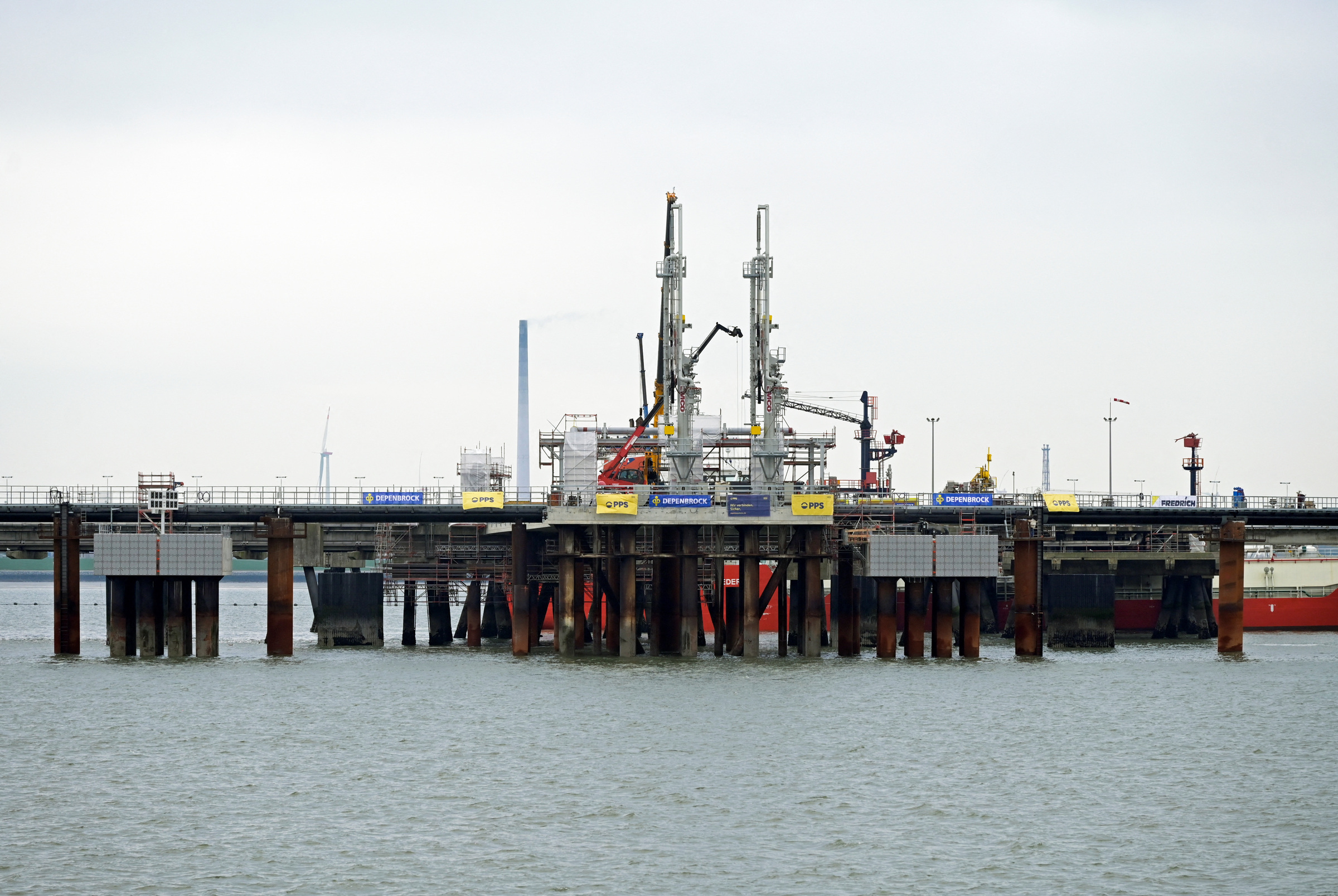 |
Floating LNG terminal in Wilhelmshaven, Germany, 15/11/2022. Photo: Reuters
European Central Bank (ECB) President Christine Lagarde emphasized ensuring sufficient oil reserves for the EU to meet potential needs. According to her, even if the conflict ends immediately, "lagging effects" will keep commodity prices high.
"It is likely that price levels will still be higher when the crisis ends", she stated. According to Lagarde, the ECB will take "all necessary measures" to maintain price stability by closely monitoring the impact of the initial economic shock caused by rising energy prices.
"We will continue to pursue a data-dependent approach and review it meeting by meeting to determine the most appropriate monetary policy stance to achieve our medium-term inflation target of 2%", she noted.
Kyriakos Pierrakakis, President of the Eurogroup – the group representing finance ministers from 21 euro area member states – believes that an end to the Middle East crisis must mean the return of free navigation without any fees when passing through the Strait of Hormuz.
According to Pierrakakis, eurozone economic growth will reach 0,9% in 2026 and 1,2% in 2027, lower than previous forecasts but far from a recession scenario. Previously, the European Statistical Office (Eurostat) reported that Q1 GDP for both the eurozone and the EU increased by 0,1% compared to Q4/2025.
Phien An (according to AP)