The Private Economic Development Research Board (Ban IV) highlighted this finding in a report submitted to the Prime Minister, detailing the impact of the Middle East military conflict on business operations.
According to Ban IV, a survey of 228 businesses conducted from 16/3 to 22/3 revealed that the conflict's impact has evolved from a potential risk into tangible pressure on business operations.
Nearly 88% of surveyed businesses reported increased input costs. The majority saw a 5-10% rise, while over 18% experienced cost increases exceeding 20%, driven by higher energy prices, raw materials, logistics, and financial expenses.
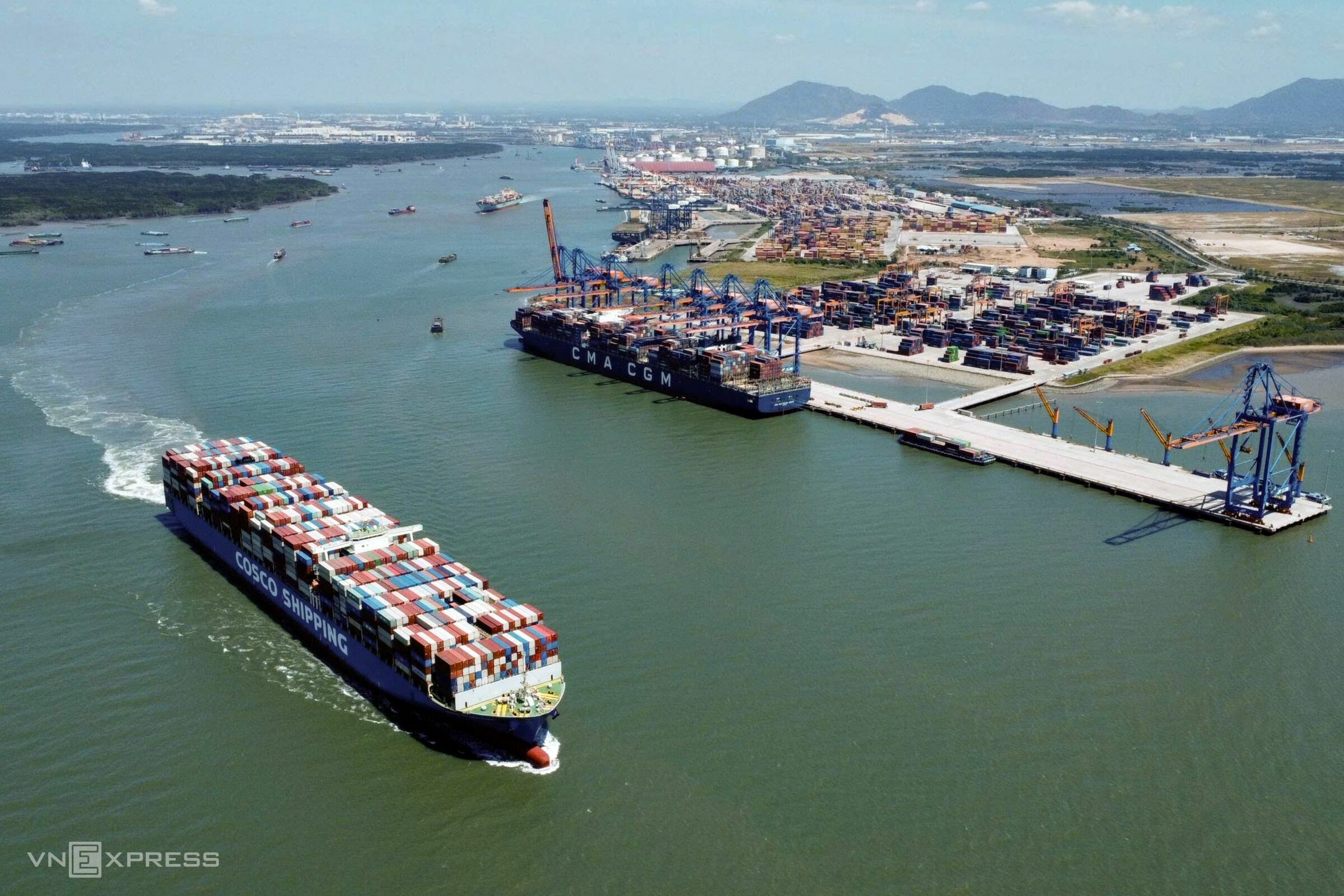 |
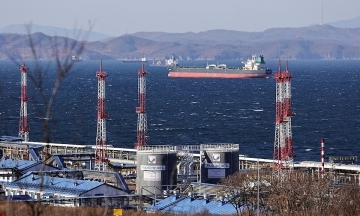
Cai Mep - Thi Vai port complex viewed from downstream, 8/2025. Photo: Truong Ha
Businesses in logistics and transportation, trade and import-export, industrial production, and construction are facing the most significant pressure. Ban IV warns that without adequate mitigation strategies, these cost pressures could further impact production costs, profits, order retention, and overall business resilience.
Furthermore, disruptions in international transportation, logistics, and a decline in outbound orders are increasing business vulnerability. 52% of businesses reported higher freight rates, longer shipping times, and additional delivery expenses. Moreover, 53,5% of businesses experienced reduced orders in export markets, mainly across Asia and the Middle East.
Overall, nearly 63% of businesses consider the conflict to have a significant or very significant impact on their operations. This impact is particularly pronounced in the transportation, import-export, industrial production, agriculture, and international supply chain sectors.
Meanwhile, financial pressures are becoming more apparent, marked by increasing interest costs, challenges in accessing capital, exchange rate volatility, and international payment difficulties. Against this backdrop, most businesses self-assess their resilience as only moderate, with 23,7% admitting their capacity to withstand shocks is low.
According to experts, geopolitical conflicts are no longer "short-term" events; rather, they are becoming increasingly complex within the framework of a "new world order," leading to numerous unpredictable consequences.
Given these realities, Ban IV has proposed that the Prime Minister promptly implement credit support measures for businesses. These include: interest rate subsidies, debt restructuring, payment deferrals, expanded access to short-term credit, and accelerated tax refunds. Such solutions are particularly crucial for heavily impacted sectors like manufacturing, export, agriculture, and small and medium-sized enterprises.
Additionally, both public and private sectors must enhance information exchange and provide early warnings regarding energy markets, international transportation, logistics costs, and industry-specific supply chains. This collaboration aims to improve adaptability to the volatile global landscape. Public-private dialogues should prioritize diversifying supply sources, identifying alternative transport routes, expanding into new markets, and reducing reliance on high-risk regions, supply chains, or suppliers.
In response, the government has implemented several proactive policies to stabilize the fuel market. The state operator utilized the Fuel Price Stabilization Fund nine times in less than a month, disbursing nearly 5,300 billion VND. On the night of 27/3, the Prime Minister further decided to reduce environmental protection tax and special consumption tax on gasoline, diesel, and jet fuel to zero, if deemed necessary for national interest.
Business representatives urged authorities to continue closely monitoring oil and fuel price developments and potential supply chain disruptions. This proactive approach would enable the implementation of suitable operational solutions to mitigate unusual fluctuations in domestic energy prices. Furthermore, reducing bureaucratic burdens and ensuring stability and consistency in domestic policy implementation are crucial. Addressing policy implementation hurdles will empower businesses to focus resources on production, operations, and risk management.
Earlier, the Asian Development Bank (ADB) noted that developing countries in Southeast Asia, including Vietnam, are among those most severely impacted by the Middle East conflict. The dual shock of rising oil prices and supply chain disruptions has significantly increased production and transportation costs. This could lead to a 0,6-2,3% reduction in GDP for these nations and an additional inflation increase of up to 3% under various conflict scenarios.
Thuy Truong