Russia's Deputy Prime Minister Alexander Novak on 27/3 directed the Ministry of Energy to draft a resolution banning gasoline exports starting 1/4. This decision followed a meeting on the domestic fuel market. The TASS news agency previously reported the ban would remain in effect until 31/7.
Novak attributed price fluctuations in the global energy market to the Middle East conflict. The ban aims to stabilize domestic prices and prioritize securing the country's fuel supply.
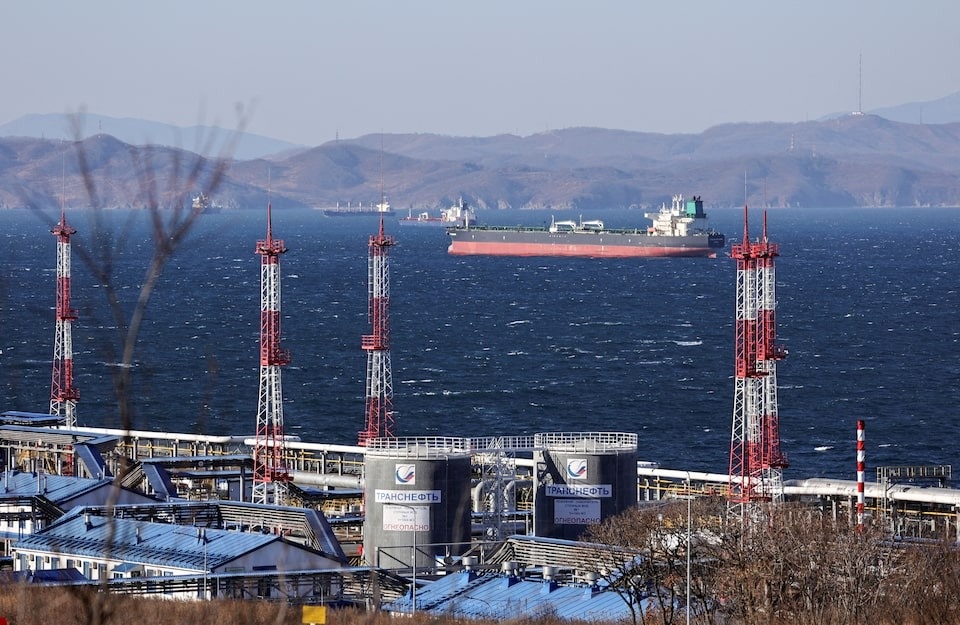 |
An oil tanker anchored at the port city of Nakhodka (Russia) in 12/2022. Photo: Reuters |
The Middle East conflict has nearly halted energy flows through the Strait of Hormuz over the past month. This crucial waterway transports 20% of global oil and LNG. Since the conflict began, Brent prices have increased by 53%, and WTI prices have risen by 45%.
This situation has boosted international demand for Russian energy. Western countries sanctioned Russian crude oil after the Ukraine conflict in 2022. However, to help cool global oil prices, the US permitted countries to purchase Russian oil in transit at sea until 11/4. India bought over 40 million barrels of Russian oil this month, and Thai officials are also considering this option.
The Russian government reports that its crude oil processing output matches last year's levels, ensuring a stable supply of oil products. Last year, some Russian regions faced gasoline shortages due to seasonal demand and intensified Ukrainian attacks on Russian refineries.
Russia has frequently restricted gasoline and diesel exports in recent years to curb rising fuel prices and manage domestic shortages. Reuters, citing sources, reported that last year the country exported nearly 5 million tons of gasoline, equivalent to 117,000 barrels per day.
Ha Thu (according to Reuters, TASS)