Mr. Nguyen Dang Hung, Deputy General Director of Napas, shared this information at the "Smart Payments in the Digital Age" workshop, part of Digital Finance Day 2026, held on 6-7/6 in TP HCM.
A Napas representative noted the rising demand for cross-border digital payments, driven by the recovery of international tourism and trade. In 2025, Vietnam welcomed approximately 25 million international visitors, with revenue surpassing 1 quadrillion VND (nearly 39 billion USD) for the first time. On average, each visitor spent over 1,500 USD in Vietnam. Simultaneously, the number of Vietnamese traveling abroad continued to grow. This trend highlights the need for more convenient payment solutions for both tourists and businesses.
However, Mr. Hung pointed out that traditional payment methods still have limitations. Using cash abroad requires currency exchange and poses usage risks for travelers. Card payments, conversely, involve acceptance costs and necessitate investment in equipment infrastructure.
 |
Napas Deputy General Director Nguyen Dang Hung discusses the role of digital payments in boosting tourism and trade. *Photo: Napas* |
In this context, QR codes are considered a suitable solution due to their low deployment costs, rapid scalability, user convenience, and accessibility for various customer groups, especially small businesses.
According to a Napas representative, the recent development of VietQR has also laid the foundation for Napas to expand its QR payment services, including VietQRPay for domestic payments and VietQRGlobal for cross-border transactions.
Napas has already implemented two-way QR payment connections with Thailand, Laos, and Cambodia, allowing Vietnamese users to pay via QR codes in these countries and vice versa. The company has also established inbound payment channels for Chinese and South Korean visitors to Vietnam and expects to complete outbound payment channels for Vietnamese users in these two markets by the end of this year. Additionally, Napas plans to connect with Singapore in Q3 and finalize connections with India and Taiwan in 2026.
"This expansion of connections aims to build a 'regional QR payment map', enabling users to conduct cross-border transactions conveniently and seamlessly," Mr. Hung stated.
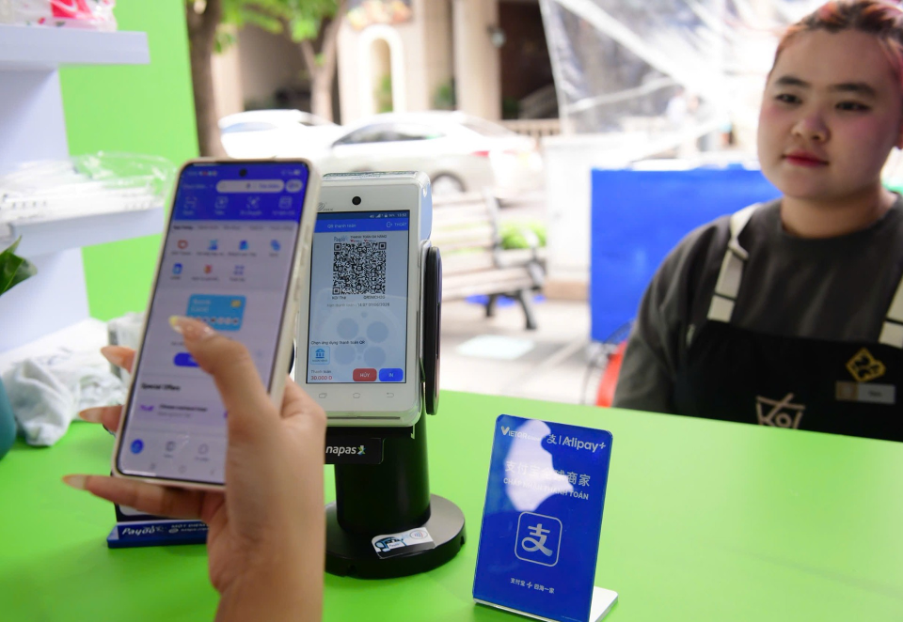 |
A Chinese tourist uses the Alipay payment application to scan a VietQRGlobal code when making a purchase in Vietnam. *Photo: Napas* |
According to Napas, beyond convenience, QR payments also generate transparent transaction data. This data assists banks, payment intermediaries, and businesses in better understanding customer needs to develop suitable products and services.
This method also aligns with the trend of account-to-account (A2A) payments, reducing reliance on traditional payment acceptance devices and optimizing operational costs. Specifically, the VietQRPay service enables businesses to accept diverse payment sources, including bank accounts, debit cards, credit cards, and e-wallets, while complying with anti-money laundering and counter-terrorist financing regulations.
As the national switching unit, Napas is focusing on building a central payment infrastructure. This infrastructure allows banks and intermediaries to access all international connections through a single technical point, simplifying deployment, reducing costs, and enhancing operational efficiency.
In addition to expanding international connections, Napas continues to standardize operational processes to ensure the payment system operates stably, securely, and consistently. This centralized infrastructure also supports businesses in expanding their payment acceptance networks, increasing fund flow transparency, and improving management efficiency.
Moving forward, Napas will collaborate with banks and payment intermediaries to expand the cross-border QR acceptance network and implement programs to promote service usage. According to the company, this QR connection expansion aims to enhance the payment experience for residents and tourists, support the development of tourism, trade, and the digital economy, and progressively integrate Vietnam deeper into the regional and global digital payment ecosystem.
Minh Ngoc