Ho Chi Minh City recorded a significant drop in remittances during the first half of 2026, with cumulative inflows reaching just over 4 billion USD, a decrease of nearly 23% compared to the same period in 2025. This downturn follows a 28% year-on-year reduction in the second quarter alone, during which remittances through credit institutions and economic organizations amounted to approximately 2 billion USD, according to data from the State Bank of Vietnam, Branch 2.
Despite the overall decline, the second quarter saw a modest recovery, with remittances to the city increasing slightly by over 1% compared to the first quarter. This marks the first quarter this year to record an increase over the preceding quarter, indicating a nascent recovery trend.
Regarding the structure of these remittances, Tran Thi Ngoc Lien, Deputy Director of the State Bank of Vietnam, Branch 2, stated that Asia continues to be the largest contributing source. Over 1,9 billion USD originated from Asia, accounting for nearly 48% of the total. The Americas followed, contributing 1,375 billion USD, representing over 34%. Oceania sent 418 million USD, making up 10,4% and proving to be the most stable region in the first half of the year. The remaining remittances came from other regions, including Africa.
 |
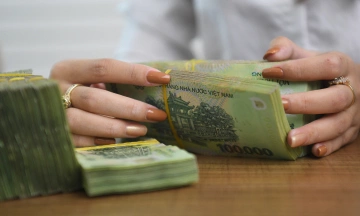
Transactions at VP Bank on the morning of 14/11. |
Lien attributed this trend to multiple factors. Slow global economic growth, a strong US dollar, and strict immigration policies in some countries impacted the employment, income, and money transfer capabilities of overseas Vietnamese. In the Americas, particularly the US – which accounts for a significant portion of remittances to Ho Chi Minh City – inflationary pressure, high cost of living, and changes in the labor market and tax policies for some money transfer transactions also affected the volume of incoming remittances.
Domestically, the State Bank of Vietnam, Branch 2, also noted that some investment channels have not generated sufficient appeal to attract remittance flows. The 0% interest rate on foreign currency deposits led some overseas Vietnamese to keep funds abroad or shift to other investment assets. Additionally, funds have diversified through various new payment channels, reducing remittance volume through the banking system.
Looking ahead, the agency forecasts that if the global economy experiences no major fluctuations and the recovery trend in the second half of the year is maintained, total remittances for 2026 could reach approximately 8,6-8,9 billion USD. While not yet returning to previous years' levels, Lien observed that the quarterly recovery trend is expected to become clearer in the second half of the year, especially as the international interest rate environment gradually eases, exchange rates stabilize, and the banking system's remittance attraction programs continue to be effective.
Quynh Trang