By 8:00 p.m. on 17/4, Brent crude oil prices dropped 10% to 89 USD per barrel. WTI crude fell 11% to 83 USD.
Oil prices declined after Iran announced that the Strait of Hormuz was fully open for commercial shipping during the ceasefire between Israel and Lebanon.
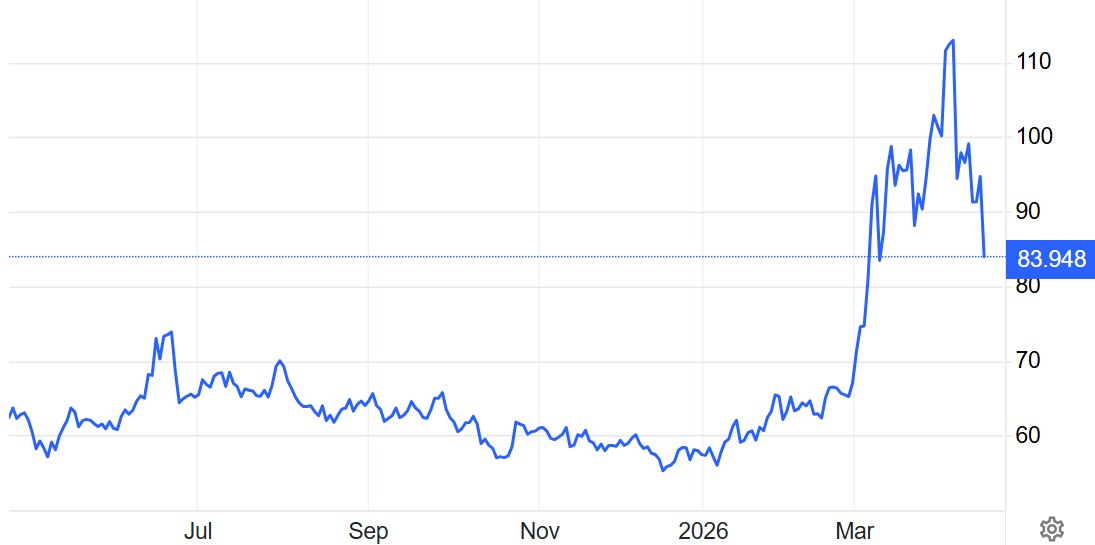 |
WTI oil prices fell over 11% during the 17/4 trading session. Chart: Trading Economics |
"The movement of all commercial vessels through the Strait of Hormuz is fully open for the remainder of the ceasefire", Iran's Foreign Minister Seyed Abbas Araghchi wrote on social media on 17/4. He added that vessels must travel along a "coordinated route" as announced by Iran's maritime authority.
Israel and Lebanon had previously agreed to a 10-day ceasefire starting at 5:00 a.m. on 17/4. Israel's military operation in Lebanon, targeting Hezbollah forces, has been a sticking point in peace negotiations between the United States and Iran.
The Strait of Hormuz facilitates approximately 20% of global crude oil and liquefied natural gas shipments. However, this waterway was almost entirely blocked after hostilities erupted in late February. This blockage caused global energy prices to surge recently due to supply shortages.
World gold prices also increased significantly following the news of the Strait of Hormuz reopening. Each ounce rose more than 70 USD to 4,860 USD.
 |
World gold prices surged during the evening trading session on 17/4. Chart: Kitco |
A de-escalation of the Middle East conflict typically benefits precious metals. Recently, gold faced pressure as the conflict drove energy prices higher, accelerating inflation in many regions. High inflation made central banks hesitant to cut interest rates. Consequently, gold, which does not offer fixed interest, was at a disadvantage. Since the conflict began, gold had lost about 10% of its value.
Ha Thu (according to CNBC, Reuters)