President Trump unveiled a decree adjusting tariffs on these goods on 2/4. This move aims to offset duties previously imposed under the International Emergency Economic Powers Act (IEEPA), which the Supreme Court rejected in February.
Following a national security investigation into imported pharmaceuticals, President Trump stated that foreign patent holders must enter agreements with the US government. These agreements require them to lower prescription drug prices and commit to relocating manufacturing operations to the United States.
To avoid tariffs entirely, manufacturers must fulfill both conditions. Companies that only partially move production to the US will face a 20% import duty. Those failing to meet either requirement will incur a 100% tariff.
Large pharmaceutical firms have 120 days to comply before the 100% tariff takes effect, while smaller manufacturers are granted 180 days.
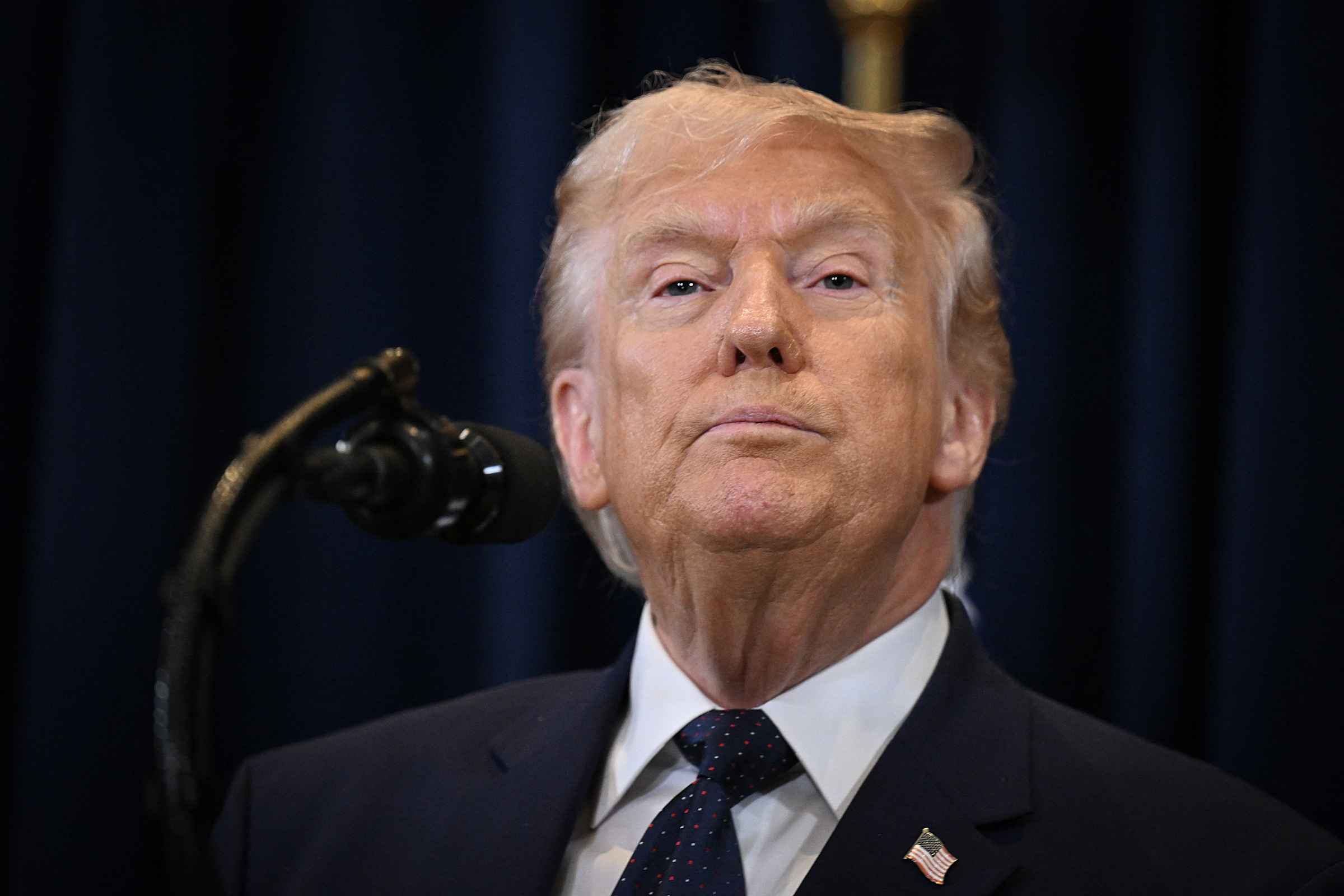 |
US President Donald Trump at a press conference in Doral, Florida on 9/3. Photo: AFP
The pharmaceutical tariff policy includes several exceptions. Import duties on branded drugs will be capped at 15% under existing trade agreements with the European Union, Japan, South Korea, and Switzerland. Additionally, the US and UK have finalized a separate pharmaceutical tariff agreement. This ensures a 0% rate for UK-manufactured pharmaceuticals for at least three years, provided the UK expands its production within the United States.
Neil Bradley, policy director for the US Chamber of Commerce, warned that the new pharmaceutical tariff policy could further escalate drug prices. He stated, "A new, complex tariff mechanism for pharmaceuticals will increase healthcare costs for American families."
In a separate decree, President Trump halved tariffs on many products containing steel, aluminum, and copper to 25%. Additionally, products with low metal content (under 15% by weight) will be fully exempt from duties, effective 6/4.
Import tariffs on basic metals—steel, aluminum, and copper—will remain at 50%. However, the Trump administration will now apply this rate based on the US sales price, rather than the declared import value, which was often considered artificially low.
These metal tariff adjustments aim to simplify the process for importers when declaring taxes on thousands of products, ranging from tractor components to stainless steel sinks and railway equipment. For instance, under the new rule, products with metal content below 15% by weight, such as dental floss dispensers containing small steel blades, will no longer be subject to tariffs.
The White House also announced tariff reductions on certain industrial equipment and heavily metal-dependent power grids. These duties will decrease from 50% to 15% until 2027, aiming to support the expansion of industrial production and data centers.
Philip Bell, President of the Steel Manufacturers Association, lauded the administration's "reasonable adjustment" of metal product categories and updated pricing methodology. This, he noted, ensures tariffs "are applied accurately to support the recovery of the US steel industry without undermining broader economic goals."
President Trump's adjustments to pharmaceutical and metal import tariffs come exactly one year after his "Liberation Day" announcement. That earlier declaration imposed reciprocal tariffs of 10-50% on imports from all countries, leading to months of retaliation from China, trade negotiations with various partners, and lawsuits from importers.
In February, the US Supreme Court declared the IEEPA-based tariffs illegal. This ruling mandated US Customs and Border Protection to devise a plan for refunding approximately USD 166 billion in duties collected over one year.
On 2/4, US Trade Representative Jamieson Greer lauded the IEEPA-cited tariffs as a "reset button" for the struggling global trade system. He contended that these tariffs had spurred companies to construct new factories in the US and compelled trade partners to make concessions for American exports.
"The best is yet to come, as President Trump's tariff program encourages domestic production, increases wages for workers, and strengthens essential supply chains," Greer stated.
Phien An (according to Reuters)