The Ministry of Agriculture and Environment is currently soliciting feedback on a draft regulation for identifying green and circular projects, as well as environmental, social, and governance (ESG) standards.
The drafting agency proposes that ESG assessment results will serve as a basis for determining projects eligible for interest rate support.
Instead of relying on external appraisal processes, businesses can proactively establish internal management and reporting systems. By comparing their practices against a defined set of criteria, they can determine their level of ESG compliance, which then serves as grounds for securing green loans.
This mechanism also extends opportunities to business households and individuals. If they meet the environmental, social, and governance criteria, they can use their assessment results to apply for interest rate support when borrowing from credit institutions and non-budget financial funds.
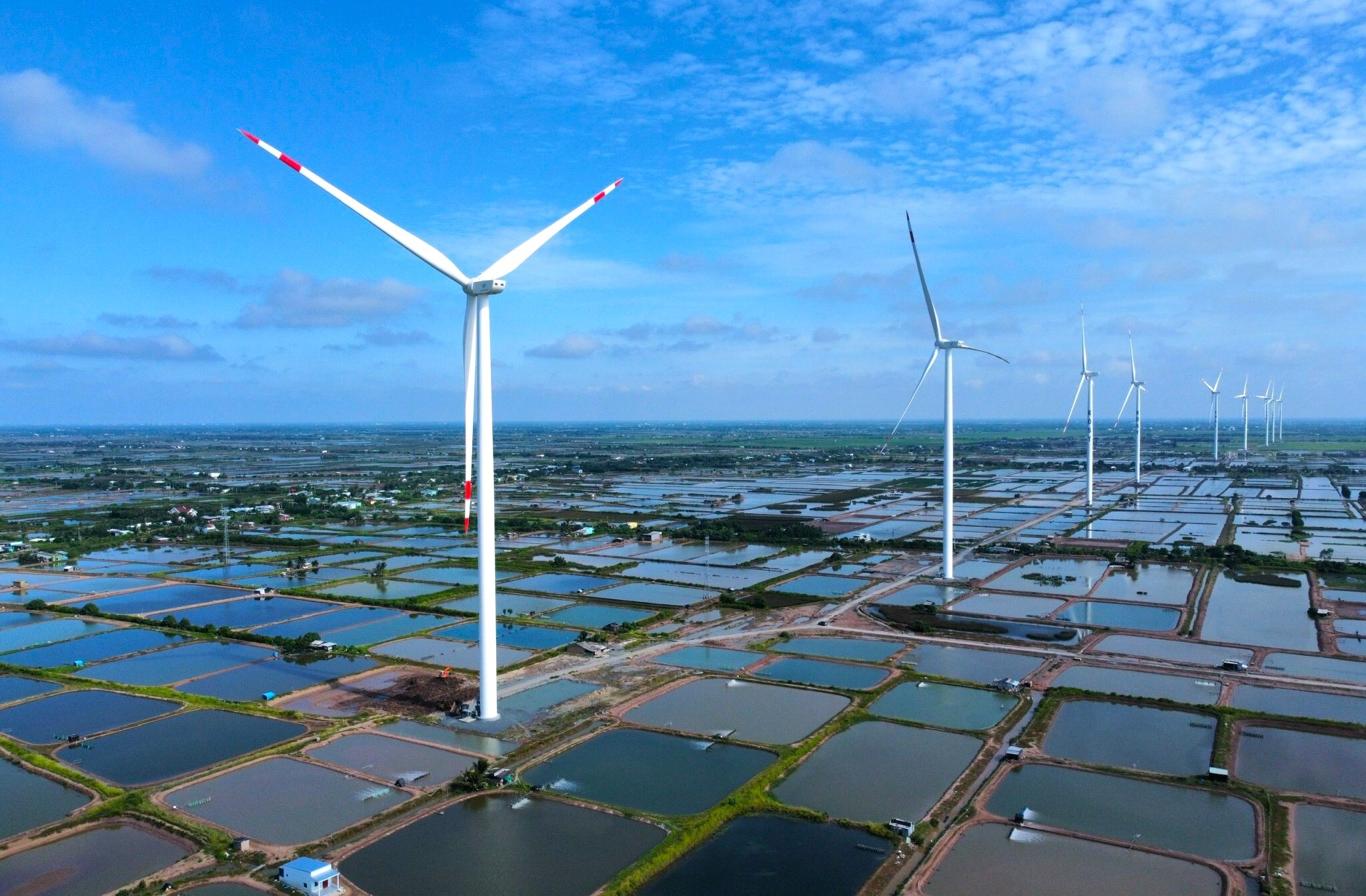 |
The Bac Lieu wind power project in Hiep Thanh ward, Ca Mau province. Photo: An Minh. |
According to the draft, sectors eligible for green capital include: renewable energy (such as wind and solar power), electric vehicles and their charging infrastructure, and sustainable agriculture adhering to standards like VietGAP and GlobalGAP.
As interest rate support is drawn from state budget resources, strict control mechanisms are also in place. The draft clearly outlines the investor's responsibility to maintain these criteria throughout the period of support. If a project no longer meets the green or circular criteria, or fails to fully apply the ESG framework, the business must proactively inform the bank and relevant authorities to halt support or revoke confirmation.
Additionally, within 30 days of receiving interest rate support, businesses are responsible for notifying the specialized agencies of the provincial-level People's Committee. This ensures that their information is updated in the database used for monitoring and evaluating policy effectiveness. To access green capital, they must also establish periodic, public reporting systems and meet a specified number of ESG criteria, depending on their scale.
Experts consider standardizing ESG criteria and linking them to credit incentives an inevitable trend as Vietnam promotes a sustainable growth model. However, for the policy to be effective, a balance between facilitating businesses and controlling implementation risks is crucial.
Gia Chinh