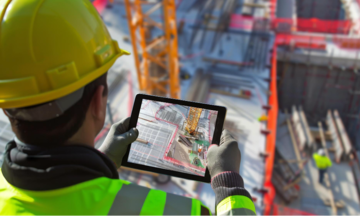
A representative from Construction Corporation No. 1 - JSC (CC1) stated that in recent years, digital transformation in the construction industry has evolved from a trend into an essential need. The development of modern technologies is gradually redefining how businesses and construction units operate and manage projects.
Since 2022, CC1 launched a digital transformation program with the goal of completing a comprehensive digital ecosystem. As part of this roadmap, the company quickly applied many advanced technology solutions to management and construction work, viewing this as a crucial lever to improve efficiency and quality across all project stages.
 |
Headquarters of Construction Corporation No. 1 in TP HCM. *Photo: CC1* |
Notably, in 12/2025, CC1 announced the operation of its Enterprise Resource Planning (ERP) system. According to the company's leadership, implementing ERP is not just about deploying a new management system; it represents a transformation in operational methods, moving towards a modern management model. This system connects and integrates core data and processes, ensuring seamless communication among all units and departments within the company's ecosystem.
Phan Huu Duy Quoc, Chairman of CC1's Board of Directors, stated that the launch of the ERP system is not an end point but the beginning of a new development phase for CC1. "With a spirit of collaboration and innovation, CC1 expects to effectively utilize this system to serve our goals of sustainable development and enhanced competitiveness, especially as the construction industry faces demands for strong innovation," he said.
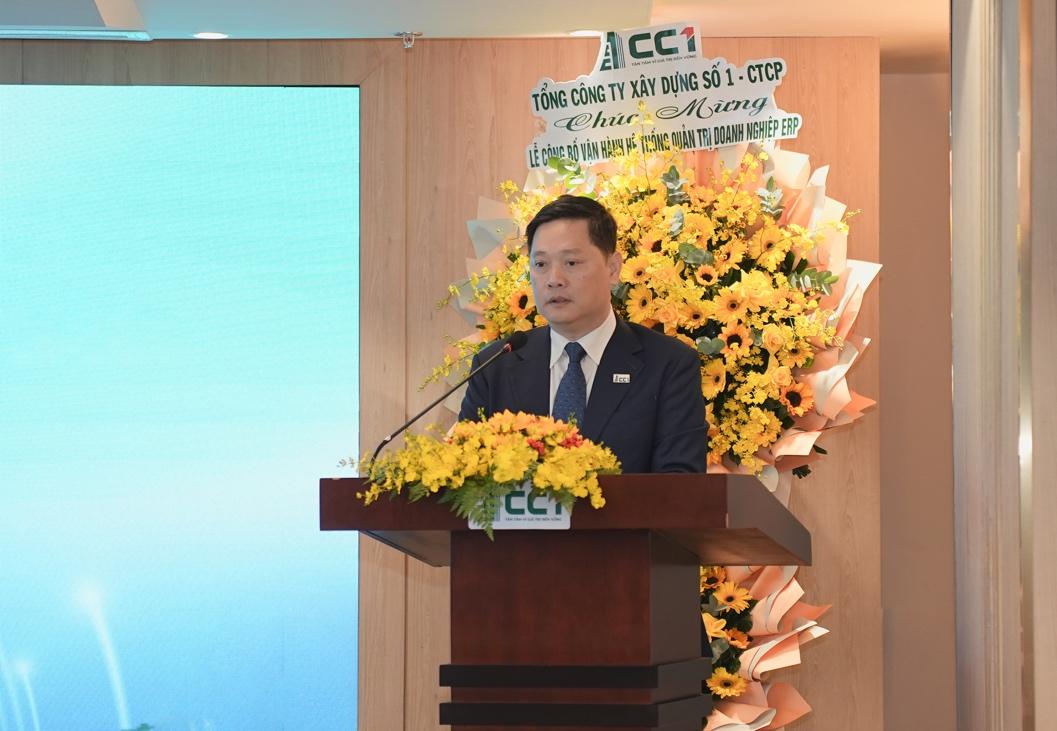 |
Phan Huu Duy Quoc, Chairman of CC1's Board of Directors, discusses ERP at an event. *Photo: CC1* |
Nguyen Tien Dat, Acting Head of Cost and Contract Control Department at CC1, explained that before ERP, operations like payment management, contract tracking, and cost control primarily relied on manual tools. These methods consumed significant time and resources, making it difficult to ensure data timeliness and accuracy. The ERP implementation addresses these limitations by standardizing processes, automating data aggregation, and shortening report generation times for operational management. Notably, key financial indicators can now be monitored and evaluated immediately upon report generation, rather than waiting for manual compilation.
Moreover, for payment operations, ERP enables CC1 to synchronously manage the entire process, from approval and work segmentation to data control, ensuring transparency and consistency. Payment data is clearly systematized by contract, contractor, and project, facilitating tracking, reconciliation, and control.
From a financial and accounting perspective, Tran Thi Ngoc Thuy, Chief Accountant at CC1, highlighted the ERP system's ability for synchronous integration, connecting and facilitating information flow between departments. Enhanced transparency and control ensure financial reports are updated promptly, supporting leadership in decision-making and risk management. This new system also reduces manual tasks, streamlines administrative procedures, and boosts the accounting team's productivity.
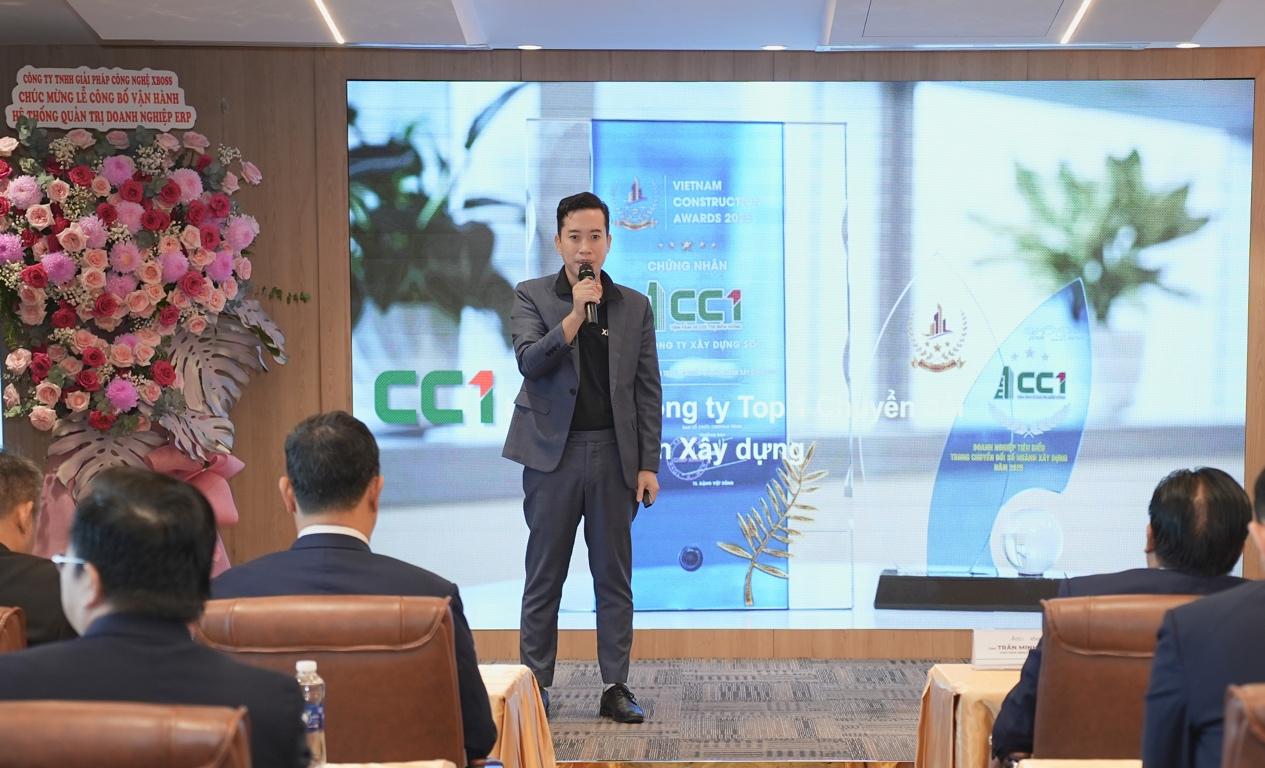 |
Tran Van Giang - General Director of XBOSS. *Photo: CC1* |
Echoing CC1's leadership, Tran Van Giang, General Director of XBOSS Technology Solutions Company Limited—the ERP system implementation partner—expressed his company's desire to help CC1 achieve its goal of becoming a top 1 digital transformation company in the construction industry. He noted that CC1 is not only a prominent industry enterprise, having received the "Outstanding Enterprise in Digital Transformation in the Construction Industry" award in 2025, but also demonstrates a strong commitment to systematic investment in modern management systems.
To date, the ERP system has deployed 8 modules, including: human capital management (HCM), supply chain management (SCM), financial and accounting management (FRM), construction project management (PMS), sales management (Sales), facility management (FMS), KPI performance evaluation, and e-bidding management. Following their launch, these modules will continue to be expanded across the entire CC1 ecosystem.
In addition to ERP, CC1 also implements Building Information Modeling (BIM) in key projects to optimize schedule management, control costs, and improve construction quality. Concurrently, the company uses geotechnical software like Plaxis (Bentley) for analyzing, evaluating, and proposing safe construction solutions, enabling faster and more effective decision-making. Through the synchronized application of these digital solutions, many company projects have shortened construction timelines, contributing to the early completion of several national key projects while meeting requirements for quality, safety, and aesthetics.
Hai My