At a workshop on extended producer responsibility (EPR) on 6/3, a representative from the Ministry of Natural Resources and Environment announced a proposal to change how businesses fulfill their recycling obligations.
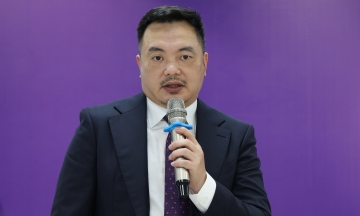
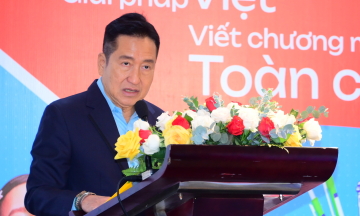
Do Van Thuan, a representative from the national extended producer responsibility (EPR) office, stated that under the Environmental Protection Law 2020, manufacturers and importers currently have two options to fulfill their post-consumer product and packaging recycling responsibilities: they can either organize recycling themselves or contribute financially to the Vietnam Environmental Protection Fund.
 |
Do Van Thuan speaking at the workshop on the morning of 6/3. *Photo: Gia Chinh*. |
However, under the proposed amendment, the regulatory body plans to eliminate the financial contribution option, instead requiring businesses to directly undertake recycling responsibilities. Manufacturers and importers could collect discarded products and packaging themselves, transfer them to recycling facilities, or hire a recycling unit to manage the entire process. They could also combine these approaches.
At the workshop, Ho Kien Trung, Deputy Director of the Environment Department (Ministry of Agriculture and Environment), outlined two proposed solutions for businesses that implement recycling but fail to meet the mandatory recycling rate. The first option allows businesses to purchase recycling credits corresponding to their unfulfilled volume. These credits record the amount of collected and recycled products and packaging that meet standards, categorized by product group. Businesses would only be permitted to purchase credits to offset their remaining obligations after having carried out the collection and recycling activities declared for the year.
According to the proposal, businesses that achieve less than 70% of the mandatory recycling volume will face administrative penalties and be required to purchase credits to compensate for the shortfall. If they achieve over 70% but still do not fully meet their obligations, businesses must still purchase credits but will not incur penalties.
The validity period for collected and recycled volumes is regulated by product group: for packaging, batteries, and tires, collected volumes are valid until 31/12 of the following year. For electrical and electronic equipment and vehicles, the collected and recycled volumes are valid until 31/12 of the second year from the year of generation. Unused credits will automatically expire after these deadlines.
Recycling credits can only be issued by licensed recycling facilities with appropriate environmental permits. Producer responsibility organizations (PROs) will be responsible for issuing these credits, accompanied by reports and subject to verification by an independent audit firm.
 |
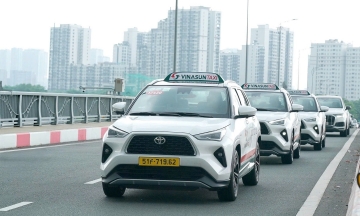
The new proposal is expected to boost recycling efforts. *Photo: Gia Chinh*. |
The second option involves depositing funds with the Vietnam Environmental Protection Fund to ensure the fulfillment of recycling responsibilities for uncompleted volumes. However, this approach raises several issues requiring clarification, such as verifying the volume for deposits, evaluating recycling results, and determining refund periods.
Ho Kien Trung stated that the proposals are currently undergoing public consultation and are expected to be submitted to the National Assembly in april, passed in october, and potentially take effect from 2027.
Since 2024, extended producer responsibility (EPR) regulations have been mandatory for several product and packaging categories, including: plastics, paper, metals, batteries, electrical and electronic equipment, lubricants, and tires. The Ministry of Agriculture and Environment is responsible for issuing recycling quotas and overseeing their implementation. This policy aims to promote a circular economy, reduce landfill waste, and transfer a portion of waste treatment costs from the state budget to producers and consumers.
However, during implementation, many businesses have reported difficulties concerning recycling costs, the financial contribution mechanism, and the inconsistent domestic collection and recycling system.
By Gia Chinh