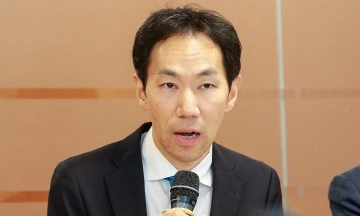
At a press conference on 7/10, Bui Quoc Hung, deputy director of the Electricity Regulatory Authority, Ministry of Industry and Trade, stated that the power sector restructuring plan is being developed to separate the generation, transmission, distribution, and retail segments.
The Ministry of Industry and Trade aims to separate the National Power Transmission Corporation (EVNNPT) from Vietnam Electricity (EVN), transferring it to a government ministry for management. This move seeks to isolate the transmission segment from activities that could be competitive in the electricity market.
According to a leader from the Electricity Regulatory Authority, power transmission is a natural monopoly because it is impractical to build multiple parallel lines to foster competition due to land constraints and investment efficiency. Electricity distribution shares similar characteristics, while power generation and retail can gradually be opened to competition.
Previously, the National Power System and Electricity Market Operation Company Limited (NSMO), the power system dispatch unit, was separated from EVN and transferred to the Ministry of Industry and Trade.
 |
Bui Quoc Hung, deputy director of the Electricity Regulatory Authority, speaks at the press conference. *Photo: Moit* |
Regarding power generation, Hung stated that, under EVN's restructuring plan, regulatory agencies aim to continue equitizing and divesting State capital from 5 generation corporations within the group.
Authorities are also considering establishing a National Strategic Power Generation Corporation, initially under EVN. In the long term, this entity is expected to include strategic multi-purpose hydropower plants like Son La, Hoa Binh, and future nuclear power projects.
For distribution and retail, the Ministry aims to gradually separate these two activities, which are currently combined within EVN's 5 power corporations. In the initial phase, distribution and retail costs will be separated, followed by organizational and ownership separation.
Hung noted that the restructuring must follow a roadmap to ensure the financial capacity and risk management of entities within the sector, laying the groundwork for developing competitive wholesale and retail electricity markets.
 |
Power utility staff inspect the system. *Photo: EVN* |
Also at the press conference, the Ministry of Industry and Trade reported that power source and grid development has been slower than planned. Total power source capacity increased by about 3,5% in the first 9 months of the year, lower than the 6,6% target.
A leader from the Electricity Regulatory Authority stated that Power Development Plan VIII and its revised version have calculated sources and grids to meet electricity demand. However, the actual progress of many projects has been affected by approval procedures, investor selection, land issues, site clearance, power purchase agreement negotiations, and pricing mechanisms.
Some policies, including electricity prices, according to Hung, have not been attractive to investors, especially the private sector and foreign capital. Meanwhile, the capital requirements for power source projects are significant, demanding mobilization of resources from the State, private entities, and international investors.
The Ministry of Industry and Trade has submitted a comprehensive report to the government on solutions to ensure electricity supply for the 2027-2030 period. One solution is to continue adjusting Power Development Plan VIII, restructuring power sources and grids to match supply needs.
The agency also plans to submit amendments to the Electricity Law to the National Assembly at the session scheduled to open on 17/10, introducing mechanisms to facilitate investment in power sources and grids. Additionally, the Ministry proposes increasing local authorities' responsibility in implementing planned projects, particularly concerning investment procedures, land, and site clearance.
Phuong Dung