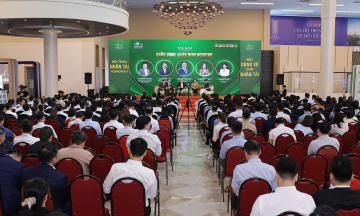
At the Ministry of Finance's press conference on 9/4, Le Long, Deputy Director of the Tax Department, discussed recent cases where authorities uncovered major incidents involving businesses using dual accounting systems to conceal revenue.
Notable examples include Hoang Long Company, which caused tax losses exceeding 241 billion VND, and Bao Tin Minh Chau Company Limited, responsible for a budget revenue loss of approximately 150 billion VND.
According to Long, the use of dual accounting systems by businesses – one for actual operations and another for regulatory authorities – constitutes a serious legal violation. This tactic often aims to conceal revenue, commit tax evasion, or misrepresent financial statements for purposes such as bidding on contracts or securing bank loans. Such actions lead to revenue losses, negatively impacting the economy and business environment.
"What is concerning", he stated, "is that this behavior can occur systematically, with sophistication, making it easy to conceal and challenging to detect without specialized audit and inspection skills or the investigative expertise of authorities."
 |
Le Long, Deputy Director of the Tax Department (Ministry of Finance), speaking at the press conference. *Manh Tuan*
The Tax Department leadership attributes this situation to the limited legal compliance and business ethics of some enterprises. Many businesses prioritize maximizing profits and reducing tax obligations, often failing to fully comprehend legal risks or even willing to accept the consequences of tax evasion.
In response, tax authorities have requested organizations providing invoice and electronic transaction services in the tax sector to collaborate in fraud prevention. These entities must provide information on customers using accounting software, including taxpayer names, tax identification numbers, headquarters addresses, and business locations. They were also required to compile a complete list of all customers using accounting software by 31/3 and submit it to the Tax Department before 8/4.
"This information collection helps tax authorities understand the scope of businesses, organizations, and household businesses using accounting software, enabling them to develop solutions for supporting and controlling tax declarations and payments", Long explained.
By 7/4, the Tax Department had received data from 42 organizations, covering 12,809 customers using accounting software. The agency continues to coordinate with various entities to compile nationwide data.
Beginning in April, tax authorities will utilize this data to review and issue warnings and recommendations to organizations, businesses, or household businesses exhibiting signs of operating multiple parallel accounting systems.
Tax authorities will also enhance cash flow control to curb fraud, integrating data between tax authorities and banks to monitor high-value transactions conducted via bank accounts. They will also increase technological applications in tax management, such as using big data and artificial intelligence (AI) for risk analysis. The system can detect unusual signs like significant revenue fluctuations, unreasonably low profit margins, or data discrepancies across systems.
Furthermore, tax authorities will continue to collaborate with investigative bodies. Cases showing signs of fraud or tax evasion will have their files consolidated and referred to the police for action.
Phuong Dung