Scale models are a common feature at real estate show homes. However, most previous models only simulated urban planning, helping customers visualize the location of towers, landscapes, or internal amenities. As the market enters a phase of competition driven by experience, the role of these models is also evolving.
At the show home for The Emerald Boulevard project, developed by Le Phong Group, the model area has become a major attraction for visitors. When the lighting system activates, the entire model transforms: light strips running along the facades highlight the building blocks, while a mini metro line operates continuously around the project. Simulated internal traffic vehicles also move according to pre-programmed scenarios, creating the impression of a dynamic urban area rather than a static model.
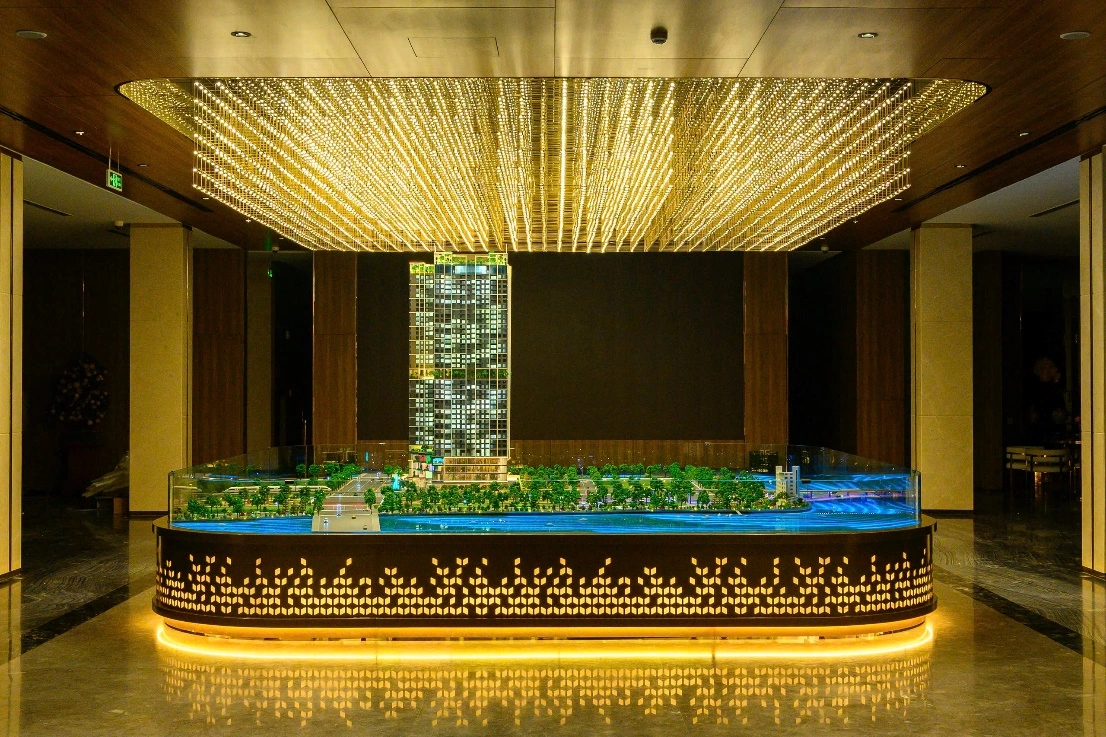 |
The Emerald Boulevard project model spans nearly 30 m2. *Photo: GMG Luxury* |
According to some project developers, customers now spend less time on technical specifications or floor plans. Instead, they prioritize intuitive experiences, wanting to feel the project's pulse from their first visit to the show home. This trend contributes to the emergence of technology-integrated models in the mid-range and high-end segments.
At The Emerald Boulevard, the model is constructed at a 1/75 scale over an area of nearly 30 m2, with building blocks reaching over 2 m in height. The distinction lies not only in its size but also in how technology is integrated to enhance visual depth and spatial experience.
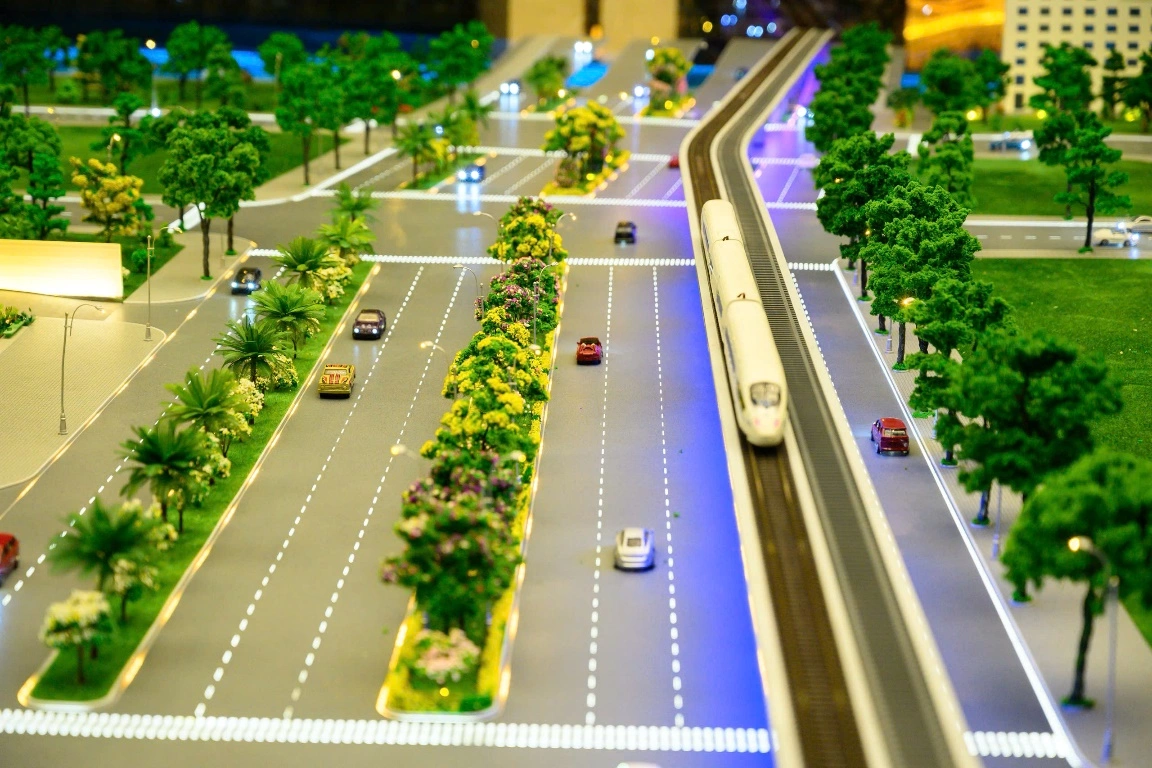 |
The lighting system simulates an urban space at night. *Photo: GMG Luxury* |
The facade lighting system is a key highlight of the model. Light strips are programmed with multiple layers of illumination, mimicking a city at night. When observed from a distance, the building blocks create a visual effect similar to a structure glowing in a real environment.
Beyond the main architecture, the commercial townhouse area also features dedicated lighting designed to replicate service activities. Details such as landscape lights, streetlights, and internal amenity areas are synchronized, contributing to the model's overall visual appeal. A notable feature is the system's ability to control lighting in specific areas via a mobile application. Operators can turn lights on, off, or set up various display scenarios based on the presentation content.
Additionally, the simulated metro system and autonomous vehicles add motion to the model. These continuous movements increase the observation time for visitors. According to some real estate marketing agencies, the time customers spend in the experience area is a key indicator related to how well they retain project information.
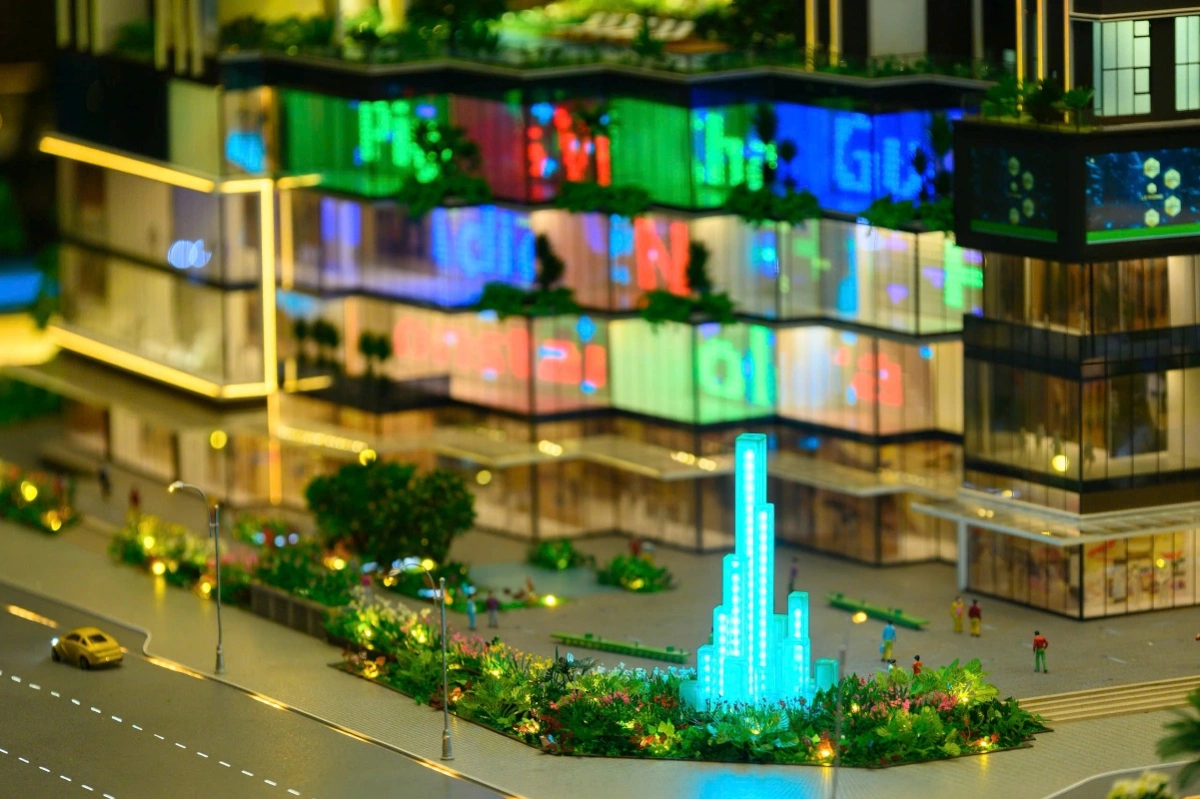 |
Landscape details depicted in the model. *Photo: GMG Luxury* |
A representative from GMG Luxury, the unit responsible for designing and constructing the model, stated that the current challenge is no longer "making a beautiful model," but rather creating an experience distinct enough for customers to remember the project after they leave. Therefore, new-generation models focus not only on technical accuracy but also on generating emotion and realistic interaction.
(Source: GMG Luxury)