On 4/6, President Donald Trump announced the expenditure to support 14 coal-fired power plants and 42 coal mines.
Trump invoked the Defense Production Act of 1950 for most of the funding, a law that grants the president emergency powers over industries vital to national security. This package includes USD 425 million for upgrading 13 coal-fired power plants and USD 75 million to support a coal export port in California.
The Department of Energy is also finalizing hundreds of millions of USD in expenditures to help construct new power plants in Alaska and West Virginia.
The administration views energy policy as a national security issue, crucial for ensuring electricity to data centers. During an Oval Office event, Trump, alongside Secretary of Interior Doug Burgum and Secretary of Energy Chris Wright, stated that "clean, beautiful coal" would help lower living costs for all Americans.
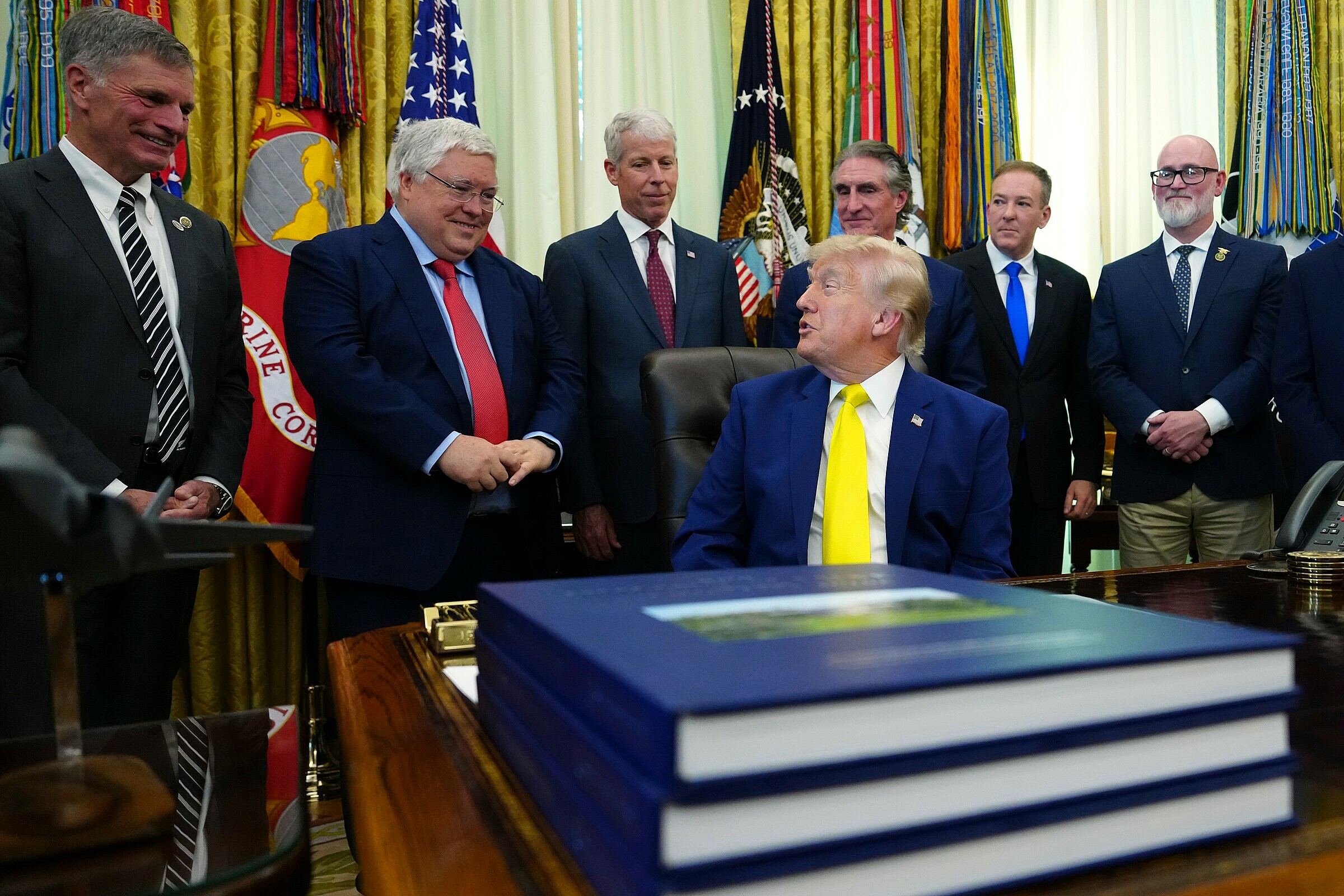 |
President Donald Trump converses with governors and secretaries at the event announcing funding for the coal industry, 4/6. Photo: AP. |
Wyoming Governor Mark Gordo recently visited Japan and Taiwan (China), where he noted a significant demand for Wyoming coal to power the artificial intelligence sector. He emphasized that opening the California port for coal exports is "very necessary" for Wyoming, the nation's leading coal producer.
However, environmental activists oppose Trump's relief plan. Patrick Drupp, Climate Policy Director at the Sierra Club, called the package "using taxpayer money to fund a polluting industry." He added that they would challenge the plan in court.
Meanwhile, Rich Nolan, CEO of the National Mining Association, argued that the subsidy would bolster production, shield consumers from energy price volatility, and support the growing demand for electricity.
Coal, which once generated over half of America's electricity in 1990, now accounts for less than one-fifth of the nation's power. The fuel has lost its competitive edge as the electricity sector increasingly relies on natural gas and renewable energy sources.
US coal exports also declined during Trump's first year in office, primarily due to reduced demand from China. This decline followed China's retaliatory tariffs on American goods last year. The International Energy Agency (IEA) projects global coal demand to stagnate or decrease in the coming years.
Despite Trump's efforts to ease environmental regulations, the coal industry has struggled to increase its workforce. Data from the Federal Reserve (Fed) St. Louis indicates that the number of active miners in the US fell from approximately 51,500 in 2017 to an estimated 39,800 by 2025.
Bao Bao (Reuters)