This information was shared by Le Manh Hung at a group discussion on socio-economic issues on 10/4.
According to the Minister of Industry and Trade, the conflict in the Middle East created the largest global energy crisis since 1970, significantly impacting Vietnam.
Hung stated that the operational goal required by authorities is to "ensure energy security". This is based on three pillars: sufficient supply, uninterrupted distribution, and ensuring public access, while minimizing macroeconomic impact.
The Ministry of Industry and Trade developed three response scenarios. The first scenario posits the conflict ending within 4 weeks. The second scenario suggests the Middle East conflict could end in "4 weeks plus 2", and the third scenario is longer than 4 weeks. "To date, the situation is largely unfolding according to the second scenario," Hung said.
Given recent developments, the operator implemented five groups of synchronous solutions. These include ensuring sufficient domestic supply, increasing the number of circulation reserve days as per Decree 95, and establishing contingencies if the conflict persists. The Minister of Industry and Trade noted that thanks to these solutions, domestic petroleum reserves "have increased from 15 to 26 days".
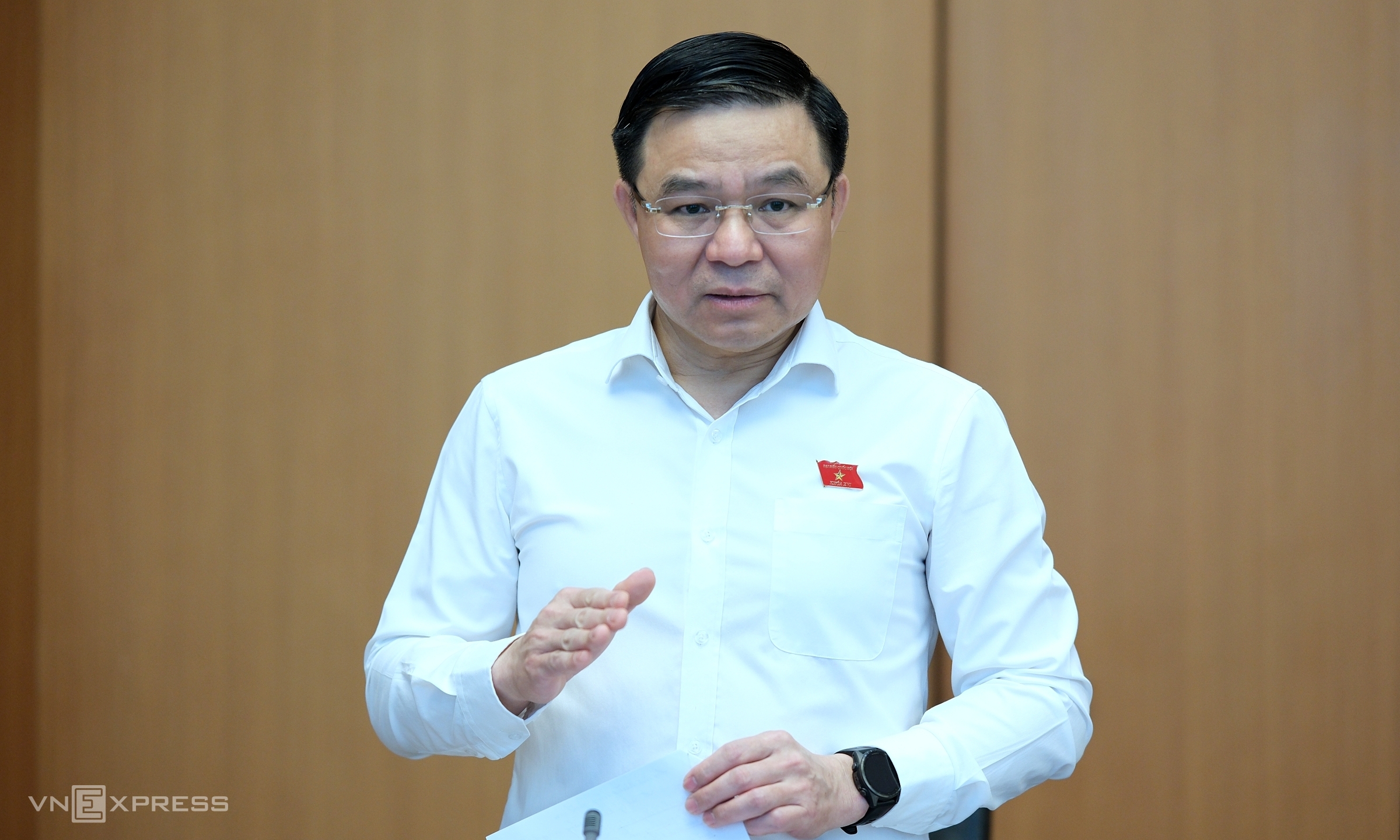 |
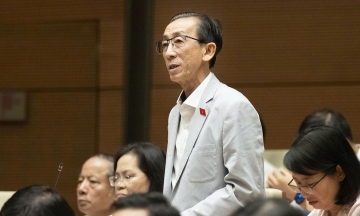
Minister of Industry and Trade Le Manh Hung speaking at the discussion session on the morning of 10/4. Photo: Anh Tu. |
At last week's government press conference, Deputy Minister of Industry and Trade Nguyen Sinh Nhat Tan stated that the two domestic refineries, Dung Quat and Nghi Son, have enough raw materials for production until the end of April. In March, key petroleum traders also imported 3,2 million cubic meters of petroleum. Coupled with current inventory (2,6-2,8 million cubic meters), domestic petroleum supply can meet production and consumption needs until the end of this month.
Currently, Vietnam lacks a separate national petroleum reserve. Reserves are stored at the facilities of major petroleum trading enterprises through contracts, with fees paid according to established norms. This reserve level only covers about 7-10 days of consumption.
Recently, the government instructed the Ministry of Industry and Trade to work promptly with foreign partners to immediately implement the construction of a strategic petroleum reserve at Nghi Son (Thanh Hoa).
According to Minister Hung, the two domestic refineries (Dung Quat and Nghi Son) maintain high capacity and are restructuring products by increasing energy products and reducing non-energy ones. Concurrently, domestic ethanol plants resumed production to introduce E10 gasoline nationwide by the end of April, one month ahead of schedule. "If E10 gasoline is used nationwide, we can increase our petroleum self-sufficiency by about 14%," Hung stated.
Thanks to crisis response solutions, the Minister noted that Vietnam has maintained petroleum and diesel prices lower than the world average of 1,3 USD per liter, equivalent to about 35.000 dong. The average price of RON 95-III gasoline is currently 23.000-24.000 dong per liter. Meanwhile, some countries in the region still face difficulties due to supply chain disruptions. "The approach taken recently is appropriate for this crisis period," the Minister of Industry and Trade affirmed.
Calculations by the Ministry of Industry and Trade indicate Vietnam's primary energy demand is approximately 119,6 million TOE (tons of oil equivalent). Domestic production meets about 66 million, with 53,6 million imported (nearly 44%). Long-term, Minister Hung believes energy strategies and planning need updating to reduce the primary energy import ratio to about 30% by 2030.
From late February until now, domestic retail petroleum prices have undergone 15 adjustment periods. Currently, each liter of RON 95-III gasoline is 23.540 dong, and diesel is 32.960 dong. Previously, prices for these two fuel types reached nearly 34.000 dong and 45.000 dong per liter, respectively.
During this morning's discussion, some delegates also urged the swift construction of a national petroleum reserve, calling it "insurance for the economy". Dang Ngoc Huy, Deputy Chairman of the Committee for Delegate Affairs, recommended that the Prime Minister implement breakthrough solutions, such as allocating budget and policies, to immediately commence the national petroleum system. He also proposed the government issue a specific roadmap, aiming for a 60-day reserve by 2028 and 90 days by 2030.
Prime Minister Le Minh Hung stated that the government's report to the National Assembly includes a plan to build national reserves for several essential commodities, including petroleum. Accordingly, the government aims to establish a petroleum reserve system for at least 90 days.
Anh Tu