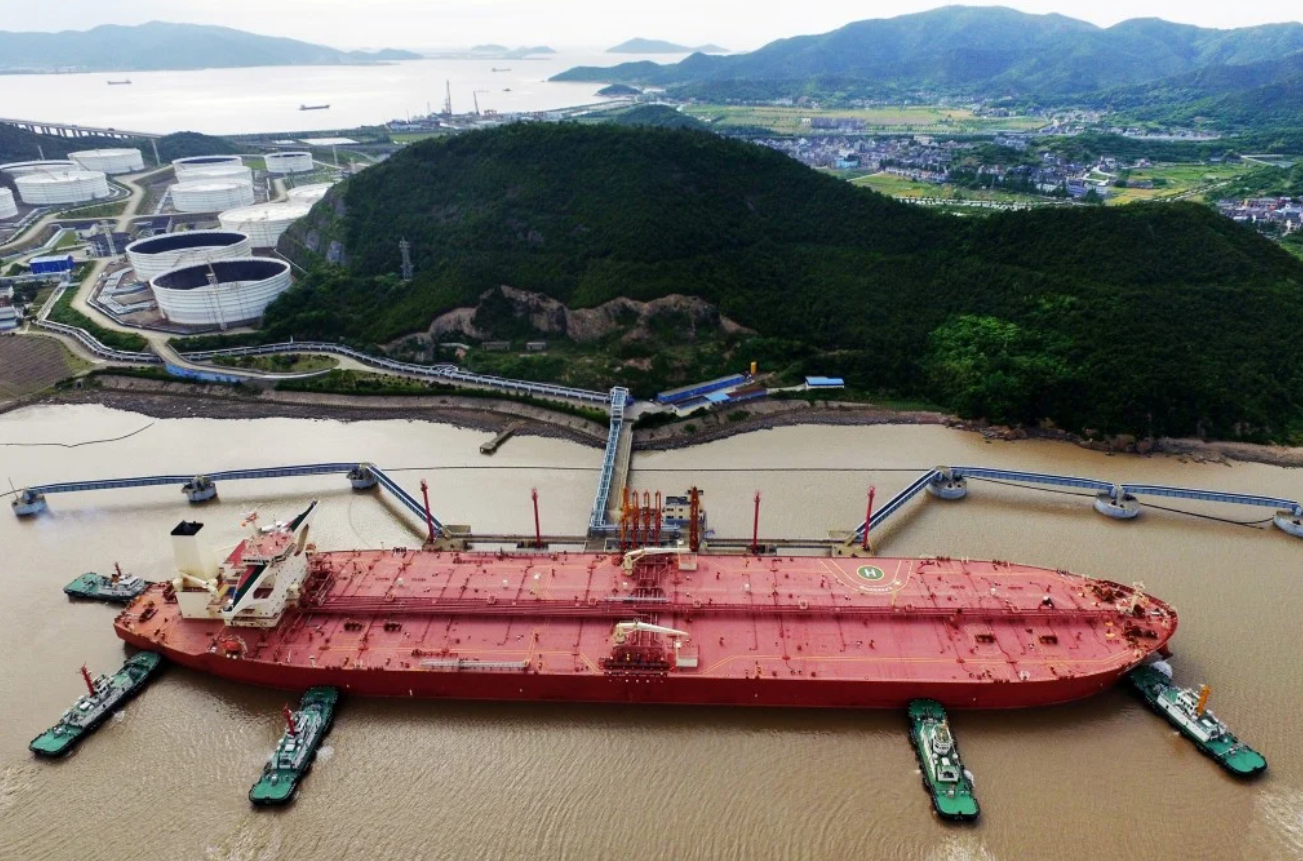
US oil corporations are preparing to announce second-quarter earnings, which are expected to be their highest since 2022. This comes as American citizens and President Donald Trump continue to voice complaints about high gasoline prices.
According to LSEG data, Exxon Mobil's net profit is anticipated to reach USD 15.9 billion, more than three times its Q1 earnings. Chevron could see profits of approximately USD 9.9 billion, also more than triple the previous quarter. Beyond accounting reasons, analysts attribute this profit growth largely to improving market fundamentals.
Energy consulting firm TPH reported that the spread between crude oil and gasoline prices in the US averaged about USD 25 per barrel in Q2, an increase of approximately USD 16 from the previous quarter. Meanwhile, the spread between crude oil and diesel rose by about USD 15, reaching approximately USD 45 per barrel, its highest level since mid-2022.
 |
A pumping unit in Nolan, Texas on 4/10/2023. Photo: AFP
Strong import demand for US fuels also contributed to improved profits. This is due to the Middle East conflict, which has caused many overseas refineries to experience supply shortages from the Gulf region. According to data firm Kpler, US crude oil exports in may surpassed the record of 5.2 million barrels per day set in april, reaching 5.6 million barrels per day.
Europe and Asia both purchased record amounts. "It's no surprise that Asia is buying so much US oil, given the shortage of supply from the Middle East", commented Matt Smith, Director of Commodity Research at Kpler.
According to Reuters, the surge in profits could complicate President Trump's relationship with the oil industry, a significant financial backer for both the President and the Republican Party. "Everyone in the industry is discussing and finding ways to respond. We know what's coming and we understand the politics", said an unnamed oil and gas executive.
On 29/6, President Trump urged gasoline retailers to "immediately reduce prices" and warned that businesses failing to comply "will face big trouble". He instructed the Department of Justice to investigate oil companies for not lowering retail gasoline prices in line with falling crude oil prices. Treasury Secretary Scott Bessent also warned that administrative measures could be implemented if retail gasoline prices did not drop significantly.
The GasBuddy tracking website reported that on 4/7, the average gasoline price fell below USD 3.83 per gallon (USD 1.01 per liter). However, Trump desires prices around USD 2.5 per gallon, which is about 11% lower than the lowest level during his current term (approximately USD 2.81 per gallon in late december).
 |
Average US gasoline prices in the first half of 2026 (USD/gallon). Source: GasBuddy
Reuters sources indicate that the oil and gas industry has increased its outreach to officials and lawmakers to mitigate criticism. Some business leaders contend that they have limited control over retail gasoline prices.
Crude oil prices account for only about half of the retail price; the remainder is determined by refining, distribution, marketing costs, and taxes. Furthermore, refined fuel supplies remain scarce, and gasoline inventories are low. According to Bob McNally, President of Rapidan Energy Group, this represents structural supply and demand pressure.
"Gasoline prices do not change simultaneously with crude oil prices, especially amid a global shock affecting supply, refining operations, and inventory levels", said Bethany Williams, Spokesperson for the American Petroleum Institute (API).
The American Fuel and Petrochemical Manufacturers (AFPM) concurred. "Refineries do not determine the price of finished gasoline, and crude oil is just one of many inputs", the association stated. AFPM also argued that government policies, such as environmental regulations, contribute to increased costs.
Phien An (according to Reuters)