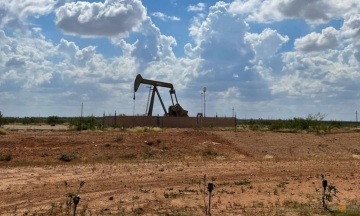
CNN reports that the Cushing center in Oklahoma is known as "the crossroads of the world's oil pipelines." Normally, this center holds 40 million barrels of crude oil.
As the Middle East conflict enters its 105th day, the US Energy Information Administration (EIA) announced that reserves stand at 21.6 million barrels, nearing the "minimum operating level" of 20 million barrels. Below this threshold, the center struggles to supply oil to all customers.
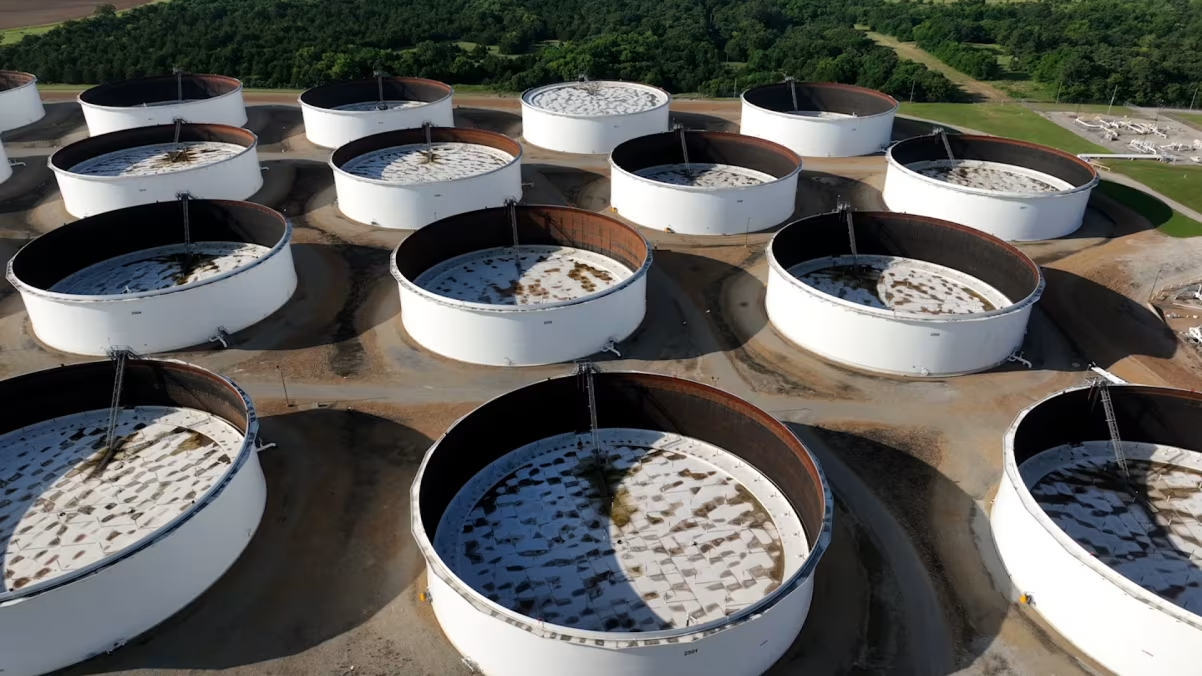 |
A crude oil storage facility in Cushing, Oklahoma, US, 9/6. Photo: CNN
The oil market cannot be depleted to the last drop like car fuel. Below a "minimum operating" threshold, oil pipelines cannot maintain pressure, and refineries cannot supply the full range of fuels customers require.
Natasha Kaneva, head of commodity strategy at JPMorgan, likens the oil pipeline system to the human circulatory system. According to Kaneva, the issue is not a global oil shortage, but rather insufficient oil circulation to maintain a stable flow throughout the entire system. At the current rate of decline, experts predict the world oil market could enter a dangerous zone within the next month.
US oil demand has reached record highs during the Middle East conflict. Cushing's crude oil extraction is outpacing the rate at which US companies can replenish it. Across the United States, diesel fuel reserves are at their lowest level since 2003. Natural gas reserves are also declining, 5% lower than last year. Beyond Cushing, other US commercial crude oil storage facilities are rapidly depleting. Total US crude oil reserves, including strategic reserves, have decreased by 79 million barrels since the conflict began in late February.
Experts note that historically, whenever the Cushing transit hub approached its "minimum operating level," fuel prices surged to record highs, as seen in 2008, 2022, and 2023. Mike Sommers, chief executive officer of the American Petroleum Institute (API), warned that oil reserves are nearing a "concerning" level.
Late last month, Neil Chapman, senior vice president of ExxonMobil, also highlighted "unprecedentedly" low inventory levels, approaching a "breaking point." "Once inventories reach this point, you will see prices skyrocket," he stated. Similarly, the International Energy Agency (IEA), the International Monetary Fund (IMF), the World Bank (WB), and the World Trade Organization (WTO) have issued a joint warning that global oil inventories are depleting at record rates, posing increasing risks to fuel security, markets, and overall economic resilience. David Oxley, chief economist for climate and commodities at macroeconomics research firm Capital Economics, expressed concern that oil prices could reach 140-160 USD per barrel in the coming months.
Bao Bao (via CNN)