On 15/4, Wall Street saw two of its three major indices climb, with the S&P 500 rising 0.8% to 7,022 points. This marked a new record, surpassing the previous peak set in January, and sharply contrasted with its 9% drop from that high just weeks prior. The Dow Jones Industrial Average (DJIA), however, experienced a slight dip of 0.15%.
The Nasdaq composite surged 1.6% to an all-time high of 24,016 points. This technology-heavy index has gained over 15% since late March.
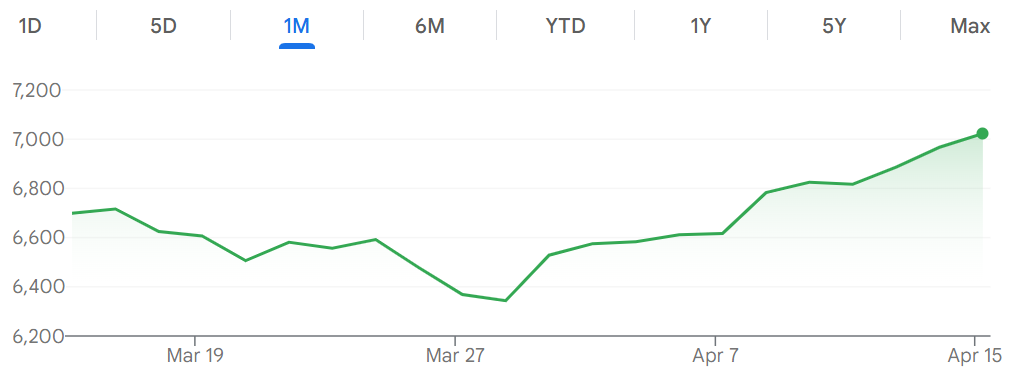 |
The S&P 500 has seen consecutive gains since early April. *Chart: Google Finance* |
The market's upward trend was fueled by growing investor optimism regarding a potential US-Iran ceasefire agreement, despite the delicate situation. In an interview with Fox Business, US President Donald Trump stated that the conflict was "very close to an end" and that Iran "really wants a deal". Reports from multiple US media outlets also indicated discussions for a second round of negotiations between Washington and Tehran.
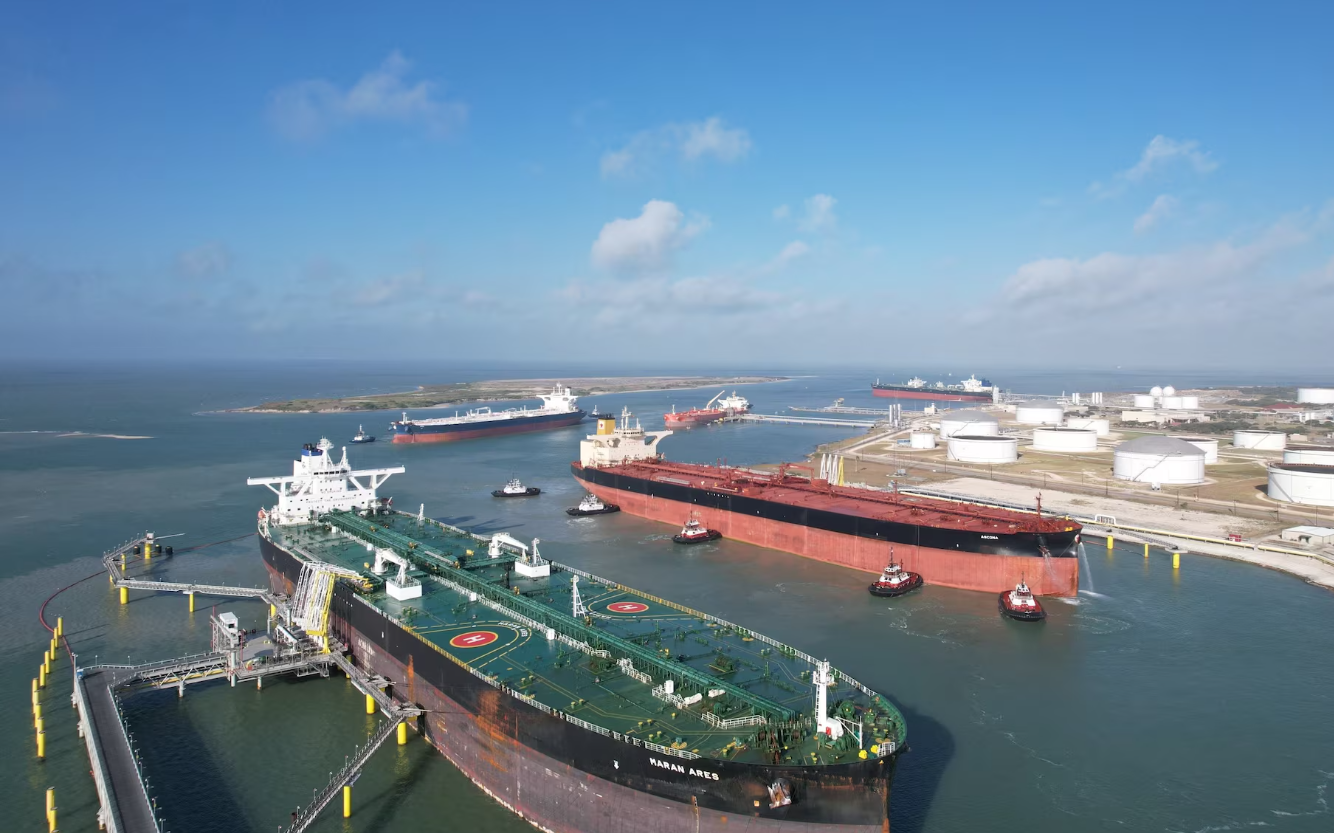
Adding to the positive sentiment, global crude oil prices fell to approximately USD 90 a barrel, further boosting Wall Street. The US is currently in its corporate earnings season, with investors holding an optimistic outlook on company profits.
The S&P 500 has recorded gains in 10 of its last 11 trading sessions, accumulating an increase of over 10%. Since the conflict began, the index has risen 2%. Similarly, the Nasdaq has enjoyed an 11-session winning streak, adding 6% to its value since the hostilities commenced.
Ed Yardeni, president of Yardeni Research, described the S&P 500's performance as a "V-shaped recovery". He noted that investors tend to invest in stocks whenever there is any news suggesting a potential resolution to the conflict.
Last week, the DJIA also experienced its strongest single-day increase in a year, and has climbed 5% since the beginning of this month. However, since the start of the conflict, the DJIA has seen a 1% decline overall.
Craig Johnson, a market strategist at Piper Sandler, suggested that the US stock market's momentum "seems to be created from hope". He pointed out that oil prices remain significantly higher than pre-conflict levels, and the duration of the conflict remains uncertain.
Global gold prices also rebounded on the morning of 16/4, increasing by over USD 40 to USD 4,832 per ounce, after a nearly USD 50 drop in the previous session. Gold stands to benefit if the inflationary pressures stemming from the conflict subside, which could allow central banks to resume their interest rate-cutting policies.
Ha Thu (according to CNBC, CNN)