Decree 127/2026/ND-CP, effective from 1/6, outlines these provisions for the management of quality and the development of Halal products and services. Under this decree, export-oriented Halal products are designated as a key commodity group, receiving priority within the national program for enhancing product and goods productivity and quality. The government will support businesses in participating in trade fairs, exhibitions, and trade promotion programs in key Muslim markets. It will also assist in developing a Halal tourism strategy.
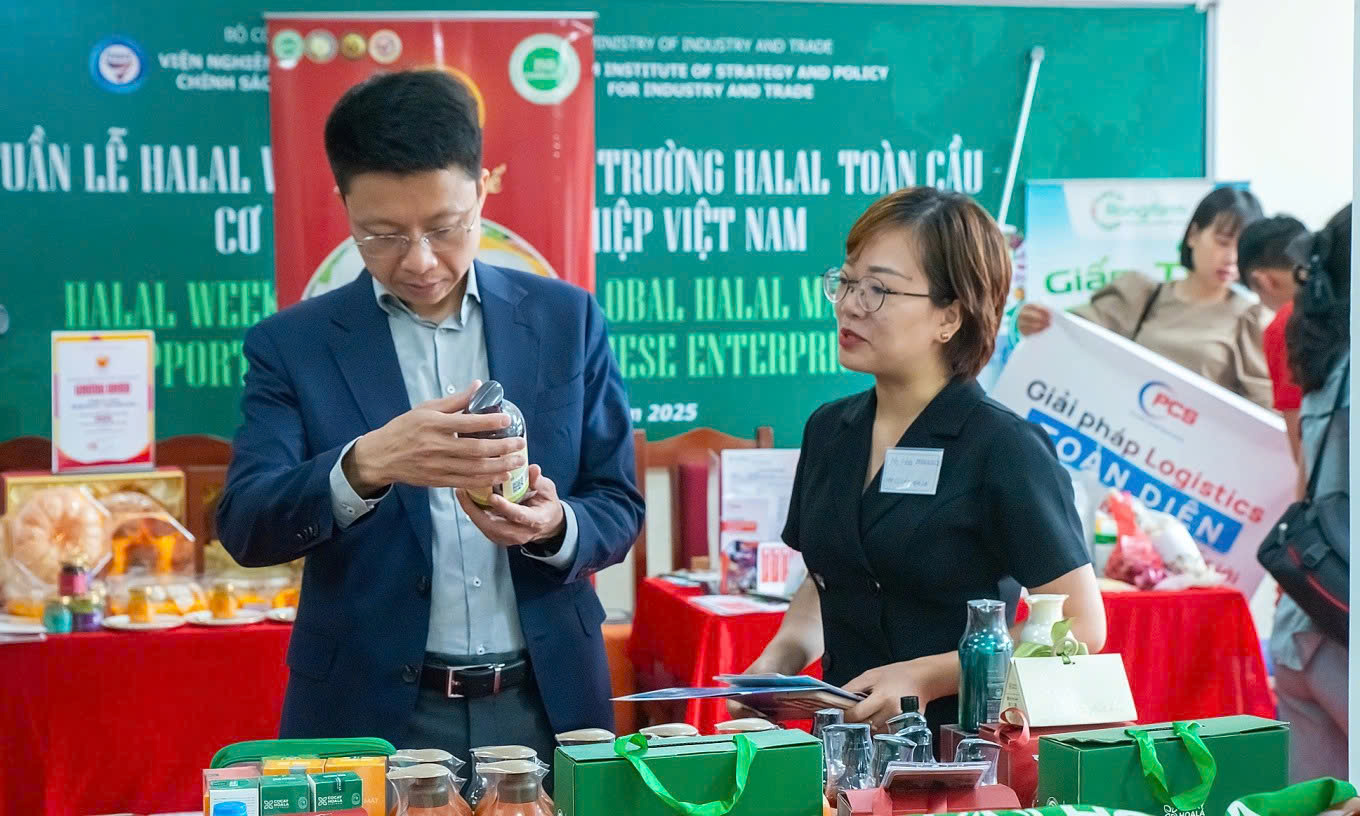 |
Some Halal-certified products on display at the seminar "Accessing the global Halal market - Opportunities for Vietnamese businesses", 25/6/2025. Photo: Institute for Industry and Trade Strategy and Policy Research |
Some Halal-certified products on display at the seminar "Accessing the global Halal market - Opportunities for Vietnamese businesses", 25/6/2025. Photo: Institute for Industry and Trade Strategy and Policy Research
Key export businesses will receive one-time support for Halal testing and certification costs, aiming to reduce market entry expenses. Small and medium-sized enterprises (SMEs) operating in this sector will also benefit from policies supporting human resource training and development, in accordance with current regulations.
In addition to these support policies, the decree mandates stricter quality management. This includes standardizing testing, certification, and labeling activities, and requiring traceability for Halal products and services.
Businesses will also gain access to the national Halal database. This resource provides information on standards, legal regulations, certification bodies, a list of certified businesses, and specific requirements for each export market.
Amidst increasing international economic integration, the Halal market is emerging as a highly promising sector with rapid global growth. With approximately two billion Muslims, representing nearly one-fourth of the global population, and a projected Halal economy size of around 10 trillion USD by 2028, this market presents vast development opportunities for countries and businesses participating in the Halal product and service supply chain.
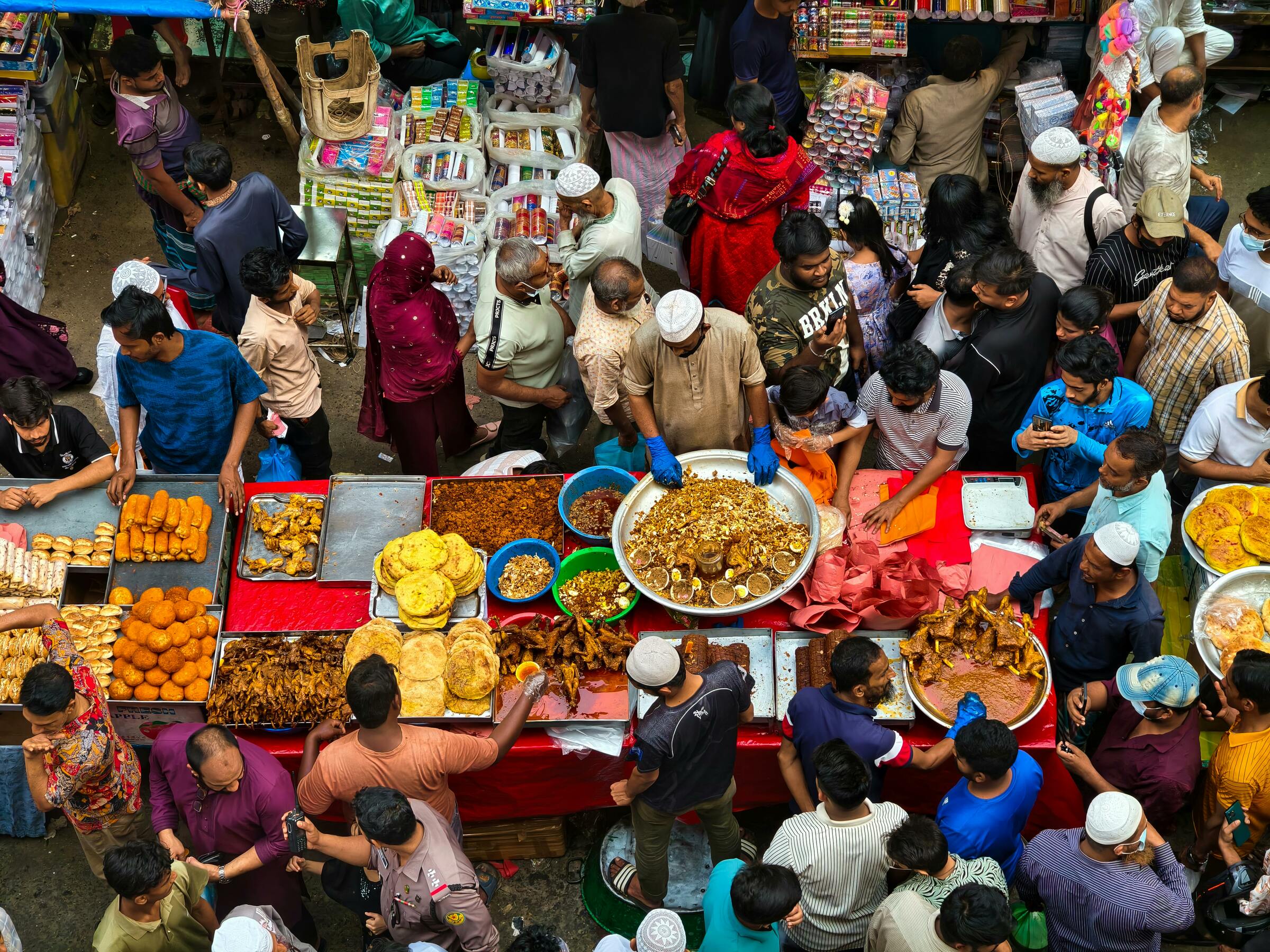 |
A street food market of the Muslim community in Pakistan. Photo: Tamim Hossain |
A street food market of the Muslim community in Pakistan. Photo: Tamim Hossain
Experts assess that Vietnam holds several advantages for deeper engagement in the global Halal supply chain. These include abundant agricultural raw materials, improving production capacity, a wide network of export businesses, and a favorable position within the regional supply chain.
In 2025, Vietnam's agricultural, forestry, and fishery exports exceeded 70 billion USD, marking a 12% increase from the previous year. Many key products, such as rice, coffee, cashew nuts, pepper, fruits and vegetables, seafood, processed foods, and non-alcoholic beverages, show potential for development under Halal standards if they meet quality management requirements.
Furthermore, many Vietnamese businesses are already familiar with international standards like HACCP, ISO, BRC, Global G.A.P., ASC, BAP, EU, and FDA. This familiarity provides a strong foundation for integrating additional Halal requirements.
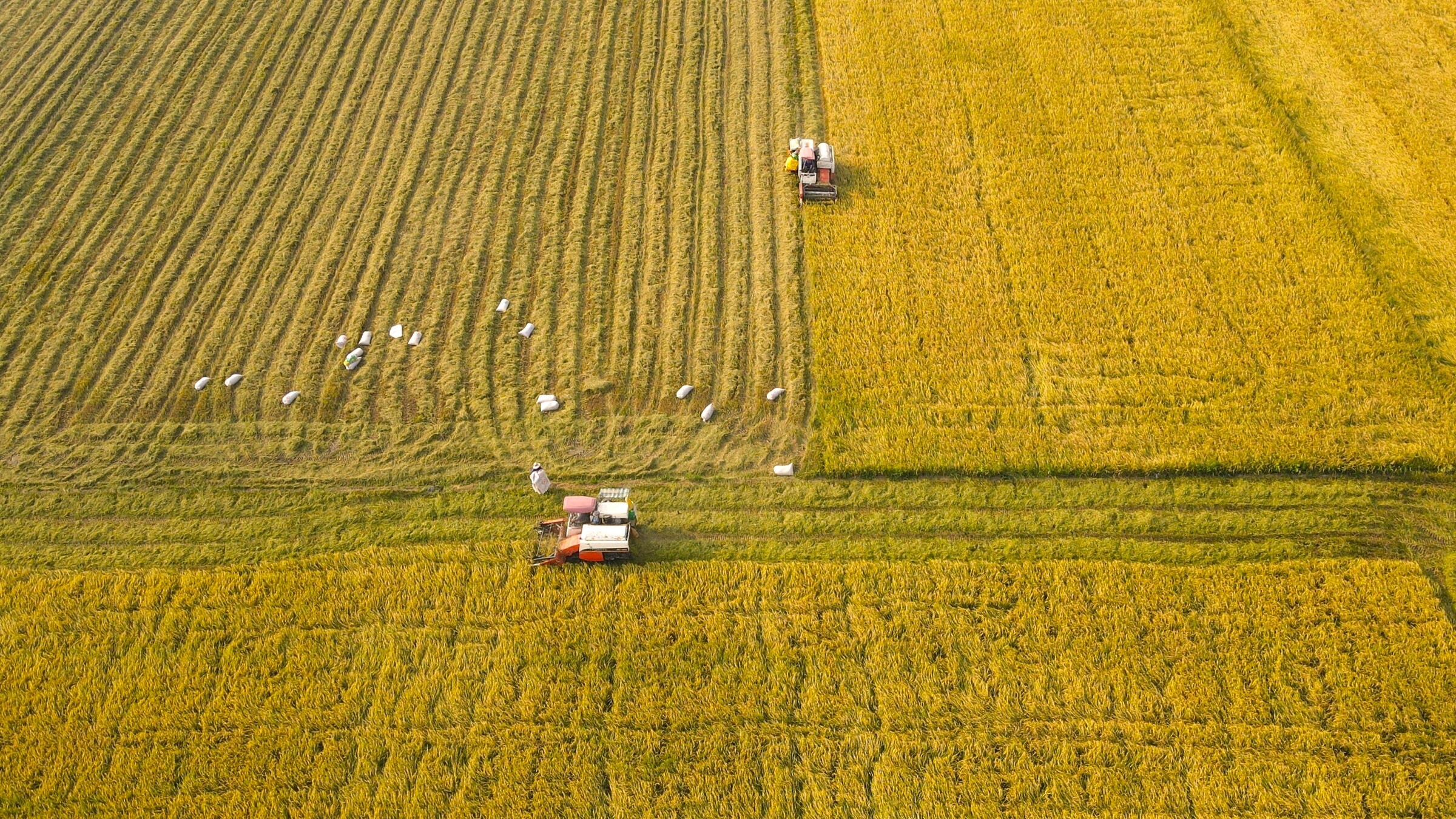 |
Vietnam is the world's second-largest rice exporter. Photo: Tran Thanh |
Vietnam is the world's second-largest rice exporter. Photo: Tran Thanh
However, experts emphasize that accessing the Halal market extends beyond mere certification. Businesses must establish comprehensive quality management systems, ensuring traceability, transparent product information, and compliance with increasingly stringent technical requirements of international markets.
In recent years, many Vietnamese businesses and cooperatives have proactively surveyed markets in Muslim countries to understand consumer demand and select suitable products. To date, Vietnam has signed 18 Memoranda of Understanding (MOU) on Halal, established a national Halal Certification Center, and developed seven national Halal standards.
Vu Ba Phu, Director General of the Trade Promotion Agency, Ministry of Industry and Trade, stated that in 2025, trade turnover between Vietnam and member countries of the Organization of Islamic Cooperation (OIC) reached approximately 24,7 billion USD, with exports accounting for 10,9 billion USD. International organizations estimate Vietnam's export potential to Halal markets could reach around 34 billion USD in the near future. However, current Halal product export turnover is only about 700 million USD, representing approximately 2% of the market's potential.
The issuance of Decree 127 is expected to further incentivize businesses to invest in production, certification, and market expansion, thereby increasing the proportion of Vietnamese goods in the global Halal supply chain.
Minh Ngoc