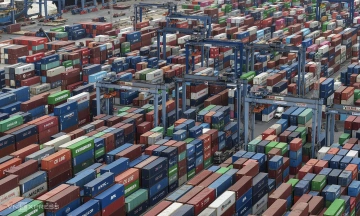
At a conference on promoting exports and controlling the trade deficit on 13/8, Permanent Vice Prime Minister Pham Gia Tuc noted that while exports grew significantly in the first seven months of the year, the trade deficit also increased, putting pressure on the double-digit growth target.
The Vice Prime Minister demanded clarification on the rising trade deficit, especially given the slow export growth of domestic enterprises compared to high imports of raw materials, machinery, and equipment. "It is necessary to clarify what raw materials, machinery, and equipment businesses are importing, their production progress, and their ability to convert these imports into export products and goods," the Vice Prime Minister stated.
Accordingly, the Ministry of Industry and Trade is tasked with working with businesses and corporations that exhibit large discrepancies between import and export turnover, particularly in the computer and electronic components sectors. The agency needs to determine the reasons for high imports, production progress, and export plans of these businesses in Vietnam.
The Vice Prime Minister also requested the inspection and control of foreign direct investment (FDI) enterprises with high import turnover or those experiencing sudden surges in imports.
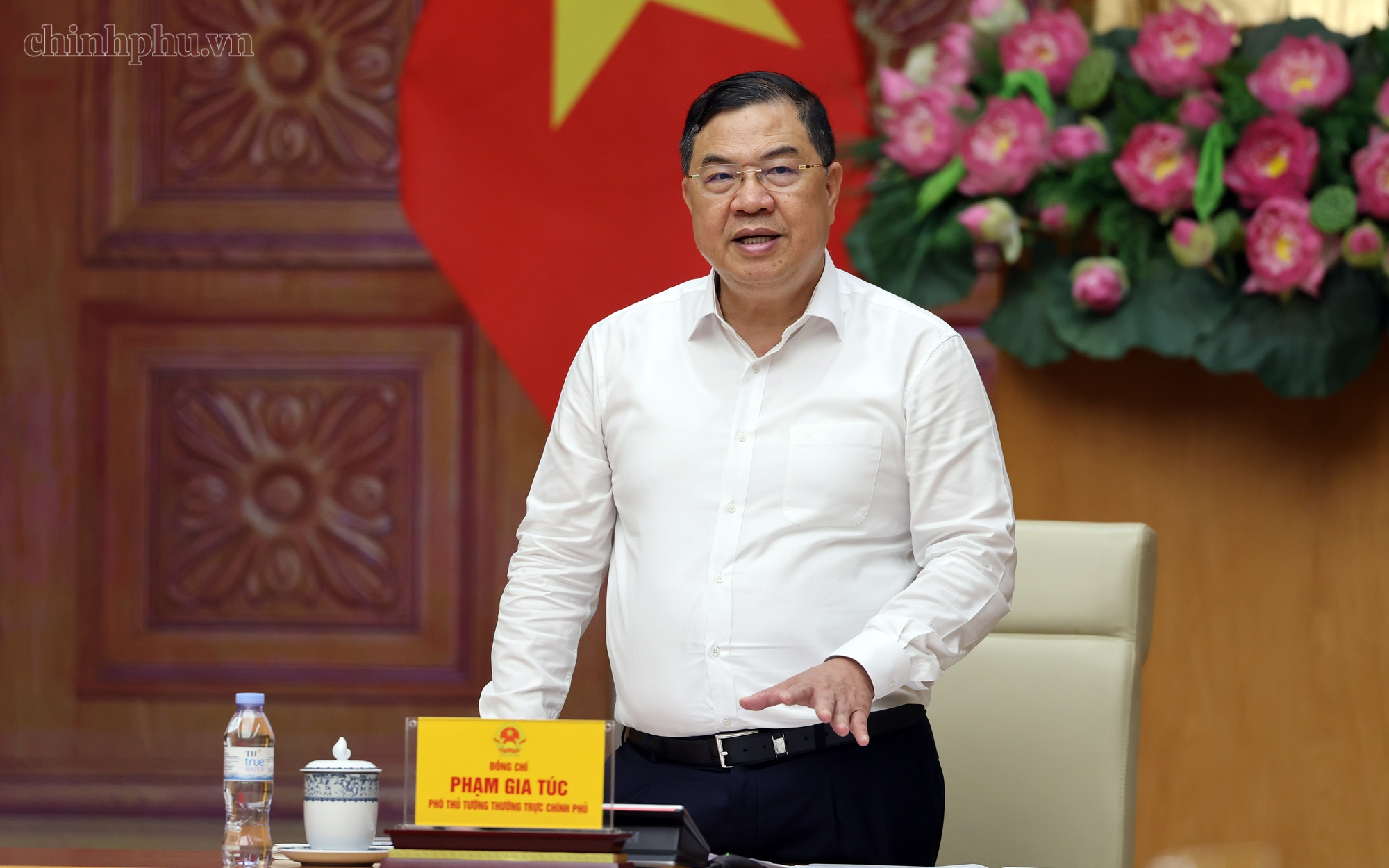 |
Permanent Vice Prime Minister Pham Gia Tuc speaks at the conference on 13/8. Photo: VGP
Data from the Ministry of Industry and Trade shows that in the first seven months of the year, total import-export turnover reached approximately 659 billion USD, an increase of 28,1% compared to the same period last year. Exports amounted to 319,7 billion USD, up 21,7%, but the country still recorded a trade deficit of about 20,3 billion USD.
The export growth showed a significant disparity between the FDI sector and domestic enterprises. In the first seven months, FDI exports reached approximately 255 billion USD, an increase of 26,5%, while the domestic economic sector achieved 64,6 billion USD, growing by only 5,8%.
Several processed industrial product groups saw strong export growth: computers, electronic products, and components reached approximately 85 billion USD (up 50%); machinery, equipment, tools, and spare parts about 40 billion USD (up 24,6%); and phones and components 38 billion USD (up 18,6%).
Conversely, imports of computers, electronic products, and components increased sharply, primarily serving production and investment expansion in Vietnam. Imports of raw materials such as metals, iron, steel, chemicals, ores, minerals, and plastics also rose.
The Ministry of Finance assessed that the current trade deficit is largely concentrated in the raw material and fuel groups. Energy import costs, in particular, were significantly affected by global prices and the evolving conflict in the Middle East.
From a business perspective, associations believe that logistics costs, raw material expenses, and compliance costs continue to pressure export activities. Meanwhile, trade defense measures, unilateral trade policies, and high green standards add further challenges.
Bui Trung Nghia, Vice President of the Vietnam Chamber of Commerce and Industry (VCCI), proposed that the government continue to reform administrative procedures, especially in specialized inspections, customs, and the issuance of certificates of origin (C/O). Additionally, VCCI suggested that management agencies support businesses in responding to trade barriers, facilitating green transitions, diversifying markets, and increasing the localization rate.
A representative from the Vietnam Electronics Business Association emphasized the industry's need to boost supporting industries, assist businesses in technological innovation, automation, and the application of artificial intelligence (AI). Increased connectivity with FDI corporations is also essential for domestic enterprises to participate more deeply in supply chains.
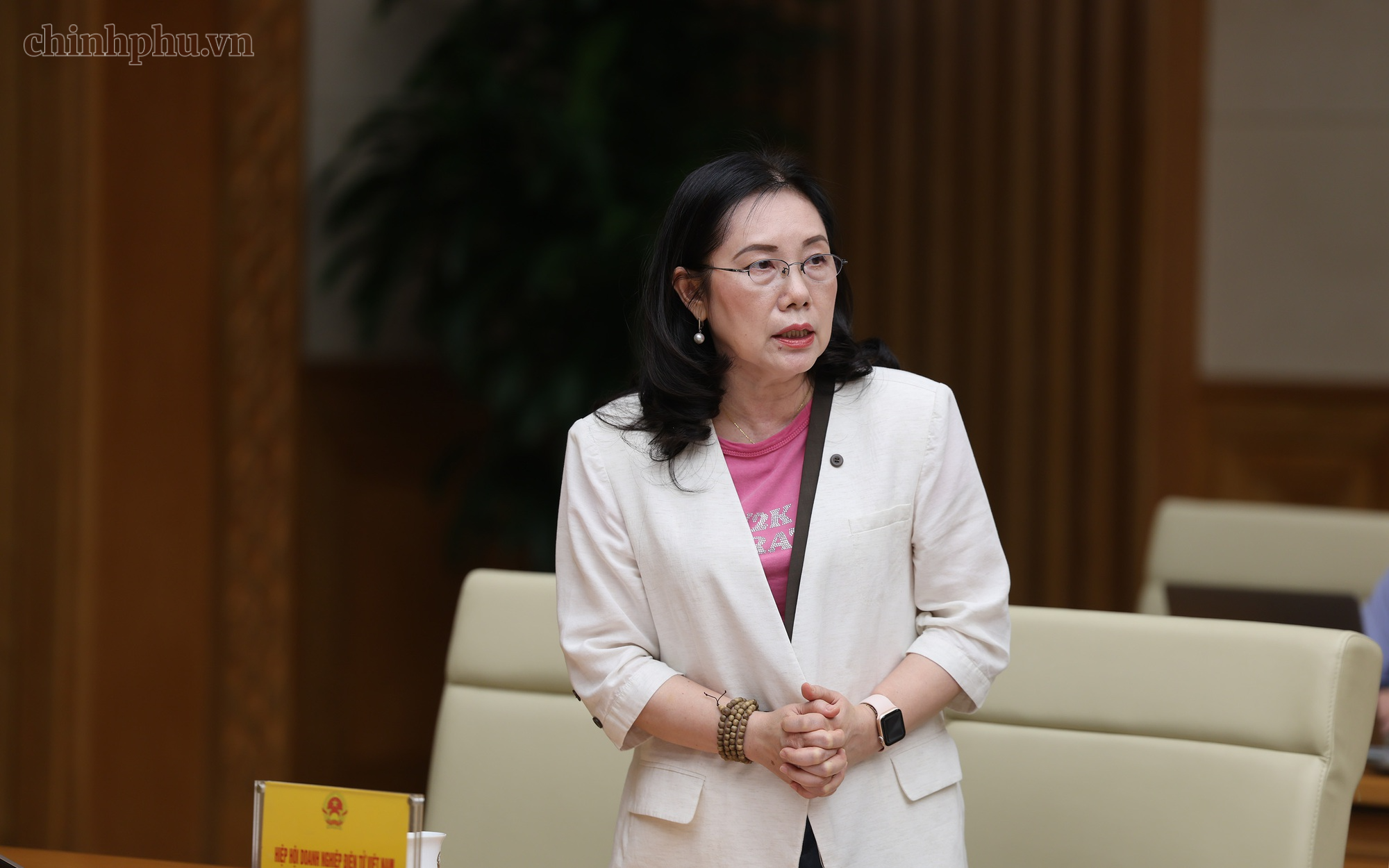 |
Do Thi Thuy Huong, Vice President of the Vietnam Electronics Business Association, at the meeting. Photo: VGP
Concluding the meeting, the Vice Prime Minister stated that to control the trade deficit, boosting exports is paramount. According to calculations by the Ministry of Industry and Trade, Vietnam needs to generate a large surplus in the remaining months to balance the trade balance for the entire year, despite many unpredictable factors in the global market.
To achieve this, the Ministry of Industry and Trade is tasked with supporting businesses in directly accessing international distribution systems and retail chains. The agency needs to accelerate negotiations for free trade agreements and expand into markets with significant potential, such as Halal, Latin America, and Africa. The Ministry must also review regulations on preventing origin fraud and illegal transshipment.
The Vice Prime Minister also called for the removal of bottlenecks that are increasing export costs. The Ministry of Finance is assigned to review value-added tax refund processes and enhance risk classification to expedite the processing of applications from compliant businesses.
The State Bank of Vietnam must ensure export businesses have access to credit, prioritizing capital for the procurement, consumption, and export of agricultural products in the remaining months of the year. By the end of July, outstanding credit for the export sector was nearly 849 trillion VND, an increase of about 30%.
Beyond increasing exports, the government leader also emphasized Vietnam's need to reduce its reliance on imported raw materials and components. He tasked the Ministry of Industry and Trade with reviewing industrial goods that Vietnam has the capacity to produce, proposing appropriate tax policies, developing supporting industries, fostering domestic supply, and increasing the localization rate.
In this regard, the Ministry of Science and Technology also proposed using import data to identify groups of raw materials and components that should be prioritized for domestic production, gradually replacing imports.
Phuong Dung