After nearly four months of blockade, the Hormuz Strait has reopened following the signing of a memorandum of understanding between Iran and the US this week. Throughout the conflict, oil shipments were largely halted from the Middle East, resulting in a global deficit of about 1.15 billion barrels, Kpler reported.
Prior to the conflict, the global oil market had a significant surplus, which initially helped absorb the supply shock. However, this surplus quickly vanished, turning into a deficit as oil tankers could not transit the Hormuz Strait.
Consequently, Brent crude prices at one point surged to 126.41 USD per barrel, forcing numerous countries to release strategic reserves to cool the market. Kpler indicates that global oil inventories have decreased by approximately 190 million barrels over the past few months.
Strategic oil reserves among International Energy Agency (IEA) member countries have fallen to their lowest levels since 1990. Notably, the US's emergency oil reserves are at a 43-year low.
At Cushing, Oklahoma, a critical US oil transit hub, inventory levels dropped to a point that pressured operations. The situation was likened to having only the dregs left at the bottom of a coffee pot, meaning oil remained in tanks but was extremely difficult to extract and move through pipelines.
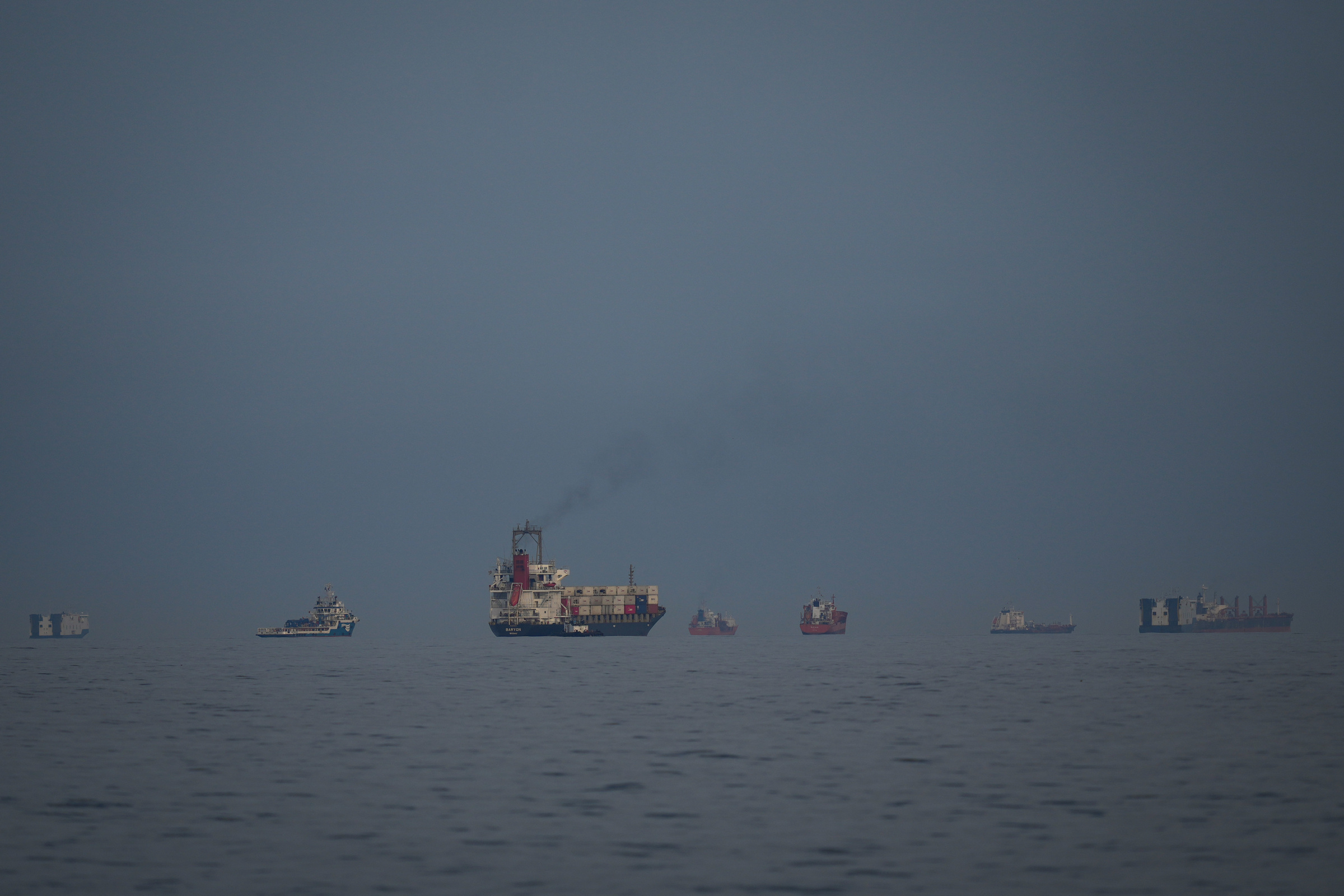 |
Tau cho dau va tau hang o eo bien Hormuz hom 11/3. Anh: AP
According to managers and analysts, the US-Iran agreement arrived at a crucial moment, as the world oil market was nearing its safe operational limits. "We will run out of reserves in about four weeks", President Donald Trump stated at the G7 summit in Versailles on 17/6.
Following the agreement's announcement, both Brent and WTI crude oil prices have fallen below 80 USD per barrel. However, experts caution that the reopening of the Hormuz Strait does not mean immediate resolution of circulation issues.
For energy flows to fully resume, all parties need to clear mines, return empty vessels, restart oil fields, and allow additional time for transportation to refineries and consumer markets. This entire process could extend for many months.
During this period, the world may continue to rely on remaining reserves. Helima Croft, Managing Director and Global Head of Commodity Strategy at RBC Capital Markets, noted that many believe the crisis is over. "There is still a very big logistical challenge to get the market back to where it was", she commented.
Under Citi Bank's base scenario, there is a 60% probability that oil flows will normalize sustainably, leading to a surplus and downward price trend over the next 6-12 months, reaching approximately 60-65 USD per barrel by Q1/2027.
Tim Waterer, a senior market analyst at KCM Trade, highlighted that for oil prices to fall further, traders need to see evidence of increased cargo traffic in the Hormuz Strait. "Brent oil prices could fluctuate around 75-90 USD in the short term", he predicted.
CNN's calculations suggest that even with a global oil supply increase of nearly 5 million barrels per day, it would still take about one year for the market to compensate for the 1.15 billion barrel deficit incurred during the conflict.
Global oil demand is projected to increase to 113.3 million barrels per day by 2030, up from 105.1 million barrels in 2025, according to OPEC.
Phi An (via CNN, Reuters)