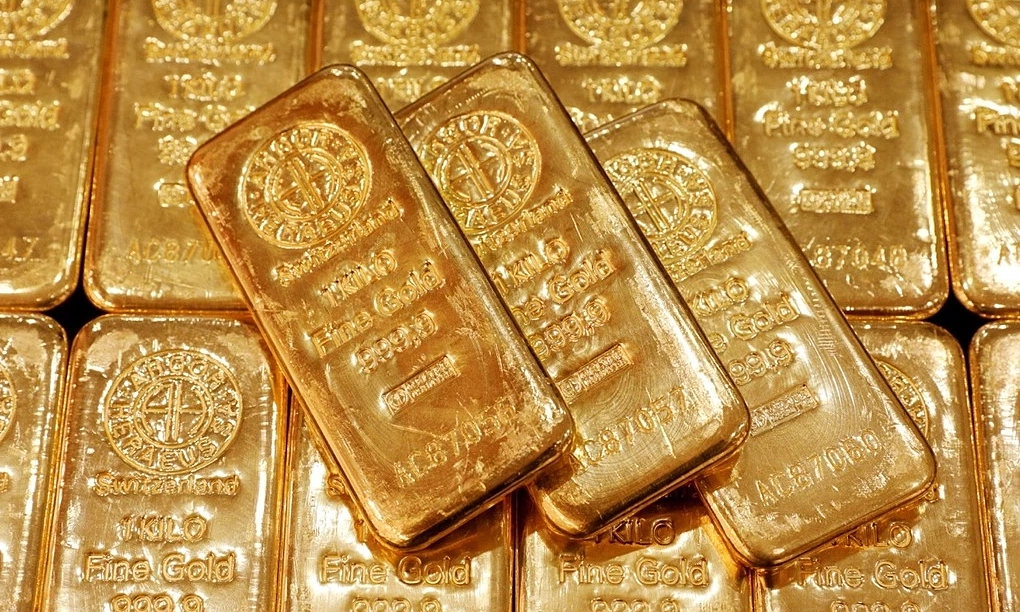
The world spot gold price closed on 10/8, rising $46 to $4,388 per ounce. By the morning of 11/8, prices continued to climb, hovering around $4,412, its highest level since 5/6.
Gold prices surged from last weekend, following US Department of Labor data indicating an unexpected drop in new jobs created in July. Bob Haberkorn, a strategist at StoneX, noted, "The current technical rally is generally strong. Investors are cautiously buying, driven by a fear of missing out if gold returns to the $4,500 mark. The US is also set to release its July consumer price index and producer price index data this week."
Official data released last week revealed that the People's Bank of China (PBOC) significantly increased its gold purchases in July, marking the sharpest rise in reserves since 10/2023. Investors are now awaiting the US consumer price index (CPI) and producer price index (PPI) reports, slated for release this week.
Economists surveyed by Reuters project July's CPI to rise by 3.4% year-on-year, a slight decrease from June's 3.5%. Jim Wyckoff, a market analyst at American Gold Exchange, commented, "The CPI data is crucial. Inflation is showing signs of cooling, and the market anticipates this report will not be excessively high. This scenario could lead to gold prices trading sideways or experiencing a modest short-term increase."
The CME FedWatch tool indicates investors currently predict a 52% probability of a Federal Reserve rate hike in September and an 81% probability in December. Gold typically loses appeal in high-interest-rate environments as it offers no yield.
Geopolitical tensions in the Middle East are also de-escalating. Iran announced it is nearing a final agreement with Oman to establish new maritime routes between the two nations via the Strait of Hormuz. However, Iran stressed that the United States must fulfill additional conditions before this strategic waterway can be fully reopened.
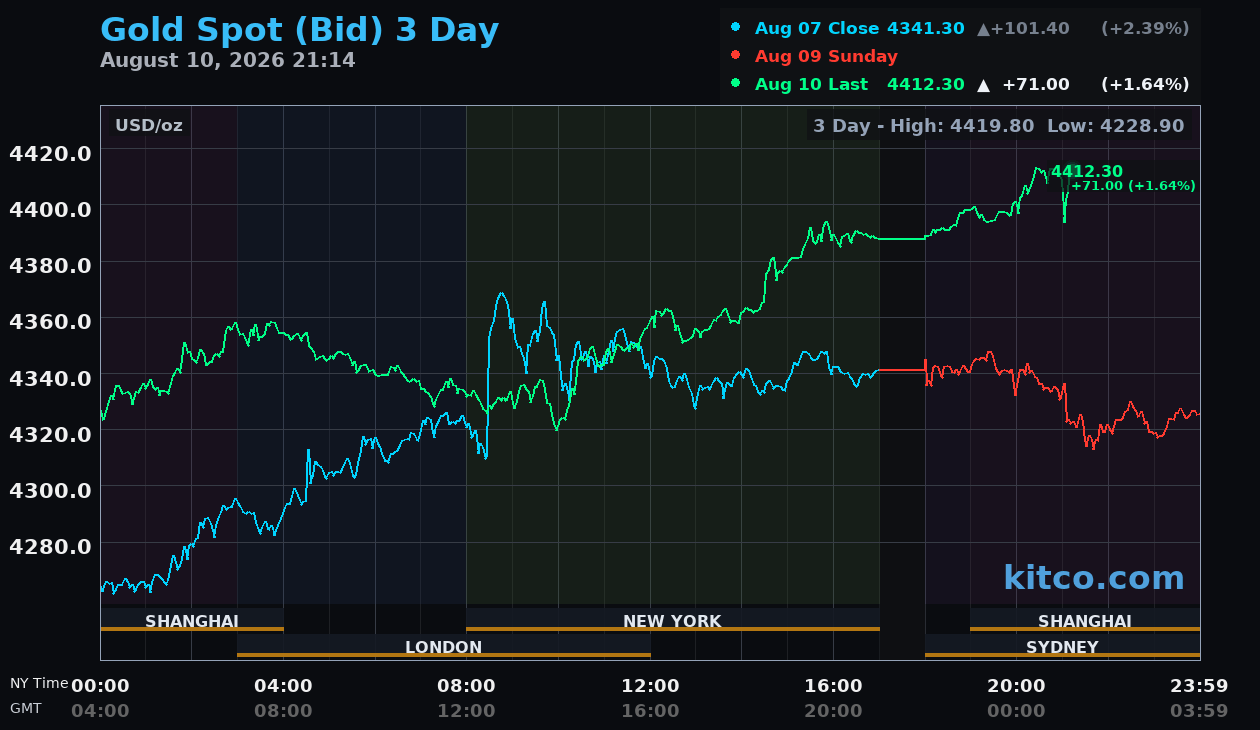 |
World spot gold prices surpassed $4,400. Chart: Kitco
Ha Thu (according to Kitco, Reuters)