In 2004, during a visit to a friend in Czech, Master Le Quang Thanh, founder and lead scientist of the Yeast Era project, met professor Puma, a renowned figure in the European fermentation industry. This chance encounter marked the beginning of Thanh's journey into probiotic research. In 2021, he and his colleagues founded Yeast Era Joint Stock Company (Yeast Era JSC), one of Vietnam's rare biotech startups possessing core technology at an industrial scale. He serves as the technical director.
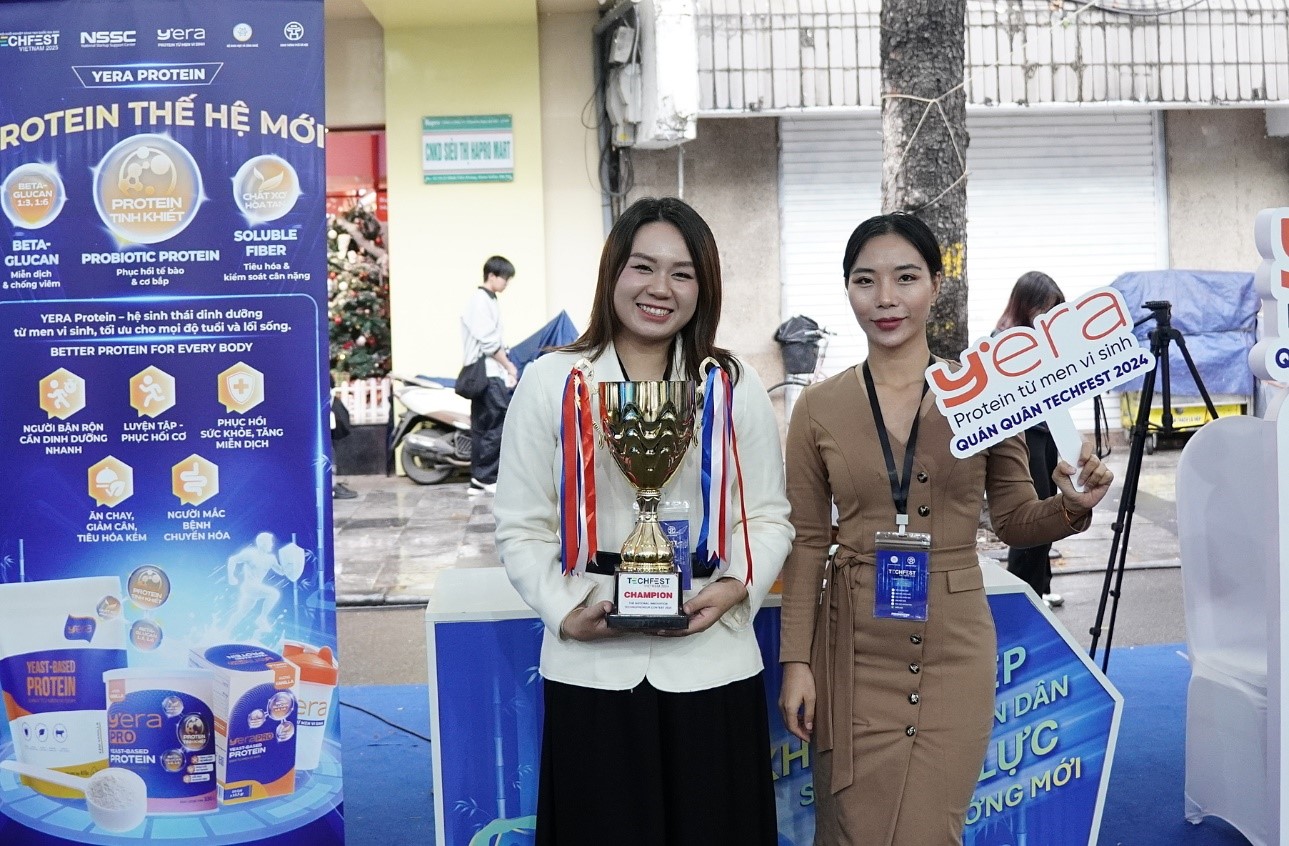 |
Yeast Era won first prize in the national innovative startup talent search competition, part of the annual national innovative startup festival (Techfest 2024). Photo: Yeast Era |
Yeast Era won first prize in the national innovative startup talent search competition, part of the annual national innovative startup festival (Techfest 2024). Photo: Yeast Era
Thanh recalls that during their first meeting, professor Puma posed a question: "Why does food – something meant to sustain humanity – become the cause of chronic illness?" This question prompted the master to change his career path.
Professor Puma analyzed the challenges humanity would face: global population projected to reach 9,7 billion by 2050, climate change, declining agricultural land, and antibiotic and chemical residues in the industrial food chain. He shared his long-held dream: to create a microbial food source that is clean, sustainable, and rich in bioactive compounds.
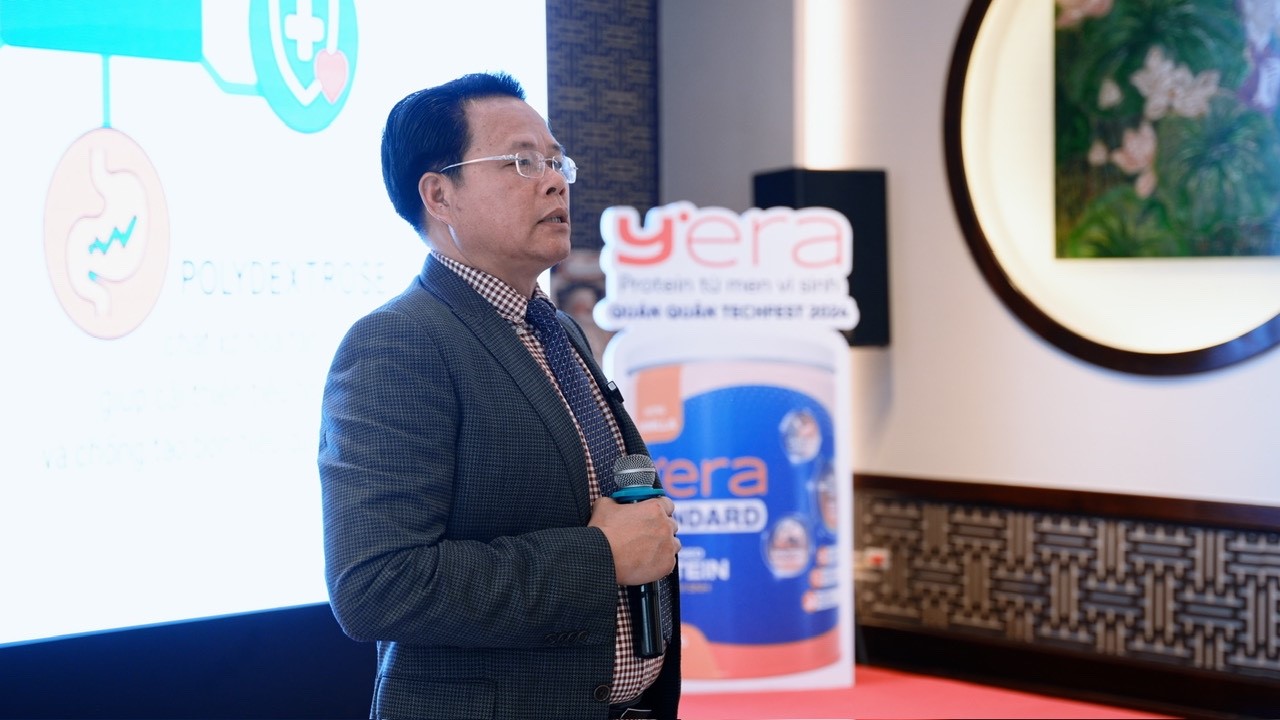 |
Master Le Quang Thanh speaks about the Yeast Era project. Photo: Yeast Era |
Master Le Quang Thanh speaks about the Yeast Era project. Photo: Yeast Era
From that extended conversation, Thanh was introduced to the research group of professor Puma and professor Rychtera (Prague University of Chemical Technology), two scientists who had dedicated decades to biomass fermentation technology. "I felt this was not an invitation, but a mission", Thanh shared.
For the first 10 years, the Yeast Era project yielded almost no commercial results. Hundreds of yeast strains were isolated and discarded; thousands of trial-and-error experiments were conducted; and there were periods full of dead ends. However, according to master Thanh, it was this challenging phase that helped the project team build the scientific foundation for their core technology. Specifically, he and his colleagues gained a deep understanding of the gene systems of microorganisms; they researched fermentation conditions to establish processes and design suitable technology to achieve high biomass, low cost, and short production times. Crucially, the team focused on industrializing the technology.
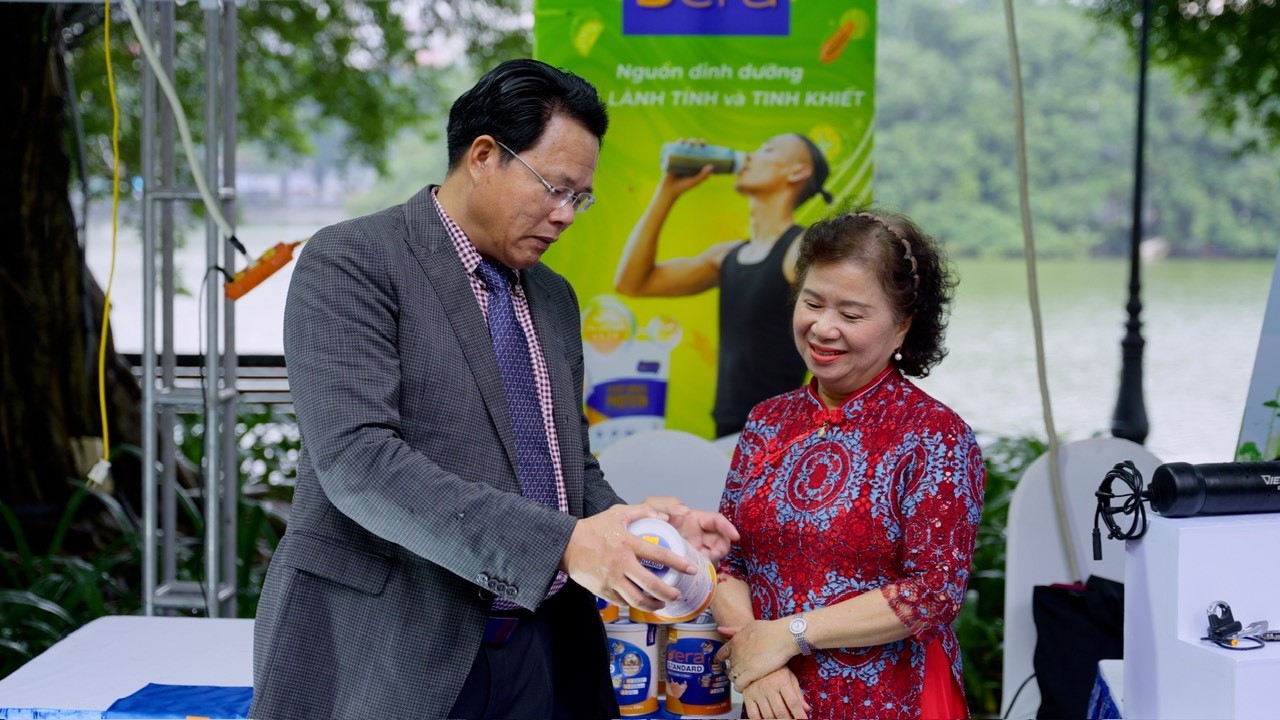 |
Master Le Quang Thanh consults on products at an event. Photo: Yeast Era |
Master Le Quang Thanh consults on products at an event. Photo: Yeast Era
Numerous real-world examples show that fermentation technology often succeeds at laboratory scales of 5-50 liters but fails at pilot scales of 1.000 liters or industrial scales of 20.000 liters. Thanh explained: "Industrial fermentation is not simply scaling up a laboratory experiment. It is a completely different biological system, where any minor deviation in oxygen, temperature, or contamination can destroy an entire fermentation batch."
Yeast Era spent many years perfecting the aerodynamic model in 20.000-liter tanks, the contamination control system, the distribution of oxygen and heat suitable for microorganisms, and the standard harvesting, washing, concentrating, and drying processes. With these elements perfected, Yeast Era can operate in Vietnam, independently of foreign experts, and expand its scale to 1.000-10.000 tons per year.
Based on its biomass fermentation platform, Yeast Era produces three core groups of active ingredients: yeast protein (pure, easily digestible, lactose-free protein); yeast β-glucan (YBG - a natural immune booster that enhances resistance, reduces chronic inflammation which is at the root of metabolic diseases, and supports early-stage anti-cancer efforts); soluble fiber; and postbiotic (supports gut microbiota, improves digestion, absorption, blood sugar, lipids, and fatty liver conditions).
"Yeast Era aims to impact all three pillars of modern health: immunity, gut health, and metabolism", Thanh emphasized.
When asked what enabled Yeast Era to overcome two decades of challenges, master Le Quang Thanh responded: "I believe that biomass fermentation technology does not just create new food. It creates a new future for human health."
(Source: Yeast Era)