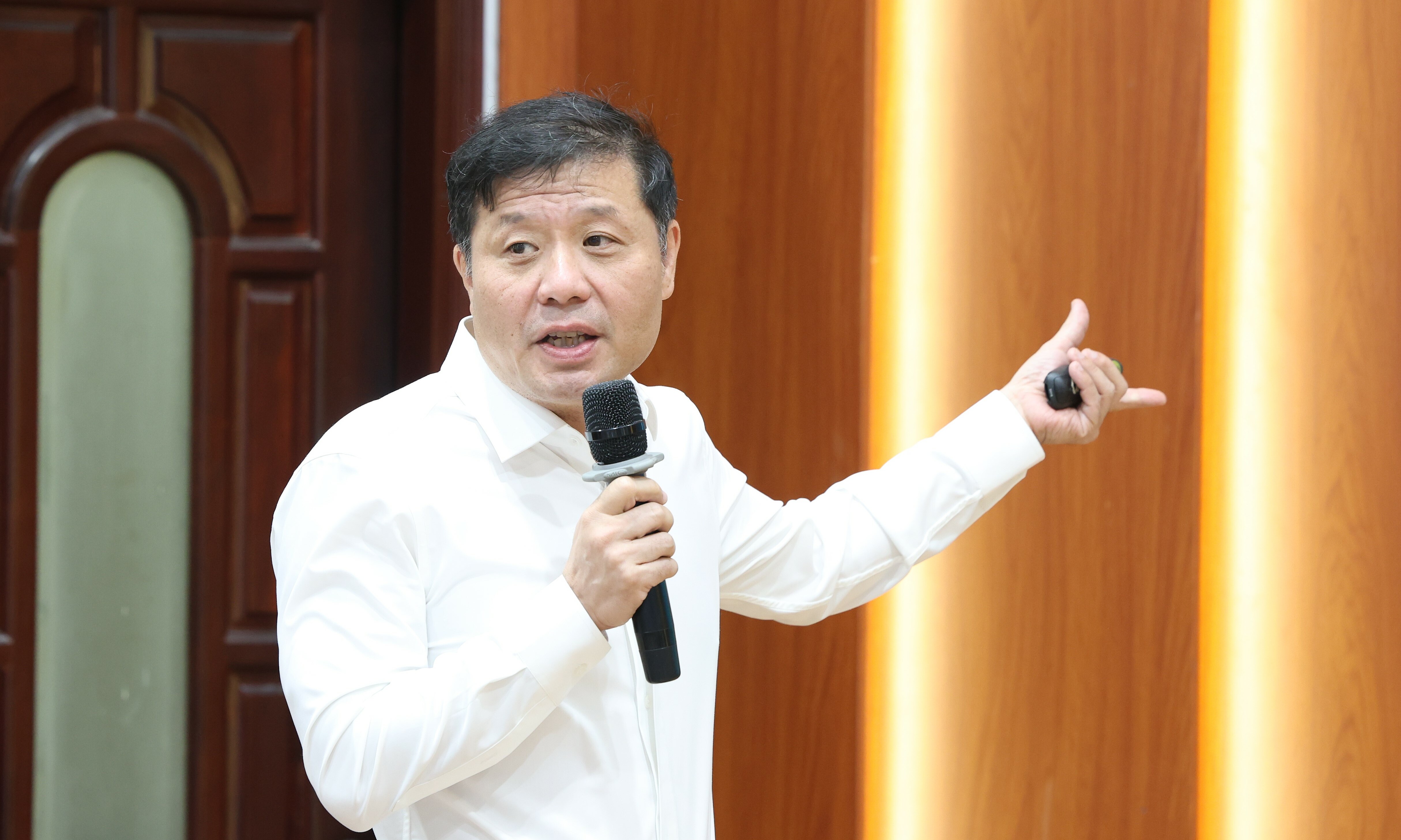
On 8/4, the National Assembly approved the appointment of Associate Professor, Doctor Hoang Minh Son as Minister of Education and Training. This position is often a "hot seat" due to the immense human resources involved, with over 1.6 million teachers impacting about 26 million students.
Le Nhu Tien, former Deputy Chairman of the National Assembly's Committee for Culture, Education, Youth, Children, and Adolescents, commented, "The new minister will face contemporary challenges as education undergoes comprehensive reform."
"The goal of education is not just knowledge transfer, but equipping learners with skills to adapt to change. This is a high demand, requiring the sector leader to have vision to realize it," he added.
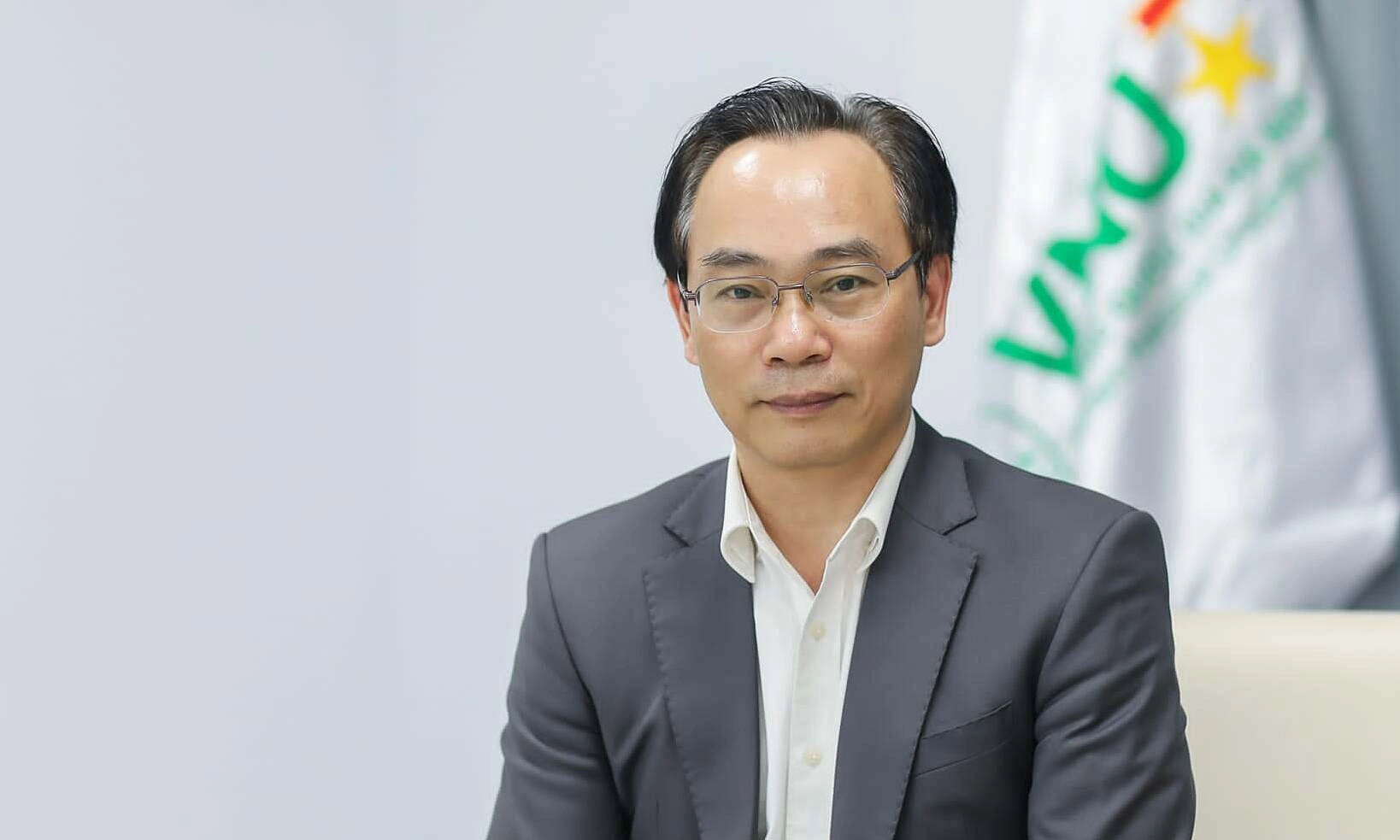 |
New Minister of Education and Training Hoang Minh Son. Photo: Toan Tran/VNU |
Overhauling the higher education network
Vietnam has about 240 universities. Resolution 71 states that the current university system is fragmented and fails to meet the demand for high-quality human resources and scientific research. The Politburo calls for urgent reorganization, restructuring, or merging and dissolving substandard schools.
Speaking to the press when he was Director of Vietnam National University, Hanoi, Hoang Minh Son said this presents an opportunity and a mission to enhance the quality of higher education.
The Ministry has provided guidance on this matter, requesting all parties to complete submissions to competent authorities by 30/6. However, experts believe this is not enough.
Doctor Le Viet Khuyen, Vice Chairman of the Vietnam Association of Universities and Colleges, emphasized that restructuring the higher education system must not only streamline the apparatus but also create an integrated pathway, helping students advance to higher levels.
Numerous other challenges exist, such as ensuring full autonomy for universities regardless of their financial status, investing in key technology sectors, and attracting talented lecturers. These efforts aim for Vietnam to have at least 8 universities among Asia's top 200, and one university in the world's top 100 in certain fields by 2030, according to Resolution 71.
"Having a university in the world's top 100 will be a significant challenge for the education sector," Tien said.
Admissions turmoil
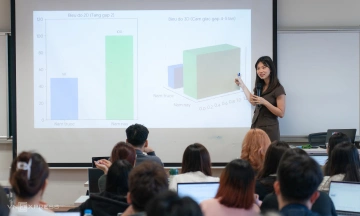
Over the past 20 years, university admissions have undergone six major changes. Initially, candidates had to take exams at the specific university they applied to. This evolved to a "three common" examination system, with common exam papers, common exam periods, and common results. Later, universities gained autonomy in admissions, leading to a proliferation of methods and separate entrance exams.
Last year, universities had to abandon early admissions and standardize score conversions across various methods and subject combinations. Each institution devised its own calculation formula, based on factors such as exam score distribution, previous student performance, and specific program requirements.
This year, about 4-5 months before the admissions season, the Ministry again required adjustments to transcript-based admission, linking it to graduation exam scores and altering how bonus points for foreign language certificates are calculated.
The Ministry states these changes aim to make admissions fairer and reduce pressure. However, experts note the lack of sufficient lead time, which leaves students and parents feeling unprepared and confused.
Globally, university admissions policies are largely stable, following two main approaches: China and South Korea organize nationwide common university entrance exams; while the United States and Europe grant universities autonomy.
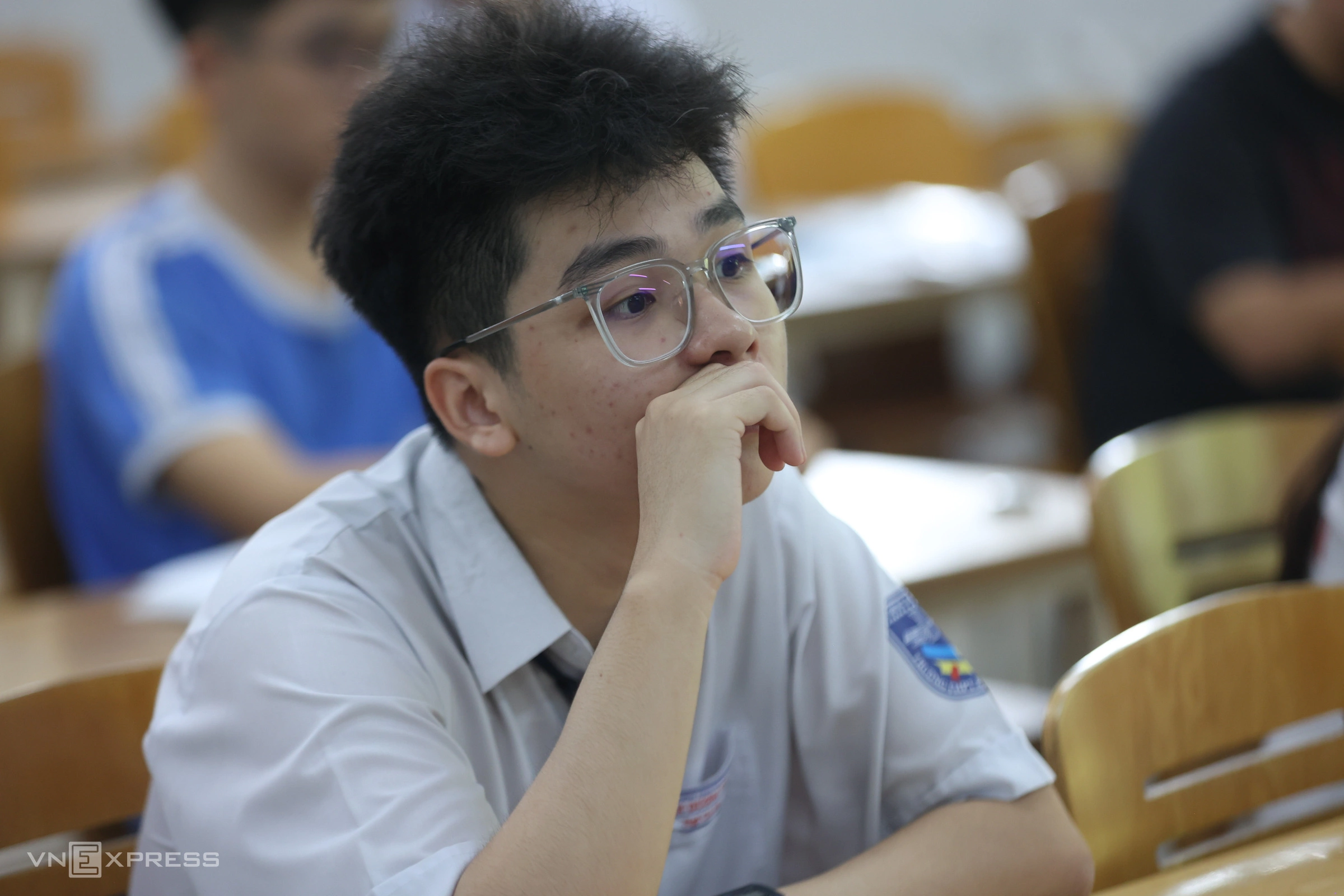 |
Candidates taking the Vietnam National University, TP HCM competency assessment exam, 4/2026. Photo: Quynh Tran |
Debate over extra classes
The Ministry's Circular 29 on extra classes was seen as "strong medicine," restricting extra classes in schools and requiring them to be free. However, it has sparked debate for a year, with many principals and experts arguing that the regulations only address symptoms, failing to reduce demand. Parents, consequently, spend 2-4 times more money on external classes for their children.
During a meeting with constituents in early March in Hanoi, Hoang Minh Son affirmed his commitment to "combat unhealthy phenomena" in extra classes, while also being open to other perspectives.
Speaking to VnExpress in March, Doctor Tran Thanh Nam, Vice Rector of the University of Education, Vietnam National University, Hanoi, suggested that in the long term, the education sector needs to improve three key areas: reforming examinations, training generations of teachers with good qualities, and fostering students' skills and self-learning spirit.
Persistent teacher shortage
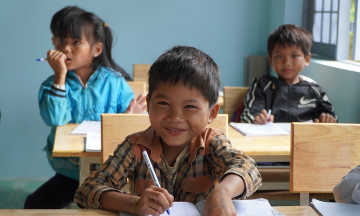
The new minister's term also faces a persistent challenge: a nationwide shortage of about 124,000 teachers as of 2/2026. Pressure also stems from an imbalance, with localized surpluses and shortages, particularly an acute need for preschool, English, and specialized subject teachers such as Informatics and Arts. Many localities have staffing quotas but lack candidates for recruitment. Concurrently, teacher resignations and transfers are increasing in some areas.
Meanwhile, the country is implementing fundamental and comprehensive education reforms, universalizing preschool for children from three years old, continuing to reform the general education curriculum towards competency and character development, and accelerating digital transformation. These initiatives place increasingly high demands on the teaching staff.
This situation necessitates synchronized, systemic, and long-term policies and solutions for teacher development.
Making English a second language in schools
Since 8/2024, the Politburo has proposed gradually making English a second language in schools.
Currently, English is a mandatory subject from the 3rd grade. No province uses English as a second language on a province-wide scale; it is only implemented through pilot programs. In the previous academic year, about 190,000 students studied other subjects in English or through integrated programs.
According to the Ministry, for English to be widely used across all 52,000 schools, the country needs an additional 12,000 teachers capable of teaching in English by 2030. However, many provinces and cities are currently struggling to recruit English teachers. Furthermore, facilities and conditions for teaching and learning English remain challenging, especially in mountainous regions.
Duong Tam