In April, Dr. Nguyen Quang Minh, 33 years old, was busy with various plans at the School of Chemical Engineering and Life Sciences, Hanoi University of Science and Technology. Having returned to the university two months prior, he was both settling into his new role and beginning to establish a research group specializing in plasma technology, a field he pursued for over five years in Europe.
Before his return, Minh earned two doctoral degrees through a dual-degree program from the University of Normandie (France) and AGH University of Science and Technology (Poland). He then conducted postdoctoral research at the University of Liverpool (UK), a university ranked 147th globally by QS.
At a point when he could have applied for indefinite residency and advanced his career in the UK, Minh put those plans aside. Instead, he applied for a lecturer position in chemical engineering at Hanoi University of Science and Technology.
"I did not want to build my house on someone else's land, so I decided to return", Minh stated.
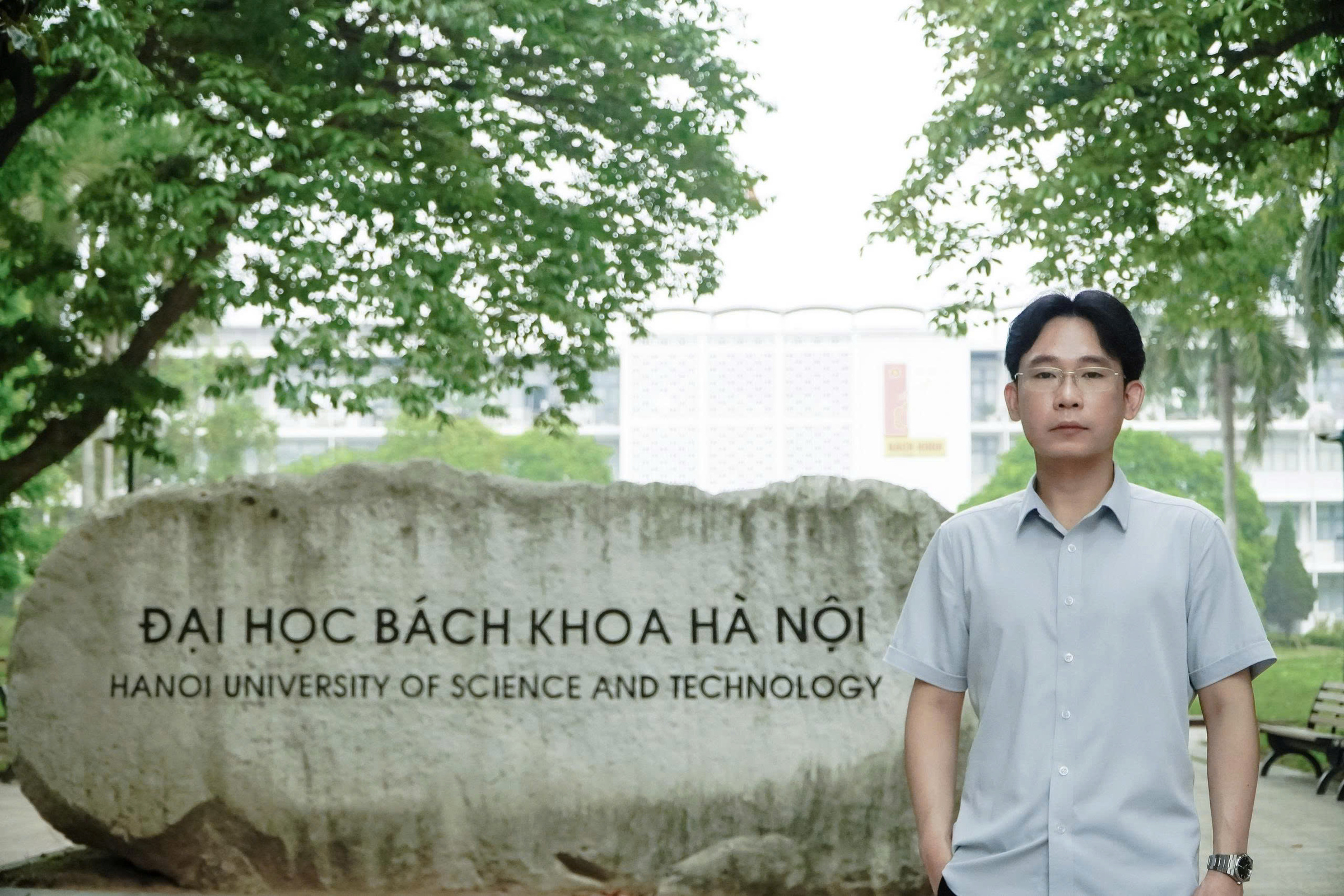 |
Dr. Nguyen Quang Minh at Hanoi University of Science and Technology. *Photo: Provided by subject*
Born in the former Thanh Ba district, Phu Tho province, Minh was admitted to Hanoi University of Science and Technology after high school. His studies were unremarkable until his third year, when he encountered the subject of catalytic kinetics at HUST.
"I was so engrossed that I pored over the book on this subject", Minh recalled.
He subsequently decided to specialize in organic and petrochemical technology. Guided and inspired by Associate Professor Dao Quoc Tuy, Minh's passion for research grew, and he began to harbor the ambition of becoming a university lecturer.
Associate Professor Dao Quoc Tuy, a senior lecturer at Hanoi University of Science and Technology, remembers Minh's surprising dedication. While conducting research in the petrochemical laboratory, Minh also participated in a research group within the department of political theory.
"Engaging in two research directions in different fields is extremely challenging, requiring careful time management. Yet, Minh excelled", said Associate Professor Tuy. "Minh also possesses excellent learning and research capabilities, along with strong presentation skills, making him well-suited for a lecturing role".
After graduating with an engineering degree with excellent grades, Minh continued his master's program at HUST. He had the opportunity to study in Germany for six months, and his interest in the new environment motivated him to set a higher goal: pursuing a doctoral degree abroad to connect with skilled professors overseas.
In 2019, Associate Professor Pham Thanh Huyen, his catalytic kinetics lecturer, introduced him to the Marie Sklodowska-Curie scholarship, which offered a dual doctoral degree program in France and Poland. After submitting his application and undergoing several selection rounds, he was accepted.
Arriving in France on a rainy day at the end of the year, with a malfunctioning phone SIM card and limited language proficiency, Minh missed his train to the university. He found himself stranded at the station with two suitcases larger than himself. Nearly in tears, he called his professor in France for help.
"Around 8 p.m., my professor drove 80 km to the train station, searched for me in the rain, and then took me to the house he had helped me rent earlier", Minh recounted. "His dedication became a driving force for me to strive harder".
Studying at two universities nearly 2,000 km apart placed significant pressure on Minh. He had to travel to the other university every 2-6 months. He also spent time studying and researching at Sorbonne University, one of France's most renowned institutions. In addition to research, he participated in many professional workshops and assisted with teaching.
Despite the challenges, Minh considered these "positive pressures" and an advantage for development, as not everyone gets the opportunity to travel widely and study at multiple universities simultaneously. This also helped him build connections, leading to a two-year postdoctoral research contract at the University of Liverpool.
Throughout his time in Europe, Dr. Minh's primary research focused on exploiting and applying non-thermal plasma technology for material surface treatment processes and catalytic chemical conversion.
Specifically, he concentrated on converting industrial emissions, particularly CO2, into valuable fuels and chemicals, such as green methanol, e-fuels, or base chemicals. A key feature of this technology is that the system can operate at low temperatures and normal atmospheric pressure, eliminating the need for high-temperature furnaces or high-pressure equipment common in traditional methods. This approach aligns with the goals of green energy solutions.
As a result of his work, he holds one French patent on plasma and catalysis. He has published 9 articles in Q1 journals (the most prestigious group), including *Applied Catalysis B: Environmental*, *ACS Catalysis*, and *Journal of Energy Chemistry*, along with several articles in Q2 journals and international conference proceedings.
Minh also participated in the ICURe technology commercialization program. After passing the idea stage, participants form a startup, receive mentorship, and are funded approximately 30,000 British Pounds (over one billion VND) for market research. In the final round, companies receive 300,000 British Pounds in funding.
He advanced to round two, co-founding and becoming chief technology officer of PlasmaC2M. However, during this time, Minh learned about the HUST-Talent program for attracting and recruiting young talented lecturers for the 2025-2030 period at Hanoi University of Science and Technology and applied.
"The decision to return is not just a personal choice, but also a desire to contribute in a small way to help the country gradually narrow the gap in scientific research with international standards", Minh shared.
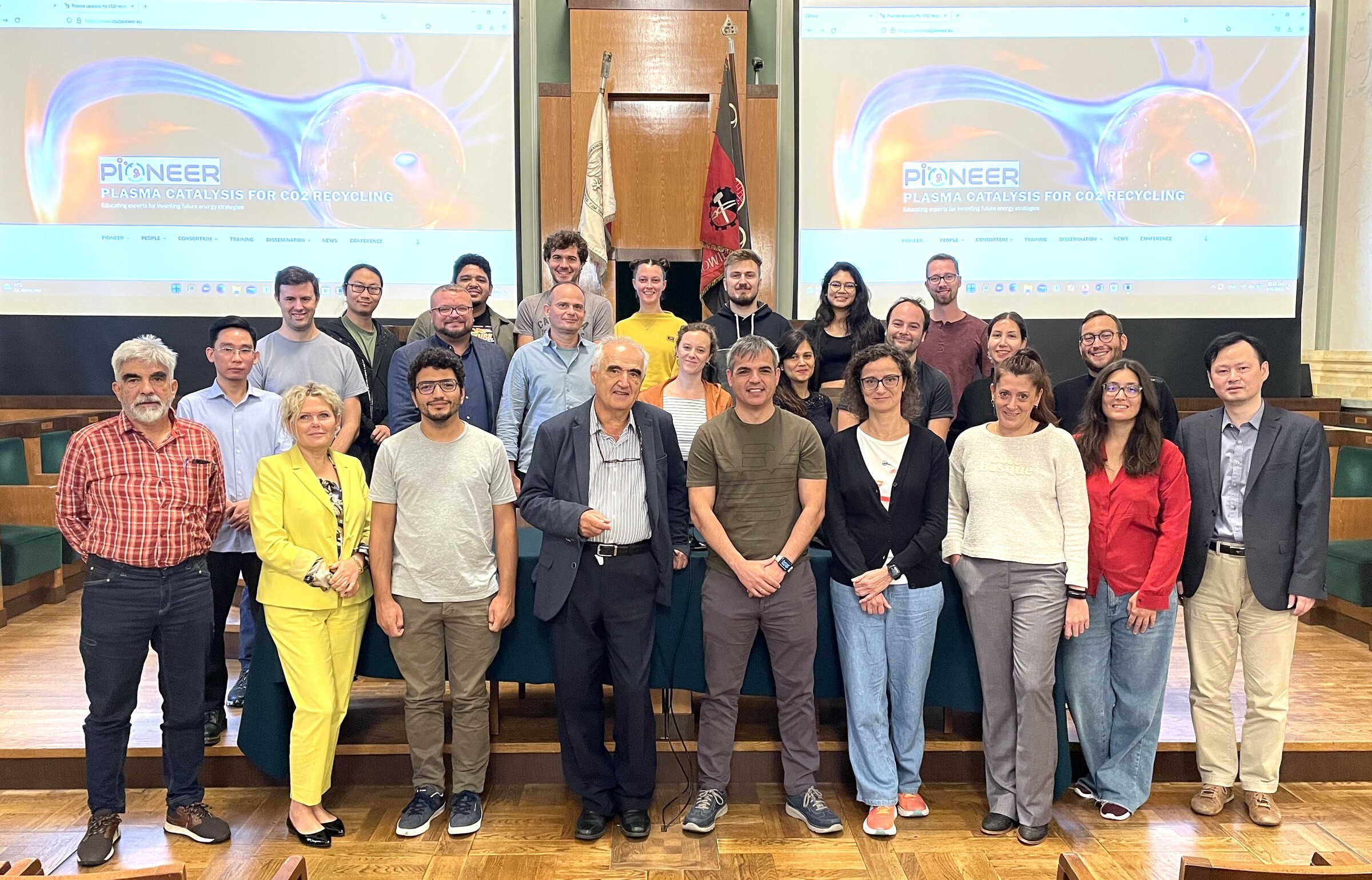 |
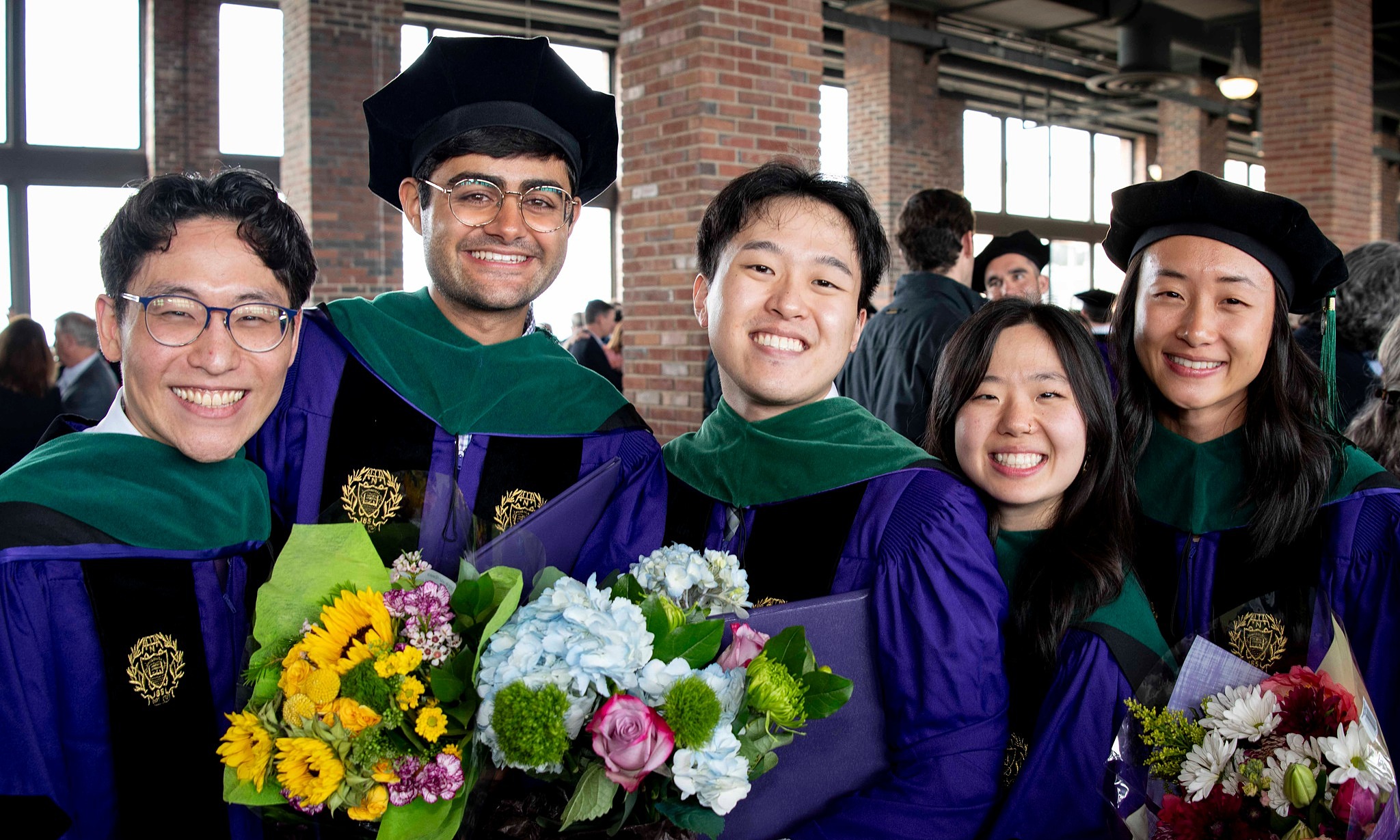
Dr. Minh (second from left) at an international workshop on plasma catalysis for CO2 recycling in 2022. *Photo: Provided by subject*
Currently, Dr. Minh lectures while continuing his research direction on applying plasma technology. Alongside conducting fundamental research, he focuses on training students with an international research mindset and methodology, covering everything from reading literature and designing experiments to writing scientific reports. From this foundation, the research group will gradually expand international cooperation, aiming to lead independent research projects.
"My goal is to establish a strong research group within five years, so that when plasma research in Vietnam is mentioned, the scientific community will immediately remember the groups at Hanoi University of Science and Technology", Minh said.
Duong Tam