The Ministry of Education and Training outlined this proposal in a draft circular on credit transfer between vocational secondary schools, intermediate vocational schools, colleges, and universities. The draft is open for public feedback until 10/6.
Specifically, the draft details two forms of credit transfer between educational levels. The first is upward transfer, from lower to higher levels, such as from intermediate vocational or college to university, which is already in practice. The second form allows transfer from a higher level to complete a program at a lower level, based on individual learning needs, career requirements, and labor market demands.
For individuals holding a university degree who wish to transfer to a lower level, educational institutions can design study pathways. These pathways will be structured around modules, specialized courses, and relevant professional competency clusters.
The Ministry highlighted a growing public demand for upskilling, career change, and skill updating. However, the recognition of learning outcomes across different educational levels is inconsistent. Many students currently have to retake content they have previously acquired. Furthermore, work experience, professional skills, and competencies developed during employment are not fully recognized in subsequent studies.
To address this barrier, the draft allows credit transfer institutions to consider recognizing professional competencies, national vocational skill certificates, specialized certificates, work experience, and other competency assessment results. This marks a change from previous regulations, where credit transfer primarily relied on completed subjects, modules, and credits.
The draft also establishes a principle for maximum recognition of accumulated learning outcomes and competencies. This aims to limit the need for students to retake content for which they have already met equivalent learning outcomes. This initiative will contribute to reducing both study time and costs for students.
While creating more favorable conditions for credit transfer, the Ministry emphasizes that maintaining training quality remains a core principle. Transfer students must meet the same learning outcomes and graduation requirements as other students enrolled in the same program.
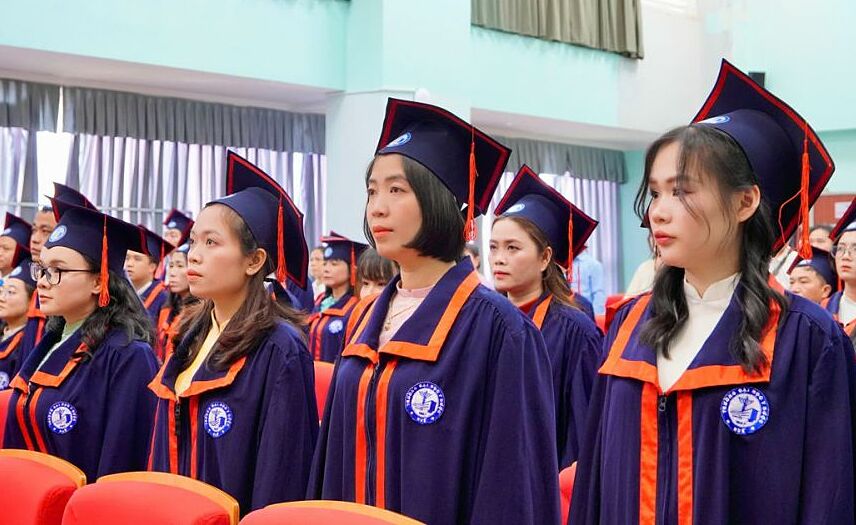 |
Students from the regular credit transfer program in Pharmacy at their graduation ceremony in march at Hue University of Medicine and Pharmacy. *Photo: University website*
Duong Tam