On 30/4, Professor, Doctor Nguyen Tien Thao, Director of the Department of Higher Education at the Ministry of Education and Training, announced that the Ministry had submitted a draft scholarship policy to the Government. This policy targets students in fundamental sciences, key engineering, and strategic technologies. The scholarships are expected to cover full-time students across 15 fields, from bachelor's to doctoral programs.
The scholarships target two groups of students. The first includes candidates who secured first, second, or third prizes in national or international excellent student competitions. The second group comprises candidates with a total graduation exam score of 22,5 points or higher in the admission combination. This combination must include mathematics and two subjects chosen from physics, chemistry, biology, or English. This score excludes priority, bonus, or converted points. Additionally, these students must rank among the top 30% of highest scores within their specific field nationally.
To retain the scholarship throughout their studies, students must consistently meet academic performance standards, credit accumulation progress, maintain academic discipline, and demonstrate scientific research capability.
"This policy is not merely about 'providing opportunities'," Mr. Thao stated, "but also a mechanism to screen and continuously foster learner development."
Regarding the scholarship amounts, a representative from the Department of Higher Education explained that the figures were designed to cover minimum study and living expenses while also providing an incentive for students.
Specifically, undergraduate students will receive monthly support ranging from 3,7 to 5,5 million VND. Master's and doctoral students will receive higher amounts, up to 8,4 million VND per month. An academic year is calculated as ten months for scholarship purposes.
Scholarship evaluation and disbursement will utilize existing data from university admission applications, ensuring no additional procedures are required.
For the 2024-2025 academic year, STEM fields, predominantly technology and engineering, account for nearly 686,000 students, representing over 33% of the total university student population. While this number has increased in recent years, it lags behind regional and global figures, such as Singapore at 46% and Malaysia at 50%.
Vietnam aims to increase its trained workforce to over one million learners by 2030.
 |
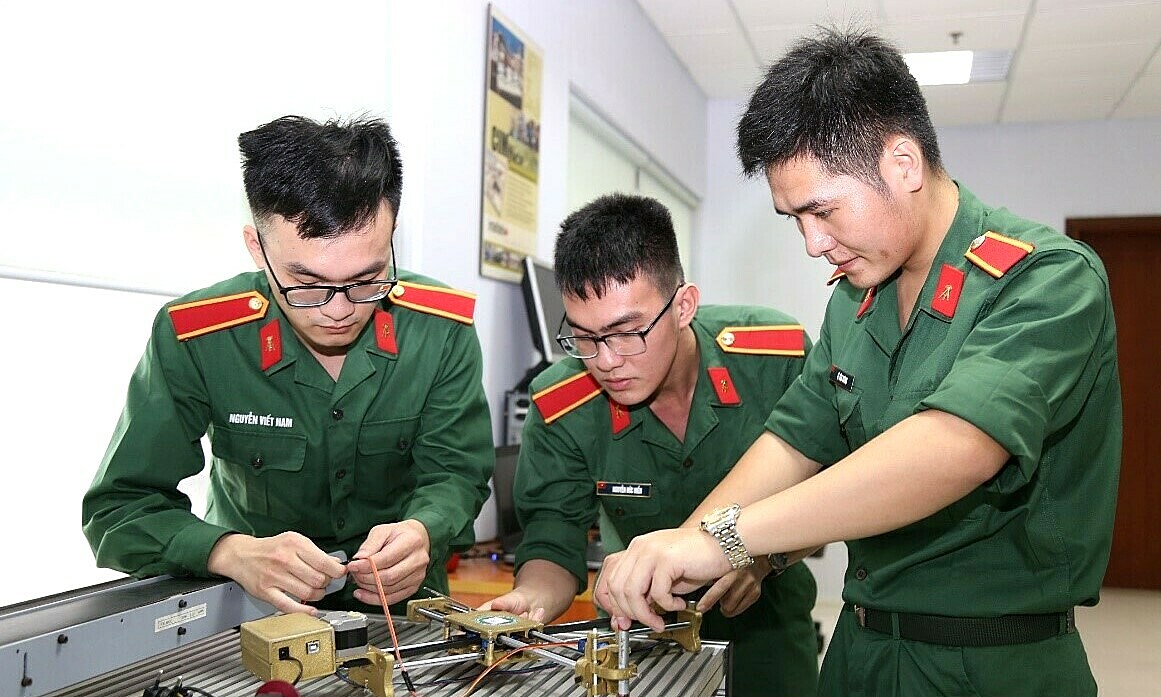
Students at the University of Engineering and Technology, Vietnam National University, Hanoi. *Photo: UET*. |
Duong Tam