A study last month by the National Bureau of Economic Research indicated that when teachers give easy A grades, students are more likely to drop out, perform worse, and earn significantly less money many years later.
Similarly, a study last year by the University of Maryland in the US found that grade inflation could reduce a class's total future earnings by approximately $213,000 USD annually. Calculations showed that a student would lose $150 USD each time their grade was raised by one step, for instance, from a B- to a B+.
The reason is that when it becomes easier for everyone to get high grades, scores no longer serve their previous function of differentiation. Simultaneously, students tend to put in less effort, perform worse on subsequent tests, and are less likely to commit to long-term learning, ultimately leading to lower adult incomes.
"This impact often does not appear immediately but only becomes evident after a long period of entering the labor market," Nolan Pope, a labor economist at the University of Maryland, stated in Fortune magazine.
These studies emerged amidst increasingly evident grade inflation in the US, even at prestigious institutions.
The Yale Daily News pointed out that while only about 10% of grades at Yale University were A- or higher in 1963, this number had increased nearly eight times by the 2022-2023 academic year. At Harvard, the percentage of students receiving A grades has increased by about 20% since 2015.
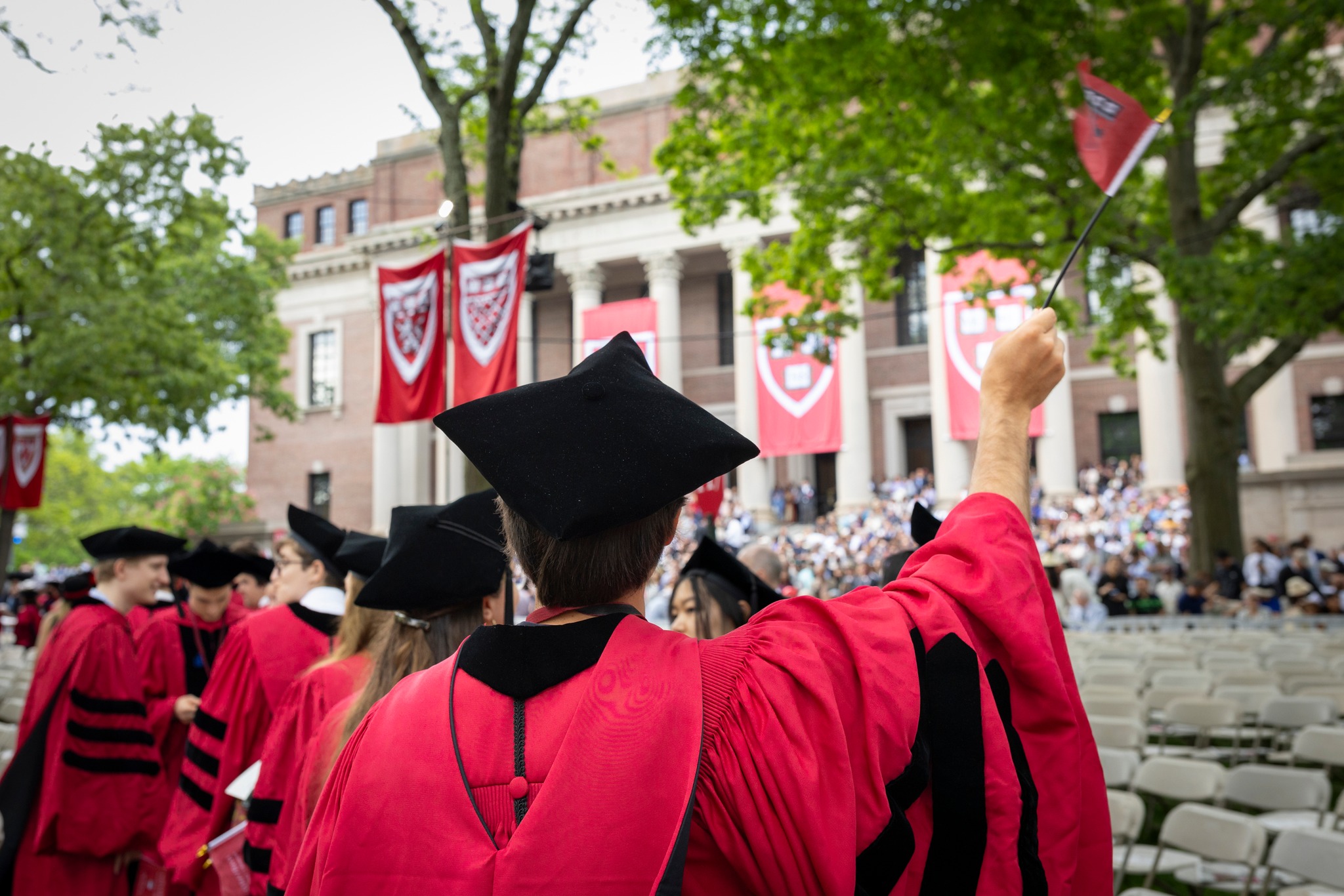 |
Harvard students on graduation day. Photo: University Fanpage |
"For teachers, giving slightly higher grades often helps reduce complaints from parents and students. Schools also maintain a better image with overall higher grades. Almost everyone sees a benefit," Pope noted.
The long-term consequences extend beyond education. Experts suggest that a growing number of graduates are unwilling to accept reasonably well-paying jobs, such as entry-level management positions in retail, leading to unemployment and dissatisfaction, with economic and social repercussions.
To curb arbitrary high grading, President Donald Trump proposed in November 2025 linking federal funding for universities to stricter grading criteria.
On the university side, last month, the faculty council at Harvard University voted to cap the number of A grades at no more than 20% per course.
Moc Mien (Compiled)