Pham Tuan Anh, Deputy Director of the Department of Teachers and Educational Administrators, Ministry of Education and Training (MOET), made this observation at a seminar titled "Solutions to Improve the Quality of Music and Art Education in General Schools" on the afternoon of 5/12.
Under the 2018 general education program, music is a compulsory subject from grades one to 9. At the high school level, it is an elective. In April, General Secretary To Lam urged the education sector to aim for a goal where every high school graduate knows how to play a musical instrument. "Children living in peace deserve such things", the General Secretary stated.
While emphasizing this as an essential policy, Mr. Tuan Anh and many experts recognize numerous difficulties in teaching and learning music in general schools.
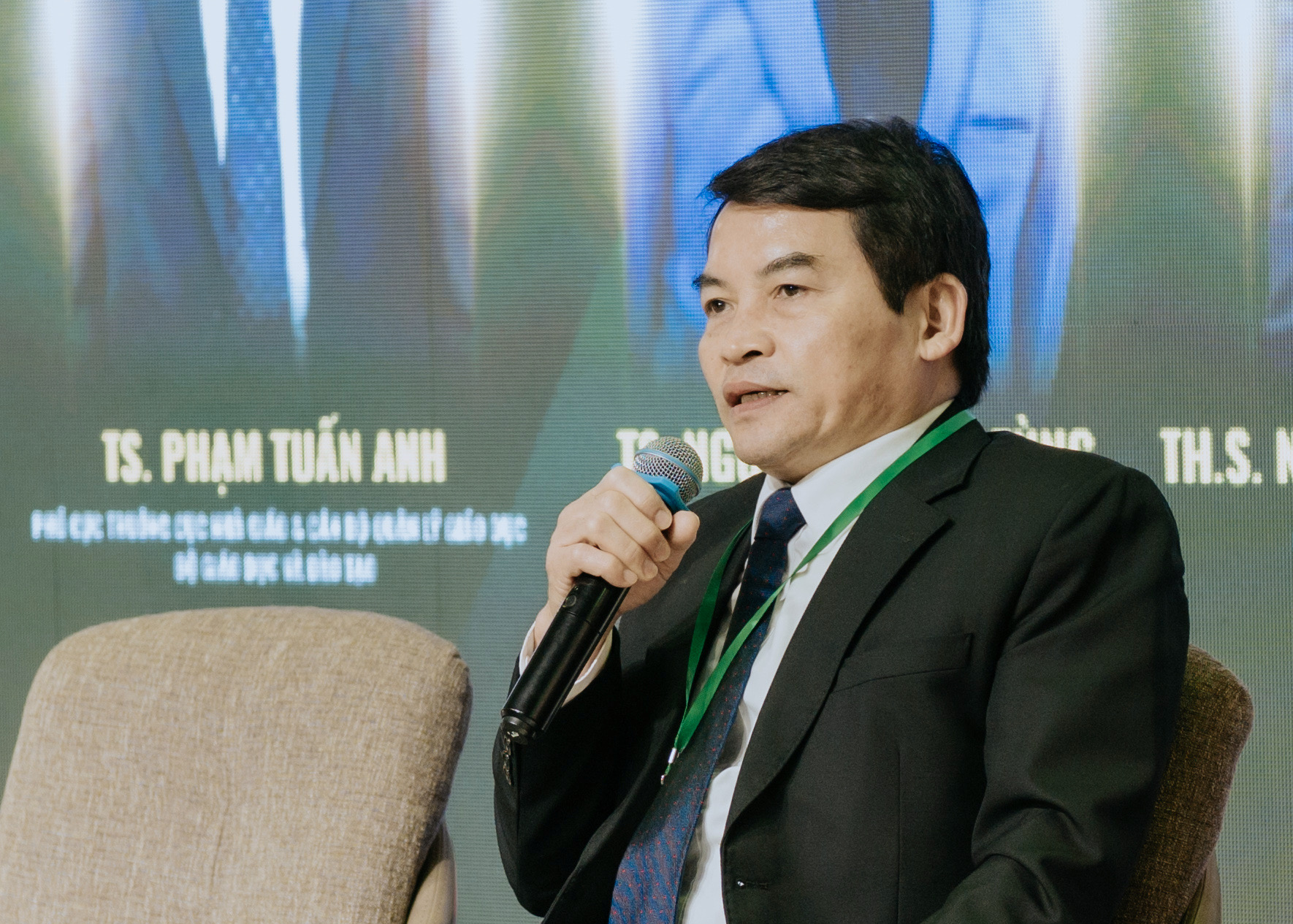 |
Pham Tuan Anh at the seminar on the afternoon of 5/12. *Photo: The NBK Schools*
The first difficulty, according to Mr. Tuan Anh, is the shortage and inadequacy of music teachers. The country currently has about 2,400 high schools. If each school requires one music teacher, this level alone faces a deficit of about 2,400 teachers, not including primary and secondary schools. While the number of music education students from universities could meet this demand, many do not enter the profession.
Teacher quality is also insufficient. Some experts point out that graduates teaching in general schools cannot identify traditional Vietnamese genres such as *ca tru*, *xam*, *cheo*, or *quan ho*.
The second obstacle to teaching and learning music is the lack of facilities. To teach this subject effectively, schools need specialized rooms equipped with a full range of musical instruments. However, few schools currently have such facilities.
Dr. Nguyen Quang Tung, a lecturer at the Central University of Art Education, concurs, stating that the two biggest challenges are teachers and facilities. Through textbook trials, Mr. Tung observed that despite students' love for music, knowledge transfer is often incomplete due to disparities in skill levels between urban and rural teachers.
Finally, Mr. Tuan Anh noted that, according to a Ministry survey, many parents still consider music a minor subject, not used for university admissions, and therefore do not fully grasp its importance.
Experts agree that it is very difficult to overcome these challenges in the short term.
Dam Tien Nam, principal of Nguyen Binh Khiem School in Hanoi, stated that integrating music into the official curriculum since 2010 required significant time and the involvement of many experts to develop the subject. The school believes that aesthetic, emotional, and creative abilities play an important role in students' personality development.
From a simple classroom lacking instruments, the school invested in a standard music room complete with a sound system, lighting, a stage, and even a professional recording studio. The teaching staff also grew from two to 30 people, including both permanent and visiting lecturers.
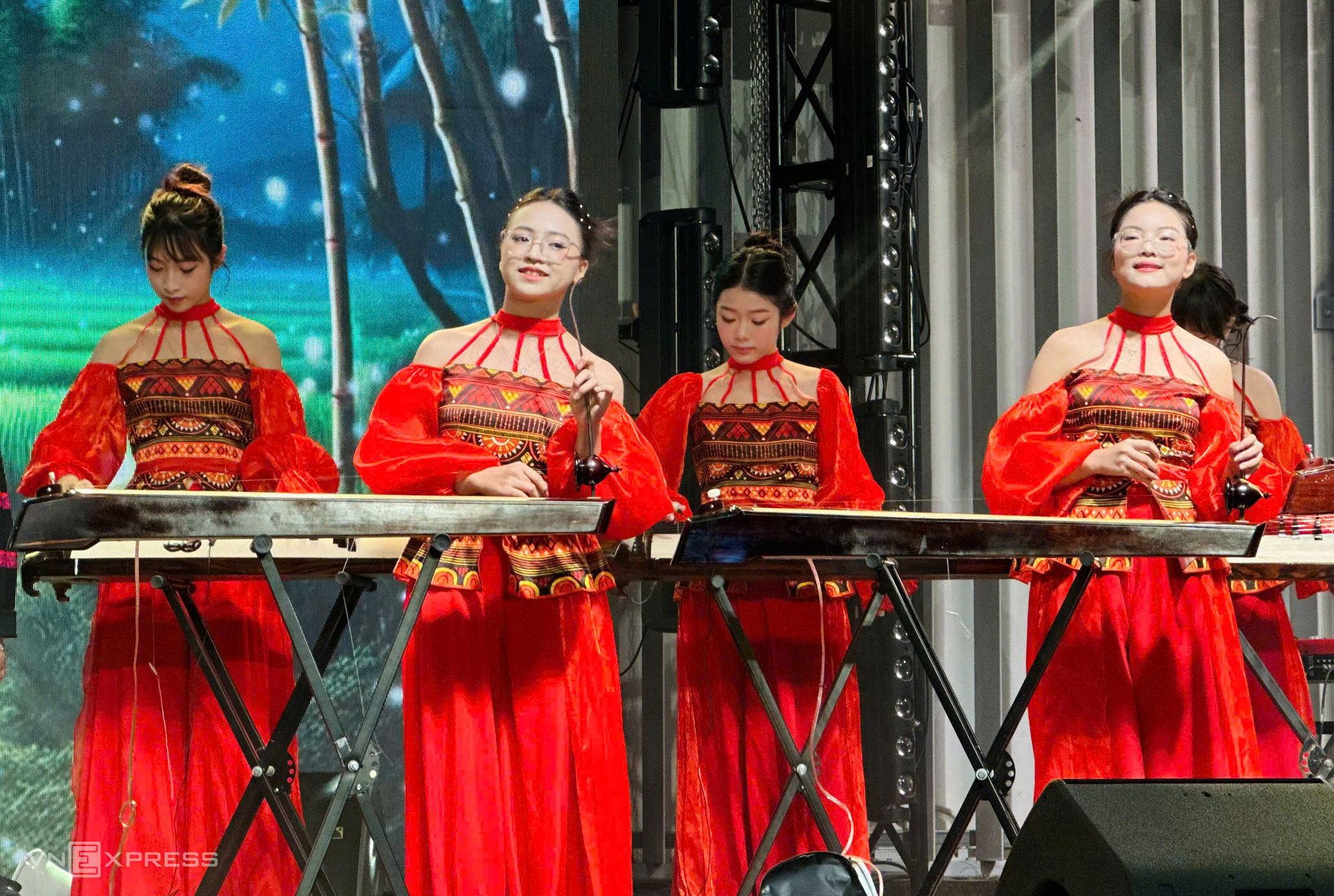 |
Students from Nguyen Binh Khiem Education System perform traditional instruments. *Photo: Duong Tam*
Thai Van Tai, Director of the Department of General Education, Ministry of Education and Training, acknowledged that public school teachers, particularly in mountainous regions, would find investments like those at Nguyen Binh Khiem School quite ambitious. However, this does not mean it is unattainable.
"We must strive to nurture our will and take concrete steps according to the General Secretary's directive", Mr. Tai said.
To address the staffing issue, the Ministry of Education and Training has issued guidelines for schools to invite experts, artisans, and artists to participate in teaching. This approach was also mentioned by Prime Minister Pham Minh Chinh in a directive in early June, aimed at enhancing cultural and art education for students.
Duong Tam