


The Australian government announced changes to its 2026 immigration policy on 12/5. This initiative aims to address skilled labor shortages and streamline the immigration process, particularly for highly qualified individuals.
To support this, the Department of Employment and Workplace Relations will receive AUD 85,2 million over four years. This funding is designated to accelerate and simplify the process of recognizing immigrant workers' skills and qualifications.
Key reforms include simplifying licensing procedures for various trades, such as electricians and plumbers. The government will also enhance the recognition of foreign qualifications and international work experience, making it easier for skilled individuals to contribute to the Australian workforce.
These changes are projected to reduce the time it takes for foreign nationals to enter the labor market by up to six months. This efficiency is expected to enable an additional 4.000 skilled workers to be employed in Australia annually, boosting the country's economic capacity.
While the long-term immigration program maintains its overall cap of 185.000 places, the allocation for skilled workers will significantly increase. This category will grow from 44.000 to 132.000 places, representing over 70% of the total intake.
Priority will be given to individuals already in Australia on a valid work visa, over those applying for immigration from overseas. This preference applies to both skilled and family reunion streams. Nearly 130.000 places are allocated to this group, with an additional 300 places reserved for special circumstances.
The remaining 55.000 work places will also primarily be allocated to skilled individuals. This strategic distribution is intended to meet Australia's long-term skill needs across various industries.
This new policy reportedly responds to calls from the Council of Australian Businesses last month. The council had highlighted concerns over the slow processing of long-term immigration applications for 55.000 skilled foreign workers. This delay left many in uncertainty while Australian businesses faced persistent labor shortages.
In parallel with these immigration reforms, the Working Holiday Maker (WHM) program will also undergo changes. These reforms aim to improve quantity control, reduce employment barriers, and ensure fairer visa allocation within the program.
As of the end of April, Australia had received a record 425.000 immigration applications. The country also saw over one million international students last year, with more than 215.000 enrolled in vocational training. This represents a 33% increase in vocational students compared to two years prior.
Among these, Vietnamese students comprised approximately 28.200 individuals, with 7.600 pursuing vocational training. This specific group saw an increase of nearly 1.600 people compared to 2024.
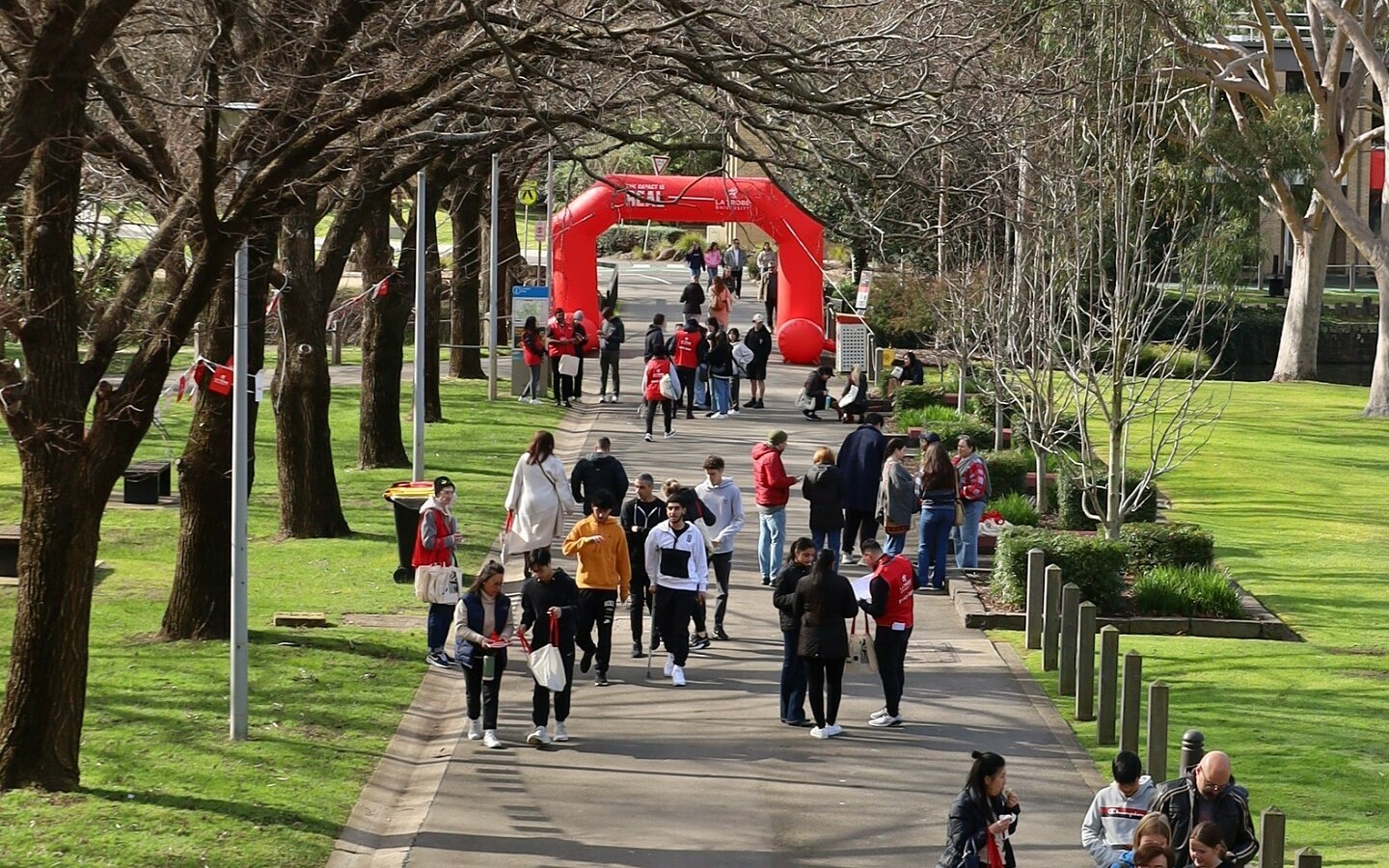 |
A corner of La Trobe University campus, Australia. Photo: University Fanpage. |
Khanh Linh (According to SBS News, 7News, AFR)


