The French star passed away at her home in Saint-Tropez on December 28, at the age of 91. One month prior, she had been hospitalized for health issues. Her passing left fans mourning, as Brigitte Bardot had long been considered an icon of French and world cinema.
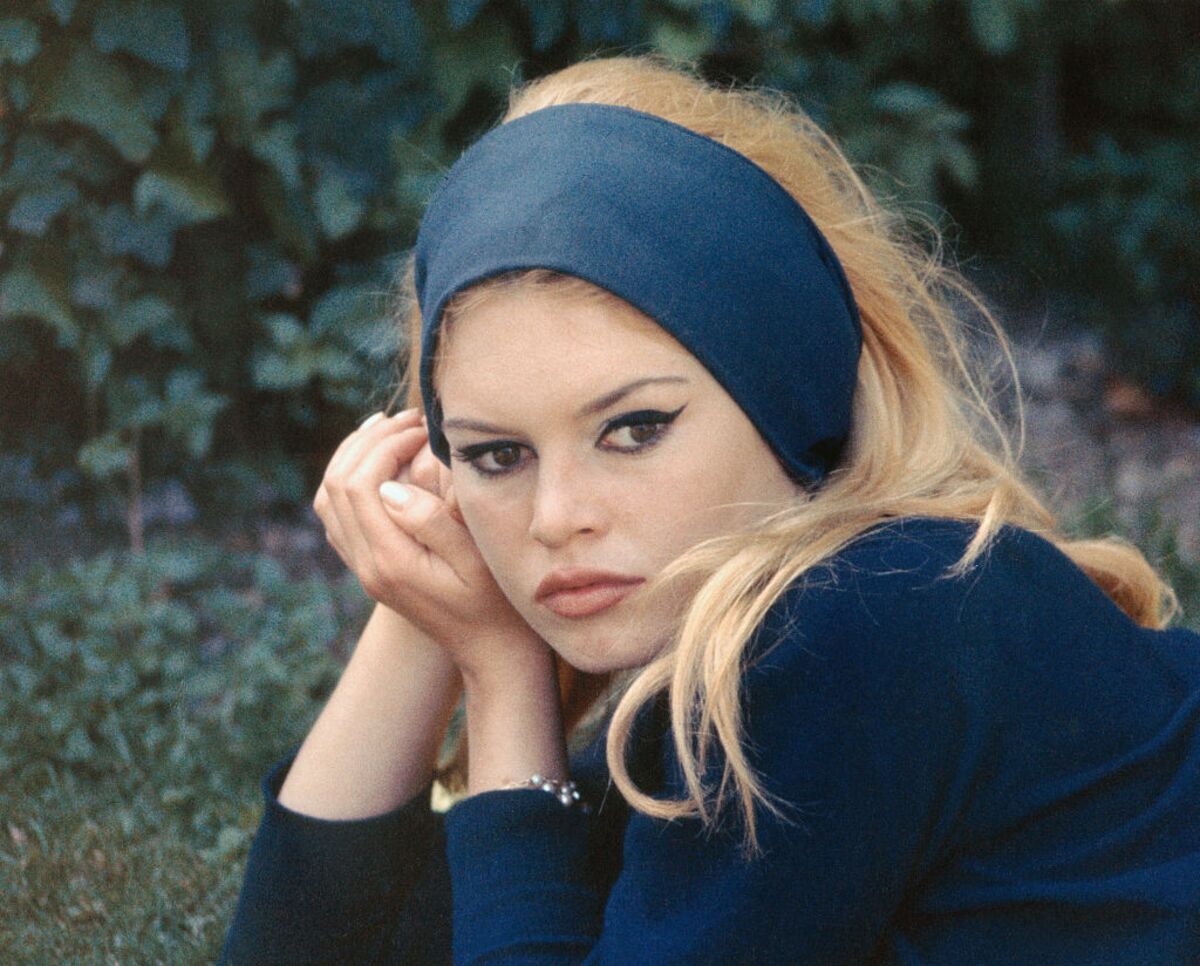 |
Brigitte Bardot on the set of "Contempt" in 1963. Photo: Rome Paris Films
According to the Guardian, film critics of the 1950s and 1960s remembered Bardot not only for her beauty but also for the free spirit she exuded through her acting. This spirit was particularly evident in "Et Dieu... crea la femme" (And God Created Woman), directed by Roger Vadim, a film that propelled her from a promising talent to a global star.
In "And God Created Woman", Bardot's character, Juliette, embodied an unrestrained nature. She did not seek security or sacrifice for men, but simply pursued her desires. This portrayal, set against the cinematic landscape of the time, was widely viewed by critics as rebellious behavior that transcended screen conventions, reflecting a France gradually shedding conservative bourgeois norms.
Juliette was sensual and impulsive, yet carried inner pain. Unlike the gentle, rural female archetypes prevalent at the time, Bardot's portrayal was youthful and mischievous. This character introduced a new type of femininity, one that broke free from stereotypes and was no longer constrained by a male perspective.
Bardot continued to challenge norms in Jean-Luc Godard's "Contempt" (1963), where she redefined cinematic conventions of love and marriage. Her character, Camille, decided to end her relationship with her husband purely because her feelings had changed. This approach mirrored a modern reality: women had the right to choose their lives without needing to justify their actions. Bardot's acting was cool and decisive, avoiding reliance on tragedy or pity to evoke emotion.
Trailer "Et Dieu... crea la femme" (English title "And God Created Woman", 1956). Video: Cocinor
Variety noted that while Marilyn Monroe remained a top star influenced by old norms, Bardot represented a daring image that reflected the open spirit of the 1960s. Her freedom was also evident in her mastery of body language and her public appearances. Bardot once stated that she did not intentionally control or build characters; instead, she acted based on her emotions when in front of her co-stars.
Her major success in the US market established Bardot as a prominent figure, representing French culture internationally. However, beyond "And God Created Woman" and "Contempt", most of her projects did not prioritize complex plots. Many films primarily exploited her physique and sensuality, featuring revealing outfits or playful scenes in the sun. Despite her long retirement from acting, her influence remains evident in later generations of actresses, including Maria Schneider, Nancy Allen, Dominique Sanda, Uma Thurman, Adele Exarchopoulos, and Sydney Sweeney. Bardot pioneered a new expression of femininity, where characters embodied a liberal spirit, self-awareness, and autonomy over their lives.
Cinema was never a great passion for Bardot. After starring in over 40 films, she ended her career at the age of 40, with her last appearance in "Don Juan" (1973). In a 2012 interview with Vanity Fair, nearly four decades after retiring, she stated: "Fortunately, I stopped. Marilyn Monroe or Romy Schneider, most great actresses met tragic ends. When I said goodbye to this work, I saved my life."
Young beauty of star Brigitte Bardot. Video: Pathe/YouTube Simply Happy
Beyond her career, Bardot's private life was a focal point of public attention. Her marriages, romantic relationships, and periods of depression captivated the French public. At her peak, a Guardian survey revealed that 47% of conversations in France revolved around Bardot, while 41% concerned politics.
At 16, she pressured her family to accept her marriage to director Roger Vadim. She later had several romantic relationships with famous artists and married actor Jacques Charrier, with whom she had one son, Nicolas. Bardot's third marriage was to German millionaire Gunter Sachs, lasting from 1966 to 1969. During her marriage to Sachs, she had a brief relationship with musician Serge Gainsbourg. In 1992, she married Bernard d'Ormale, an advisor to former National Front leader Jean-Marie Le Pen, in a remote Norwegian church.
After leaving the film industry, Bardot became active in animal protection. She condemned the hunting of baby seals, opposed animal testing, and campaigned against industrial farming methods. In 1986, she founded the Brigitte Bardot Foundation, selling many personal assets and memorabilia to support its cause. Environmental activist Paul Watson, who worked alongside Bardot in many campaigns, described her as "a friend to the animal world." Bardot once said she empathized with hunted animals, having herself experienced the feeling of being surrounded and harshly treated by the spotlight of fame.
Following her passing, French President Emmanuel Macron wrote on his personal page: "Her films, her voice, her beauty, and also her sorrows, her passion for animals, Brigitte Bardot embodied a free life."
Que Chi (according to Variety, AP, Guardian)