According to Reuters, around 2024, former Death Row Records music producer Craig Williams opened a production facility in a converted warehouse in central Los Angeles. He initially planned to rent the space for music video shoots, but a significant portion of the studio was soon dedicated to a different format: multi-episode short films shot vertically, each lasting about two minutes, targeting audiences watching on phones.
"Short film projects are continuously commissioned. After one year, my schedule was fully booked. I think I have to build another facility," Williams said.
He currently operates three production facilities under the name Vertical World Studios, specializing in fast-paced, high-climax short films. The locations are equipped with permanent sets such as hospital rooms, police stations, courtrooms, and nightclubs. Williams acquired many of these sets at liquidation prices from major studios like Sony Pictures and Paramount.
The growth of short films coincides with Hollywood's contraction. Mergers among major media conglomerates have led to a decline in film production and job opportunities. Simultaneously, artificial intelligence (AI) can replicate actors' voices and digital images. Meanwhile, paid streaming services like Netflix and Disney+ face intense pressure to retain viewers amidst YouTube's dominant market share.
In this context, short films, also known as microdramas, have become a suitable option for producers due to their brief production time, low cost, and ability to reach audiences via mobile phones.
Episodes typically range from 45 seconds to two minutes, with virtually no lengthy introductions. The plot often escalates quickly, revolving around situations such as a female lead falling for a vampire or a handsome CEO. Each episode usually ends with a cliffhanger to keep viewers engaged. Lily Darragh Harty, head of production at CandyJar, a platform specializing in romance films, stated, "Audiences are immediately drawn into the story, so they are instantly captivated."
 |
Dramatic love stories are a common motif in vertical films. Photo: ReelShorts |
This model allows companies to produce more content at a significantly lower cost compared to traditional television. Each series typically has 50-75 episodes, produced in about three months with a budget of 100,000-300,000 USD. In contrast, a 30-minute television episode often costs 2-4 million USD.
The development of AI helps producers shorten production times and optimize costs. Many platforms now apply generative AI throughout the entire process, allowing each work to be completed in just three to four weeks.
One of the factors contributing to the success of vertical films is their storytelling approach, which aligns with many people's phone usage habits. According to research firm eMarketer, the average American spends 99 minutes daily watching videos on their phone. Technology and media market research firm Omdia reported that 66 million people in the US watched short films monthly last year, double the 26 million viewers in 2024. Women aged 25 to 55 are the primary audience.
Platforms often allow users to watch the first few episodes for free, then charge weekly or monthly fees. Meagan Johnson, a content creator living in Chicago, US, discovered short films through Facebook and stated she spent 200 USD monthly to watch these series. "I scrolled past an ad for a show on social media, and the more I watched, the more engrossed I became," Johnson said.
ReelShort, one of the largest short film platforms in the US, recorded users spending approximately 38 minutes daily watching films on their phones in Q2 this year, a 40% increase year-over-year. According to Omdia's analysis, this duration exceeds the mobile app usage of Netflix, Amazon Prime Video, and Disney+.
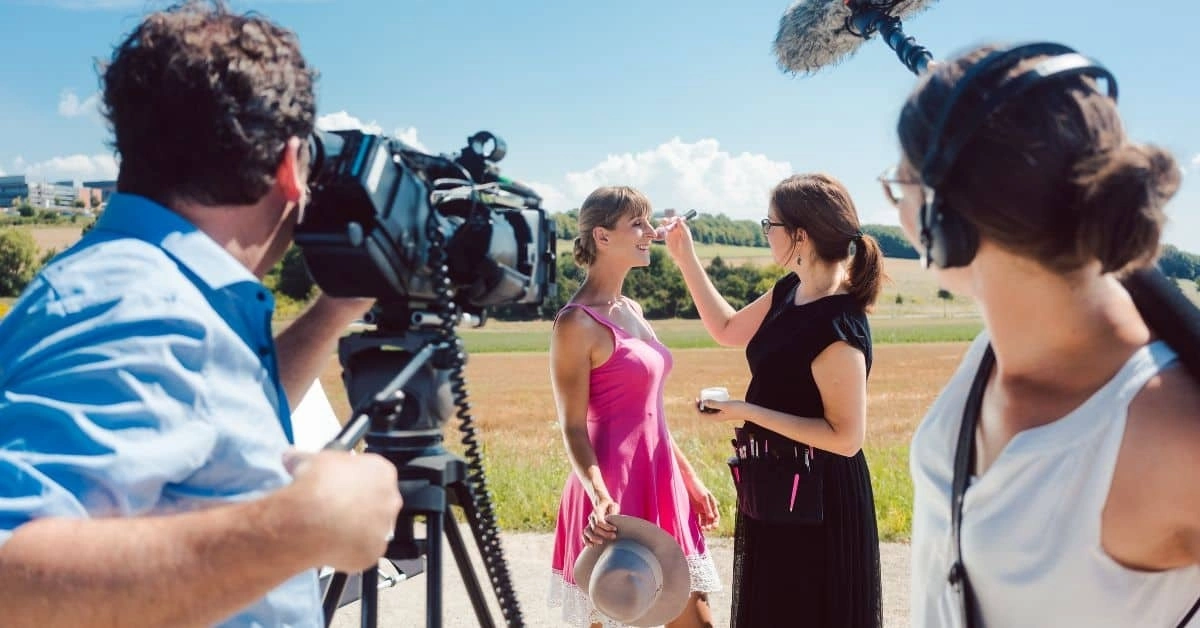 |
Microdramas create additional jobs for actors and staff in Hollywood. Photo: Filma.io |
Before its explosion in Hollywood, short films were popular in Trung Quoc. This format helped Trung Quoc-funded applications like ReelShort and GoodShort quickly establish a foothold in the US. According to Owl & Co., global revenue from vertical video, including TikTok, is projected to reach 150 billion USD this year, excluding Trung Quoc.
The vertical film market creates jobs for actors, screenwriters, directors, and behind-the-scenes personnel, while also attracting investment from film studios, media companies, and technology enterprises. Major entertainment companies are also embracing this trend, with many firms launching works that target audiences accustomed to watching short-form content on their phones. NBCUniversal added vertical content to its Peacock channel starting in early 2025. Fox signed an agreement with Holywater Tech, the Ukraine-based company behind the My Drama platform, to produce over 200 vertical videos and receive a share of equity in return.
This format also opens up more opportunities for newcomers. Previously, actors often started with commercials, played extras, and sought agents before getting roles in television series. However, according to Hernan Lopez, head of Owl and former President and CEO of Fox International, this path is changing. "Today, many people come to Los Angeles and get their first job thanks to a vertical film," he said.
However, the rapid production of vertical films raises concerns about working conditions. Due to low budgets and tight production schedules, many projects still operate outside the union system, causing some actors and screenwriters to use pseudonyms to avoid violating union regulations. This situation highlights the gap between the market's development speed and traditional labor standards in Hollywood.
The Screen Actors Guild - American Federation of Television and Radio Artists (SAG-AFTRA) has developed a specific agreement for vertical films to address the unique budget and schedule characteristics of this format. The regulations apply to projects with a maximum budget of 300,000 USD, stipulating compensation rates, rest periods, overtime, and safety requirements, while also including provisions to protect actors against the use of AI.
The business model of vertical films also sparks debate. Many applications offer a few initial episodes for free, then require users to pay to continue watching, often through subscription packages or individual episode purchases. A series can extend for dozens of episodes, making the total cost significantly higher than the payment methods of traditional streaming platforms.
Experts believe that vertical films may not replace traditional production models, but their rise indicates that Hollywood must adapt as viewers become accustomed to short-form content. This is a potential market, opening new approaches to engaging audiences who spend significant time on their phones.
Cat Tien (according to Reuters, 163, Los Angeles Times)