* This article reveals film content
Released over 3,000 years ago, "The Odyssey" is a foundational work of Western literature. Now, Christopher Nolan, who studied and earned a bachelor's degree in English literature before becoming a filmmaker, has adapted the epic into the most ambitious cinematic project of his career. However, instead of recounting the Greeks' triumphs, the director transforms Odysseus's return home into a journey confronting the trauma of war, featuring grand spectacles and a deep exploration of character psychology.
Homer's original "The Odyssey" consists of 24 books with over 12,000 lines of verse, requiring Nolan to carefully select many details for the screen adaptation. The director retains Homer's characteristic layered storytelling structure, interweaving the present with flashbacks to gradually reveal Odysseus's past. Instead of using dialogue for exposition, Nolan prioritizes visual storytelling, editing rhythm, and changes in character appearance, making the film accessible even to those unfamiliar with the epic. In turn, some plotlines and characters are streamlined or adjusted to suit the cinematic language.
The film portrays war through the fates of survivors and its prolonged consequences. From the opening minutes, the film indicates that the focus is not on the siege of Troy. The legendary city appears only as the starting point for a story about veterans, initiating a chain of losses that extend for 10 years afterward.
The reclaiming of Helen serves merely as a pretext for King Agamemnon to conquer a strategically vital location on the trade route between the Mediterranean Sea and the Black Sea. This interpretation aligns with some scholarly theories suggesting that economic and military interests were primary motives for the conflict. Set within the context of Greek mythology, "The Odyssey" raises contemporary questions about violence, guilt, and forgiveness. Beyond Odysseus's adventures lies a narrative about overcoming self-blame and rediscovering oneself after trauma.
The Trojan horse, the epic's most famous symbol, is also viewed differently by Nolan. For Homer, it represented the pinnacle of wisdom and cunning. In the film, this success becomes a haunting memory for Odysseus throughout his sea voyage. The victory leads to the deaths of comrades, the destruction of a city, and unanswered questions about the true cost of conquest.
During his days adrift at sea, Odysseus not only faces monsters and natural disasters but also carries the haunting memories of the war. The one-eyed giant Polyphemus, the Laestrygonians, and the Sirens reflect a world dominated by violence, where the strong overpower the weak. Soldiers, who once fought in the name of justice, become entangled in a cycle of plunder and slaughter, gradually losing the values they once defended.
Circe is not merely a sorceress who turns men into pigs. In Nolan's interpretation, her magic serves as a metaphor for humanity's moral decay after years of warfare, when survival instincts and the desire for acquisition override human compassion. Among the soldiers, only Odysseus retains his empathy because he carries a persistent sense of remorse for what transpired.
Calypso represents the temptation to forget the past, offering Odysseus refuge but unable to heal the emotional wounds. In the film, the lotus flower acts as a drug that helps people forget pain but cannot mend spiritual scars. Only by daring to confront his past can Odysseus continue his journey home.
The Sirens in the epic entice men with what they yearn to know, but in the film, they force Odysseus to grapple with his mistakes and transgressions. Beyond the trials at sea, the character is tormented by his past. This is exemplified by Sinon (Elliot Page), a character originally from Virgil's Aeneid. Odysseus's deception of the Trojans by exploiting Sinon haunts him, becoming an embodiment of the guilt he tries to deny. Is a victory built on deceit truly worthy of praise? This is a question the film repeatedly poses without offering an absolute answer.
Odysseus bears the wounds of war, but his loved ones at home also suffer its consequences. Nolan dedicates significant time to developing the psychologies of Penelope and Telemachus, illustrating that war does not end when the sounds of swords cease. Those left behind live in anticipation and doubt, no less tormented than the soldiers wielding swords on the battlefield.
Matt Damon delivers a deeply internal performance as Odysseus, transitioning from a confident general to a traumatized survivor torn between responsibility, guilt, and the longing to return home. His acting is primarily conveyed through his eyes and expressions, effectively communicating his exhaustion and solitude over 10 years.
As Penelope, Anne Hathaway creates the image of a resilient woman. Besides protecting Ithaca from the suitors' ambitions, her character experiences a range of emotions, from hope and anger to despair. The actress portrays her inner conflict, making Penelope one of the film's most impactful characters.
Tom Holland also has ample screen time as Telemachus. The character grows up without a father, learning to become an heir while questioning whether he should perpetuate the cycle of violence left by the previous generation. Among the antagonists, Robert Pattinson makes an impression as Antinous, who seeks to seize the throne as Ithaca descends into chaos. His arrogant and calculating portrayal makes the character a formidable opponent for Odysseus in the final act. Supporting cast members such as Charlize Theron, Samantha Morton, and Lupita Nyong'o do not appear extensively but contribute to highlighting facets of power and loss.
Visually, Nolan continues to demonstrate why he is one of the most effective directors utilizing IMAX projection technology today. Instead of merely using the format to create an overwhelming sensation, he transforms the vastness of the sea into a storytelling element. The expansive wide shots make humans appear small amidst nature, emphasizing Odysseus's solitude. The sequences confronting the Cyclops, naval battles, and the journey to the Underworld impress with their scale, but the emotional impact of the characters remains the highlight.
With a 96% "fresh" rating from both critics and audiences on Rotten Tomatoes, the film receives praise for breathing new life into the Greek epic. Robbie Collin of The Telegraph asserts that Christopher Nolan has transformed a great literary masterpiece of Western civilization into a blockbuster for the ages. "This is the film of the year," he wrote.
The Guardian and Empire magazine gave the film five out of five stars, with Empire commenting: "'The Odyssey' is a worthy adaptation of the classic epic, further solidifying Christopher Nolan as one of contemporary cinema's boldest filmmakers. You should experience this work on the largest screen possible."
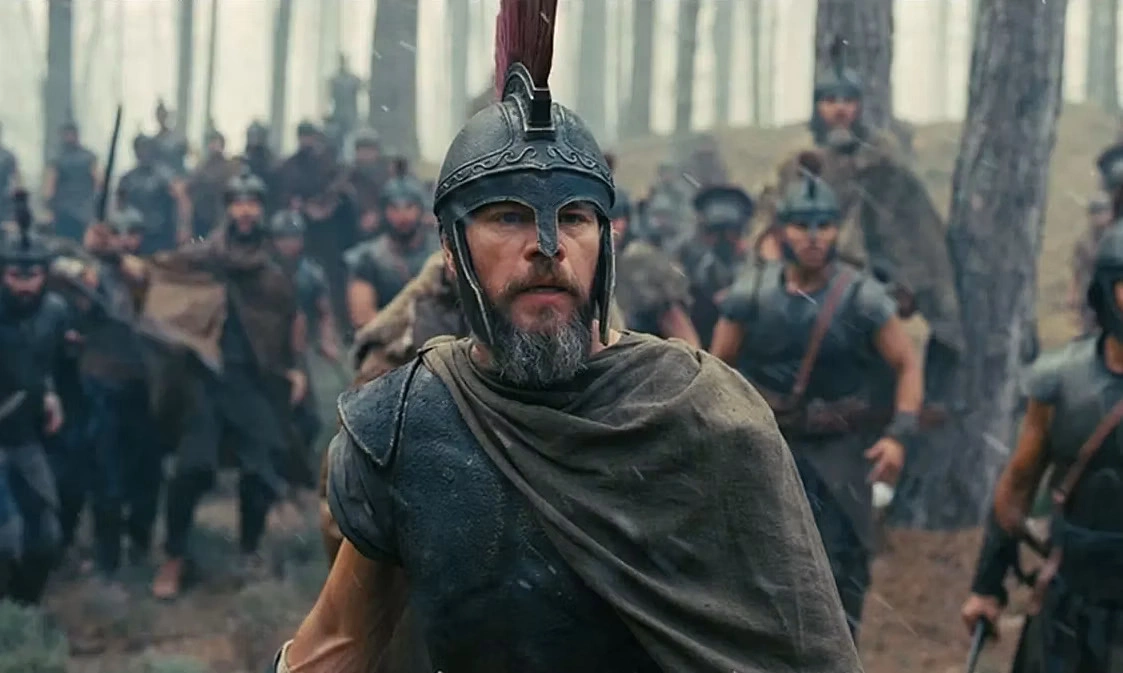 |
Matt Damon as the hero Odysseus. Photo: Universal Pictures |
However, the nearly three-hour pacing sometimes slows due to extended explanatory segments. Some ideas are emphasized repeatedly, making the middle section less concise than Nolan's previous works. Nevertheless, these limitations do not diminish the story's weight.
After over three millennia, Nolan does not attempt to make "The Odyssey" a purely mythological action film or to abandon the spirit of the original text. Instead, the filmmaker uses the epic to speak about contemporary issues. For Nolan, Odysseus's longest journey is not crossing the sea or defeating monsters, but learning to live with the choices of his past.
Cat Tien