Initially, the tumor was small and painless, but after one year, it grew significantly, occupying nearly two-thirds of the back of Mr. Thanh's left thigh and causing numbness and pain due to compression. Doctor Van Duc Minh Ly from the Orthopedic Trauma Center at Tam Anh General Hospital, Ho Chi Minh City, diagnosed the patient with leiomyosarcoma. According to medical literature, this is a malignant form of soft tissue cancer, accounting for about 0,17% of all cancers, known for rapid progression, high metastatic potential, and a tendency to recur.
The patient underwent two weeks of treatment to manage his cardiovascular condition, after which a biopsy of the tumor was performed. Full body CT scan results showed no cancer metastasis. Meanwhile, MRI images revealed a very large tumor, compressing and displacing adjacent anatomical structures.
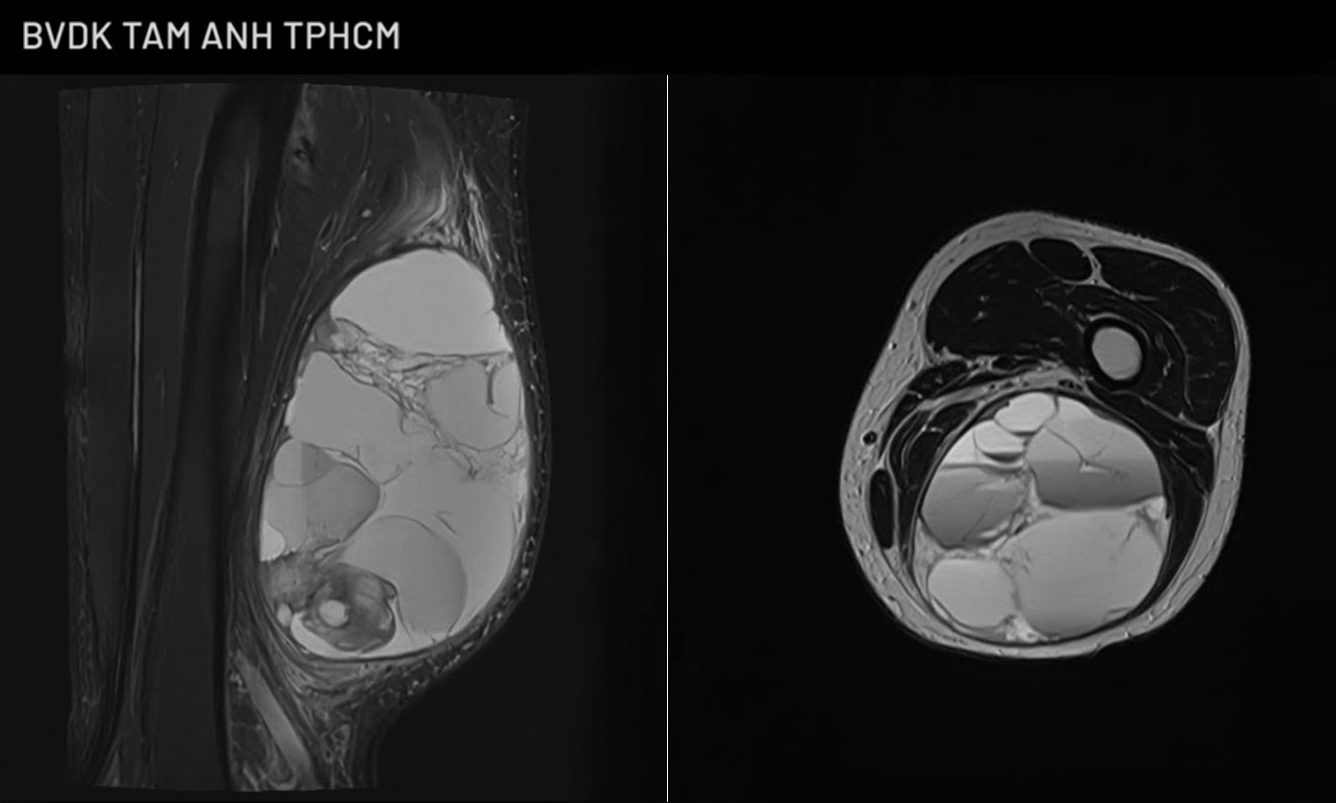 |
MRI results showed a large space-occupying lesion in the soft tissue on the back of Mr. Thanh's left thigh. *Tam Anh General Hospital* |
Doctor Ly assessed this as a complex case due to the tumor's large size and the extended anesthesia time required, especially since Mr. Thanh suffered from heart failure, posing risks of myocardial infarction, acute heart failure, and arrhythmia. However, without surgery, the tumor would continue to grow, compressing other organs, reducing the patient's mobility, and potentially metastasizing.
A multidisciplinary team of doctors from Orthopedic Trauma, Diagnostic Imaging, Oncology, Cardiology, Anesthesiology and Resuscitation, Pathology, and Radiation Oncology convened. They developed several treatment plans and risk management strategies, including the use of ECMO (extracorporeal membrane oxygenation), vascular grafting if the femoral artery needed removal with the tumor, readiness for intensive care, and radiation therapy after four weeks. The surgical goal was to remove the cancerous tumor, preserve the patient's leg, and minimize complications.
After four hours of surgery, the team successfully excised the 1,2 kg tumor. Mr. Thanh retained his left leg and was able to walk with crutches three days post-surgery. Doctor Ly stated that despite its large size, the tumor had clear margins, and no damage to the femur was observed. He is expected to receive radiation therapy four to six weeks after surgery, once the surgical wound stabilizes.
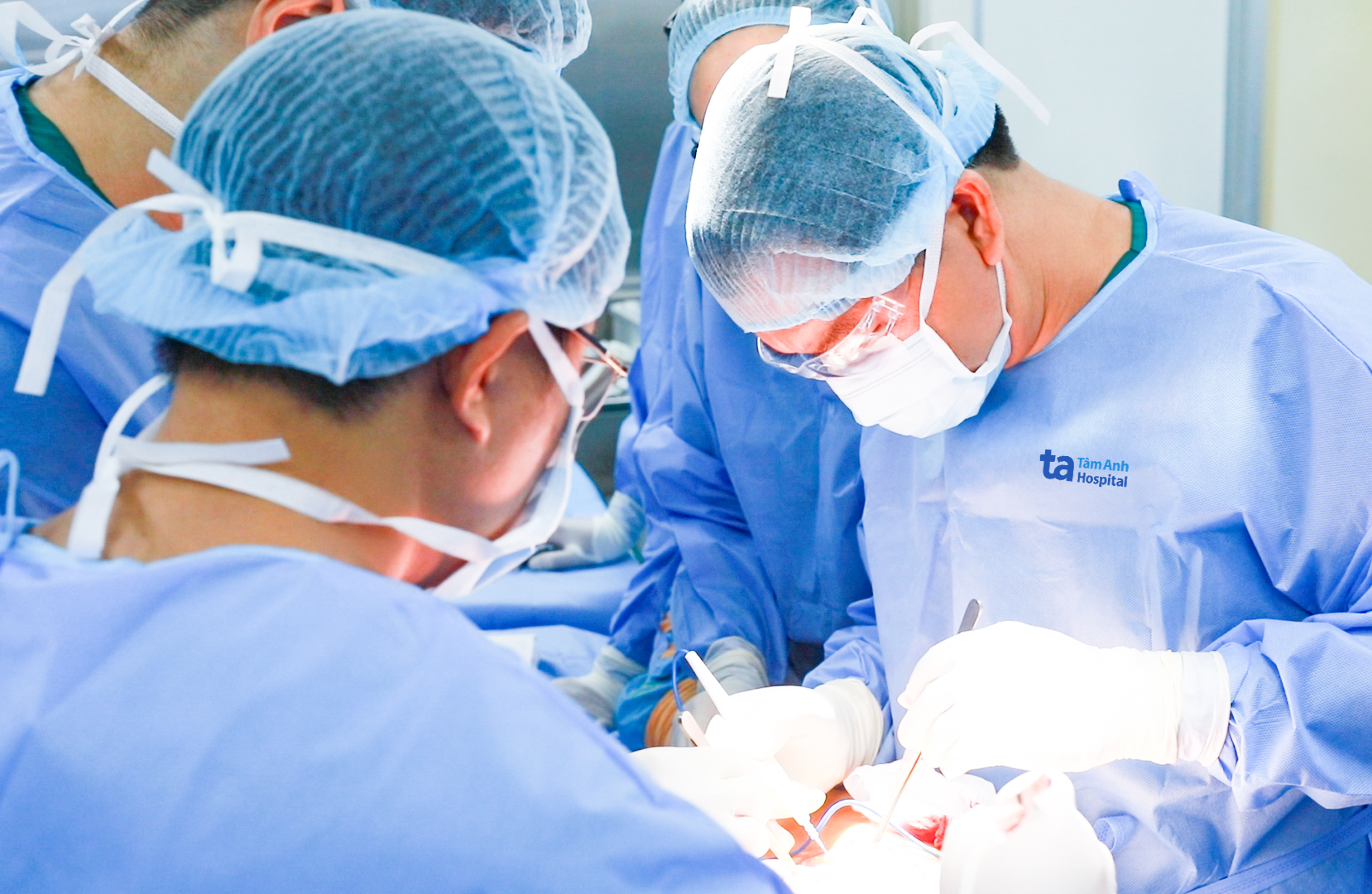 |
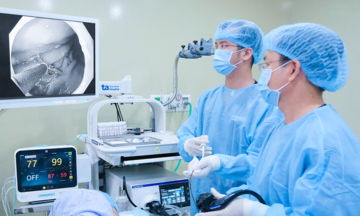
Doctor Ly (right) performing surgery to remove the cancerous tumor from Mr. Thanh. *Tam Anh General Hospital* |
Leiomyosarcoma can cause varying symptoms depending on its location. In its early stages, the disease often presents with no obvious symptoms, mostly appearing as small, painless lumps. Doctors advise patients to seek immediate medical attention if they notice warning signs of a malignant tumor, such as a hard lump, rapid growth, skin infiltration, or ulceration.
Phi Hong
* Patient's name has been changed
| Readers can submit questions about musculoskeletal diseases here for doctors to answer. |