Eng English
China 中国人

Eng English
China 中国人
  • News
  • World
  • Business
  • Entertainment
  • Sports
  • Law
  • Education
  • Health
  • Lifestyle
  • Travel
  • Science
  • Digital
  • Automobiles
  • Trở lại Thể thao
  • Health
Thursday, 15/10/2026 | 10:15 GMT+7

Stroke suspected due to atrial fibrillation

Ms. Nhu, 67, who has atrial fibrillation but inconsistently takes anticoagulant medication, experienced dizziness and unsteady gait due to a brain blood clot causing a stroke.

Doctor Le Thi Yen Phung, from the Department of Neurology at the Neuroscience Center, Tam Anh General Hospital TP HCM, reported that upon admission, Ms. Nhu was conscious and responsive. Brain magnetic resonance angiography (MRA) results initially showed no occlusion of large brain arteries, with the basilar artery still open. However, the patient had reduced sensation on the left side of her body and was monitored.

Approximately 24 hours later, Ms. Nhu's condition worsened abruptly. She fell into a deep coma, her Glasgow Coma Scale score dropping from 15 to three points, with complete paralysis of all four limbs and poor pupillary light reflexes. At this point, a 3 Tesla MRI of her brain revealed widespread infarction in both sides of the cerebellum, pons, and brainstem, along with complete basilar artery occlusion caused by a blood clot.

Basilar artery occlusion is a severe and dangerous form of ischemic stroke. It can lead to rapid coma and paralysis of all four limbs, often more quickly than other types of stroke, according to Doctor Phung.

Brain MRA upon admission showed no large artery occlusion (left), but after 24 hours, the basilar artery was completely occluded (right). Photo: Tam Anh General Hospital

After a consultation, doctors decided on endovascular intervention for the patient. Digital subtraction angiography (DSA) confirmed complete basilar artery occlusion. Doctors inserted a catheter system from a peripheral artery, guiding it through the vessel to the occlusion in the brain, then used specialized tools to remove the blood clot. This procedure fully restored blood flow through the basilar artery in the brain.

Ms. Nhu has a history of hypertension, type 2 diabetes, ischemic heart disease, and atrial fibrillation, for which she was prescribed anticoagulant medication but took it inconsistently. Doctor Phung explained that atrial fibrillation causes the atrial chambers to contract asynchronously, which can lead to blood stasis and thrombus formation in the heart. Over time, these clots can travel through the bloodstream to the brain, blocking large arteries.

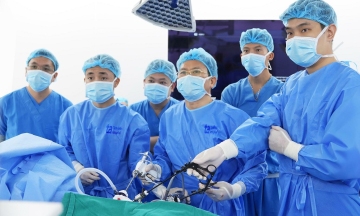
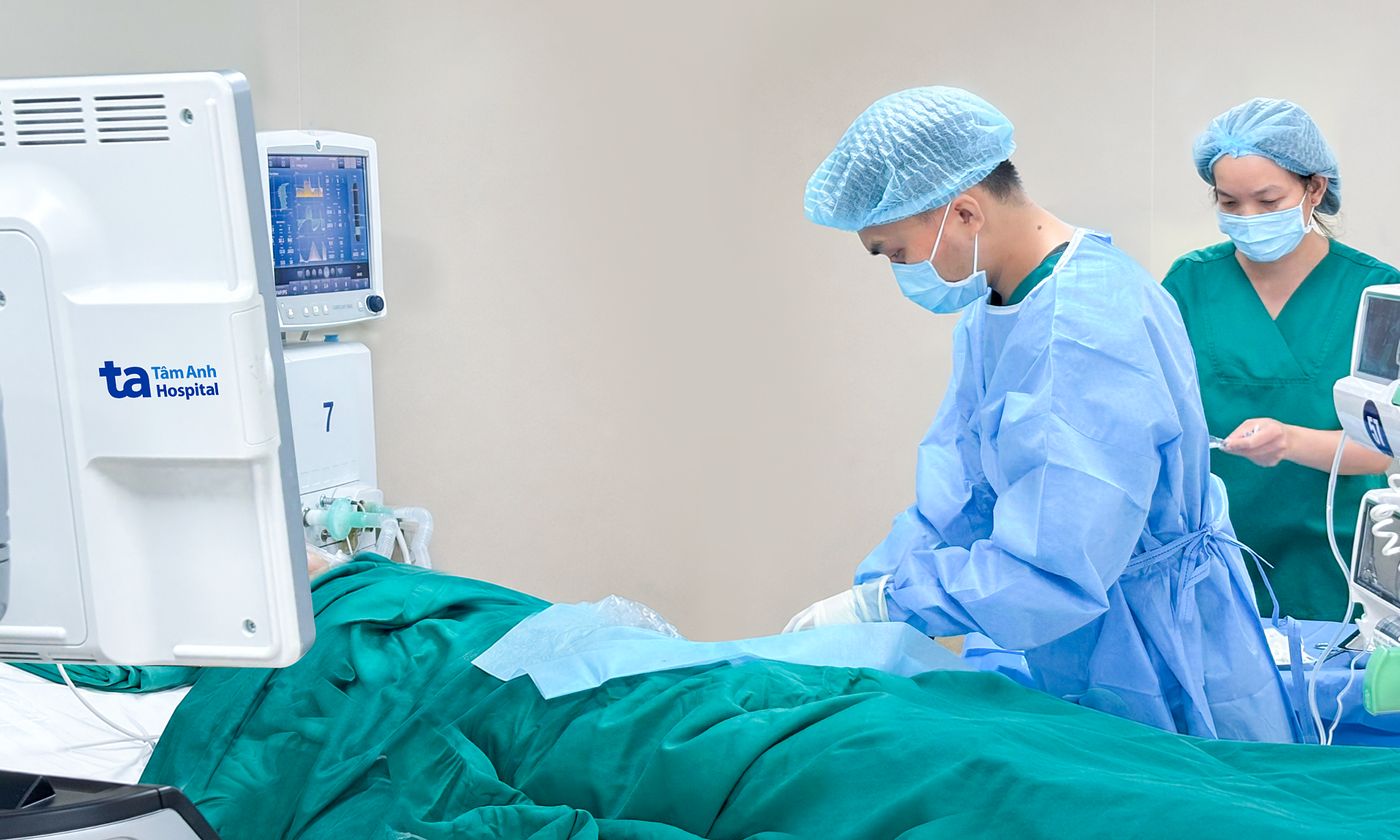
Doctors performed endovascular intervention to remove the blood clot for Ms. Nhu under DSA guidance. Photo: Hospital provided

To reduce the risk of stroke recurrence, Ms. Nhu needs to manage her atrial fibrillation and prevent new thrombus formation. Doctors are monitoring her neurological progression and imaging findings, carefully weighing the risk of hemorrhage before deciding when to restart anticoagulant medication. Administering anticoagulants too soon can increase the risk of bleeding in the damaged brain area, while delaying too long increases the risk of new thrombus formation from the heart and recurrent stroke. After two weeks of treatment, Ms. Nhu showed significant recovery, becoming conscious, mobile, and returning to normal daily activities.

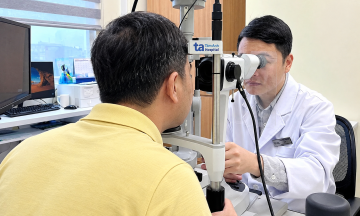
Doctor Phung checking muscle strength after stroke treatment for Ms. Nhu. Photo: Tam Anh General Hospital

Doctor Phung advises that individuals prescribed anticoagulant medication should not stop, reduce the dose, or restart medication without a doctor's guidance.

When stroke symptoms appear, following the BE FAST principle—loss of balance (Balance), vision problems (Eyes), facial drooping (Face), arm weakness or paralysis (Arm), speech difficulty (Speech), and time to call emergency services (Time)—the patient needs immediate transport to a stroke-ready facility. Early detection and intervention can limit brain damage and improve recovery chances.

Trong Nghia

*Patient's name has been changed

Readers can submit questions about neurological diseases here for doctors to answer.
By VnExpress: https://vnexpress.net/dot-quy-nghi-do-rung-nhi-5132459.html
Tags: atrial fibrillation stroke recurrence stroke

News in the same category

Hypertension caused by paraganglioma

Hypertension caused by paraganglioma

After a decade of difficult-to-control hypertension, Hoai, 45, was diagnosed with an abdominal paraganglioma by doctors.

Liver enzymes increased 30-fold due to hepatitis B

Liver enzymes increased 30-fold due to hepatitis B

Ong Tuan, 48, had liver enzymes 30 times the normal level, with doctors diagnosing liver damage caused by the hepatitis B virus.

Who should get regular eye exams?

Who should get regular eye exams?

Older adults, individuals with chronic diseases, or those with a family history of eye conditions should undergo regular eye exams for early detection of potential vision damage.

Elderly woman suffers septic shock, respiratory failure

Elderly woman suffers septic shock, respiratory failure

Lan, 99, experienced coughing and wheezing, leading doctors to diagnose acute septic shock and respiratory failure.

How common abdominal pain differs from appendicitis in children

How common abdominal pain differs from appendicitis in children

Common abdominal pain appears in episodes, gradually subsiding after a child passes stool or rests, whereas appendicitis pain is dull and progressively worsens over time.

Risk of illness as vietnamese increasingly favor ultra-processed foods

Risk of illness as vietnamese increasingly favor ultra-processed foods

Vietnamese people are spending more and more on ultra-processed foods and fast food, leading to unbalanced meals and increasing the risk of obesity, diabetes, and cardiovascular diseases.

Man suffers facial deformity, adrenal atrophy from joint medication bought on YouTube

Man suffers facial deformity, adrenal atrophy from joint medication bought on YouTube

A 69-year-old man developed acute adrenal insufficiency and severe blood sugar irregularities after self-medicating with unverified joint pain medication purchased via YouTube advertisements.

Emergency corneal transplant for sudden vision loss

Emergency corneal transplant for sudden vision loss

Experiencing sudden severe vision loss, Ms. Le Thi My Hanh, 66, saw her husband as a mere shadow. She underwent an emergency corneal transplant in her left eye and had a biological membrane placed in her right eye.

Liquid biopsy 'tracks' microscopic cancer cells in the bloodstream

Liquid biopsy 'tracks' microscopic cancer cells in the bloodstream

Blood ctDNA testing can detect residual cancer after colorectal surgery and predict recurrence risk.

What to do if you unexpectedly wake up in the middle of the night?

What to do if you unexpectedly wake up in the middle of the night?

Avoid checking your phone, looking at the clock, and instead, practice deep breathing to relax if you wake up during the night. If you cannot fall back asleep after 20 minutes, leave your bed and read a book under soft light.

Eng English
China 中国人
  • News
  • World
  • Business
  • Entertainment
  • Sports
  • Law
  • Education
  • Health
  • Lifestyle
  • Travel
  • Science
  • Digital
  • Automobiles
FPT Tower, 10 Pham Van Bach Street, Dich Vong Ward,
Cau Giay District, Hanoi, Vietnam
Email: contacts@vnportal.net
Tel: 028 7300 9999 - Ext 8556
Advertise with us: 090 293 9644
Register
© Copyright 2026 vnnow.net. All rights reserved.
Terms of use Privacy policy Cookies