On 25/3, the hospital discharged the boy from Lao Cai. His blood cell lines developed normally, and his health recovered well. This achievement followed weeks of the medical team's efforts to control dangerous complications during treatment, including infection, bladder hemorrhage, and cytomegalovirus reactivation. This surgery marks the 15th successful allogeneic bone marrow transplant performed by the facility.
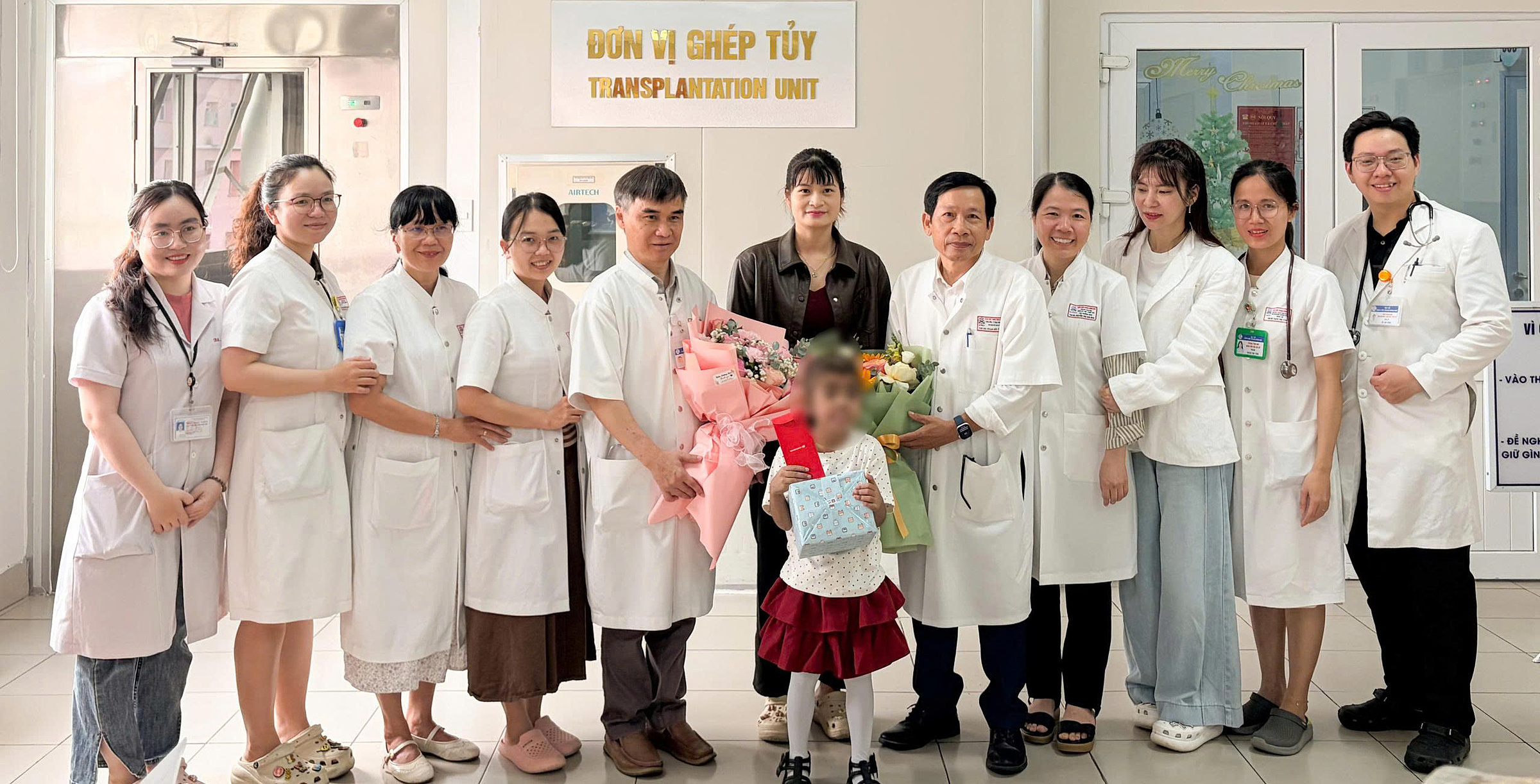 |
The 11-year-old girl poses for a commemorative photo with the doctors. Photo: Hue Central Hospital |
The boy's family discovered he had Thalassemia at 8 months old. For years, he required monthly blood transfusions and continuous iron chelation medication. When magnetic resonance imaging (MRI) results indicated severe iron overload in his liver, the family traveled thousands of kilometers to the central region seeking a chance at life. There, tests revealed a perfect 12/12 human leukocyte antigen (HLA) match with his sister, prompting the medical council to quickly approve the surgical plan.
Medical professionals consider Thalassemia a common genetic blood disorder, requiring patients to rely on lifelong blood transfusions and face complications like heart, liver, and kidney failure. Annually, Vietnam's healthcare system records approximately 2,000 to 2,500 new severe cases in newborns. Currently, stem cell transplantation serves as the most comprehensive solution, helping patients overcome dependence on blood transfusions to achieve normal physical and mental development. To meet increasing treatment demands, Hue Central Hospital recently opened two additional sterile transplant rooms. It is also implementing routine haploidentical transplant techniques, offering hope to patients lacking fully compatible bone marrow donors.
Vo Thanh