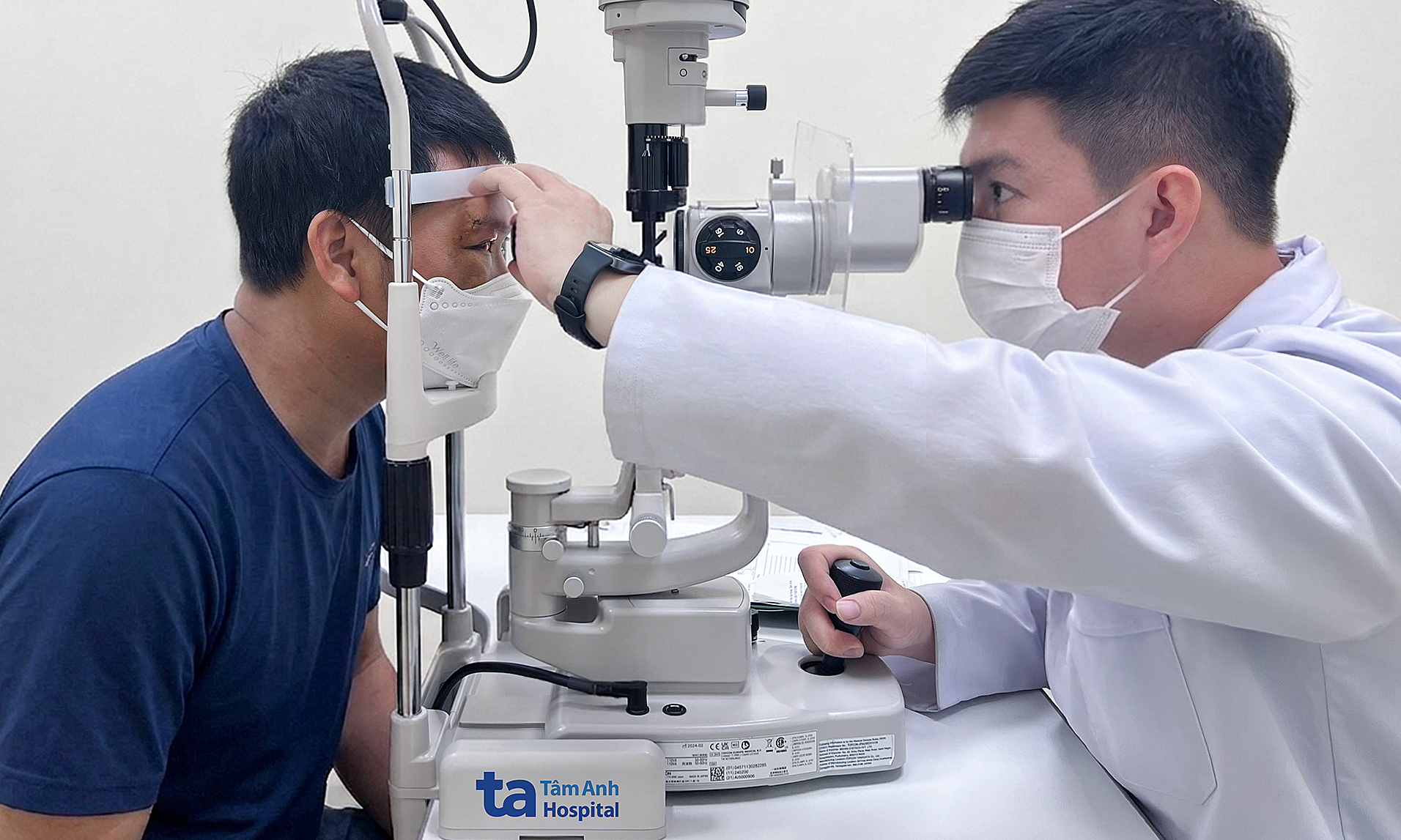
Response:
Blurry vision with a veil-like sensation refers to a condition where eyesight becomes less clear than usual. Patients often describe it as a foggy or thin film appearing before their eyes, making observed images unclear. This can hinder activities such as reading, using electronic devices, or driving, and looking at distant objects.
This condition differs from blurriness caused by refractive errors like nearsightedness, farsightedness, or astigmatism. With refractive errors, vision often improves by squinting or wearing appropriate glasses. Conversely, the veil-like sensation usually does not improve with squinting and may relate to the eye's surface, cornea, lens, or deeper structures within the eye.
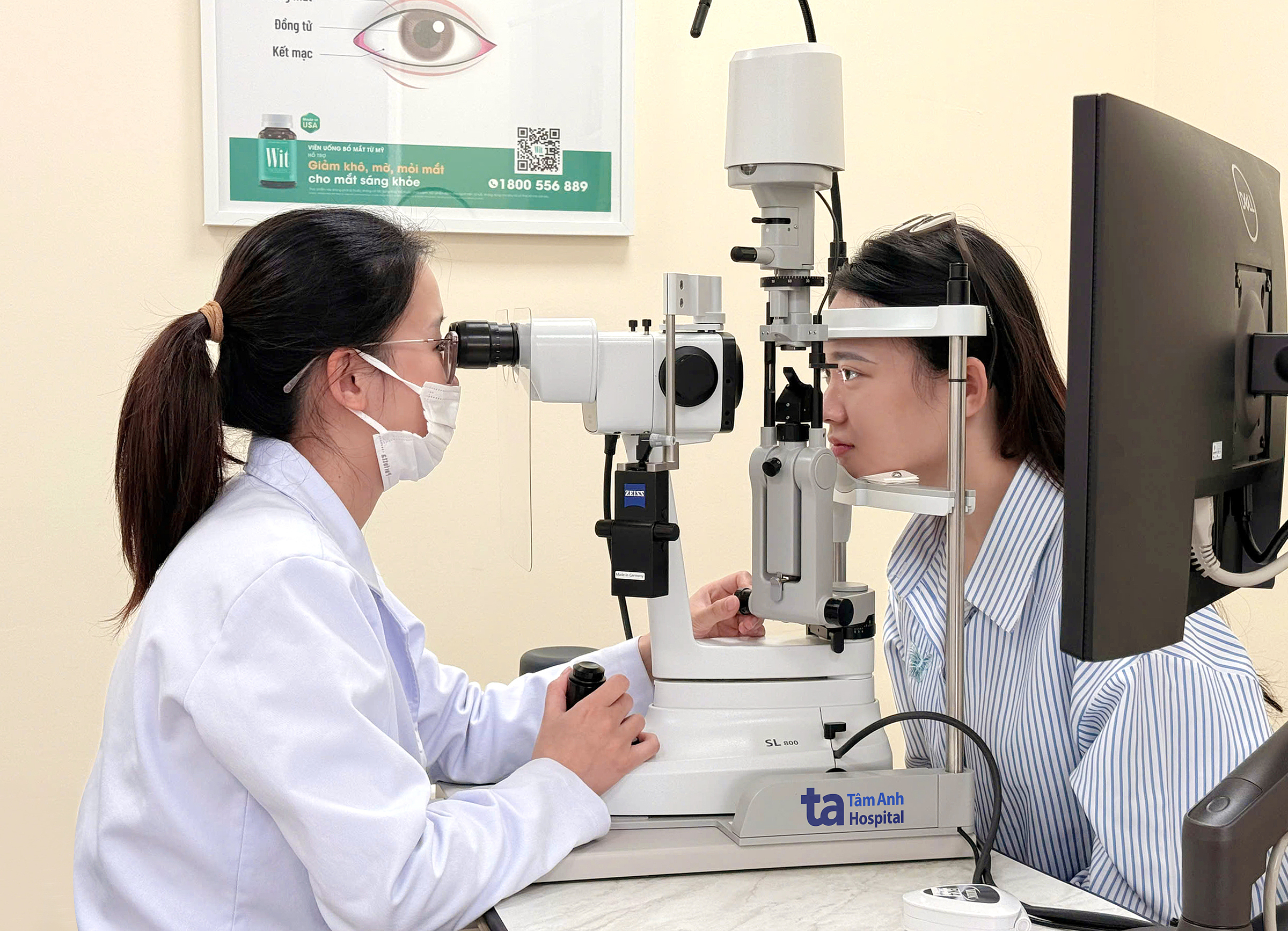 |
Doctor Huyen examines a woman's eyes. Illustration: Tam Anh General Hospital |
The causes of this condition are varied. Some cases involve mild, temporary issues such as dry eyes, allergies, or eye strain from prolonged computer or phone use. When the eye's surface lacks moisture or is irritated, vision may temporarily decrease, creating the sensation of a thin film over the eye.
However, this can also be an early sign of certain eye diseases. Conditions such as keratitis, cataracts, glaucoma, uveitis, or some retinal diseases can cause vision reduction, leading patients to feel their vision is obscured. If not detected and treated promptly, these conditions can result in long-term vision impairment or vision loss.
When experiencing veil-like blurry vision, individuals should rest their eyes, limit prolonged use of electronic devices, and ensure adequate lighting in their work environment. Taking regular eye breaks and blinking frequently can reduce eye strain. In some cases, using artificial tears helps keep the eye surface moist, reducing blurriness.
If blurriness persists, recurs frequently, or is accompanied by symptoms such as eye pain, redness, light sensitivity, rapid vision decrease, or distorted images, individuals should visit an ophthalmology hospital for examination. A doctor may prescribe vision tests, funduscopy, or retinal imaging to identify the cause.
Master, Doctor Le Thanh Huyen
High-Tech Eye Center
Tam Anh General Hospital Hanoi
| Readers can submit questions about ophthalmological conditions here for a doctor's response. |