On 24/3, the Environmental Working Group (EWG) released its 2026 Produce Shopper's Guide, highlighting spinach as the top item on its "Dirty Dozen" list of 12 most contaminated produce items. A significant finding in this year's report is the discovery of PFAS, or "forever chemicals," in over 60% of samples from these 12 produce types, raising substantial public health concerns.
The "Dirty Dozen" list includes common fruits and vegetables such as strawberries, grapes, peaches, cherries, apples, blackberries, pears, blueberries, and potatoes. While potatoes averaged two types of pesticides, experts found an average of four or more toxic chemicals on each spinach sample and at least four types of chemicals on the other listed produce items.
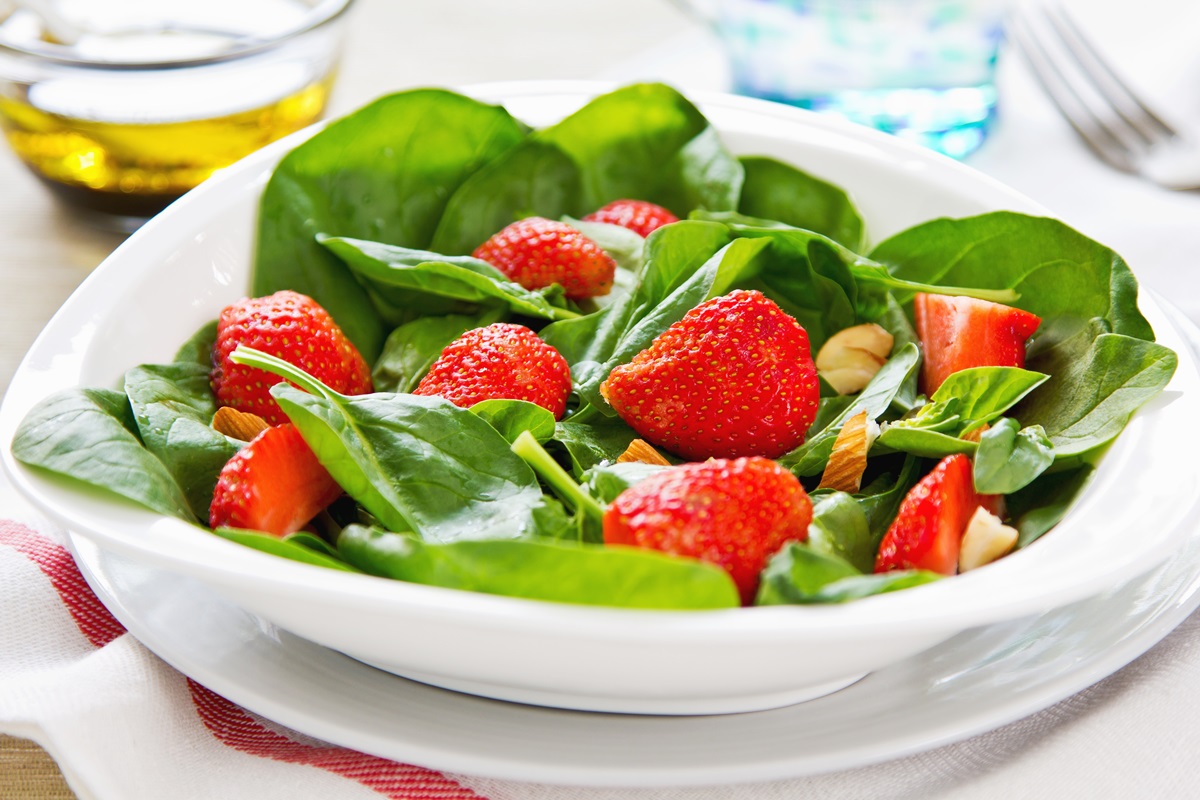 |
Illustrative photo: Go Diary Free |
EWG's conclusions stem from analyzing over 54,000 produce samples tested by the US Department of Agriculture (USDA). Even after the USDA peeled and washed produce to mimic home preparation, traces of 264 types of pesticides were detected, with 203 found within the Dirty Dozen group. Bernadette Del Chiaro, EWG Vice President, explained that manufacturers use PFAS as active ingredients in pesticides. These chemicals possess extremely stable molecular bonds, requiring decades or even centuries to fully decompose, thereby posing a severe threat to public health. According to the US Environmental Protection Agency (EPA), "forever chemicals" elevate the risk of cancer, obesity, thyroid disease, and weaken the immune system, even at extremely low concentrations.
Health experts express concern that consuming food with multiple chemical residues could lead to a cumulative effect, increasing risks such as premature birth, birth defects, miscarriage, and genetic damage. The American Academy of Pediatrics (AAP) stresses children's particular sensitivity to pesticides. Fetuses exposed to these substances face a higher risk of birth defects, low birth weight, and stillbirth. Young children are more susceptible to behavioral, learning, and cancer issues.
The Alliance for Food and Farming (AFF), representing US farmers, responded to the report by asserting that the presence of residues does not mean food is unsafe. An AFF spokesperson stated that the EPA consistently establishes strict safety limits to protect consumers, especially young children.
Alongside its warning list, EWG also presented the "Clean Fifteen," a list of 15 types of produce with the fewest chemical contaminants. Pineapples, sweet corn, and avocados lead this safe category. Other items include: papayas, onions, frozen peas, asparagus, cabbage, cauliflower, watermelon, mangoes, bananas, carrots, mushrooms, and kiwi.
The US Food and Drug Administration (FDA) advises individuals to continue eating fruits and vegetables while ensuring proper preparation. Home cooks should wash all produce under running water before peeling to prevent bacterial cross-contamination, then dry with a clean cloth. For hard-skinned produce like carrots or potatoes, a dedicated scrub brush can be used. The FDA strongly recommends against using soap or dish soap, as porous foods can absorb cleaning chemicals. For leafy green vegetables, users should remove outer layers, gently wash each leaf under low-pressure water slightly warmer than the produce, and use a salad spinner to dry them.
Binh Minh (According to CNN)